Canonical learn pageAlias merge: 12v dc gear micro motor

12V Micro Gear Motor Sizing Page for Ratio, Output RPM, and RFQ Boundaries

Use this 12V micro gear motor workflow when a request says 12v dc gear micro motor, 12v micro dc gear motor, micro gearmotor 12V, or N20-style 12V gear motor. The page keeps the first decision practical: define output rpm, loaded torque, duty cycle, driver current, and gearbox evidence before asking for samples.

Published: 2026-07-26 | Last updated: 2026-07-26 | Primary keyword: 12v micro gear motor
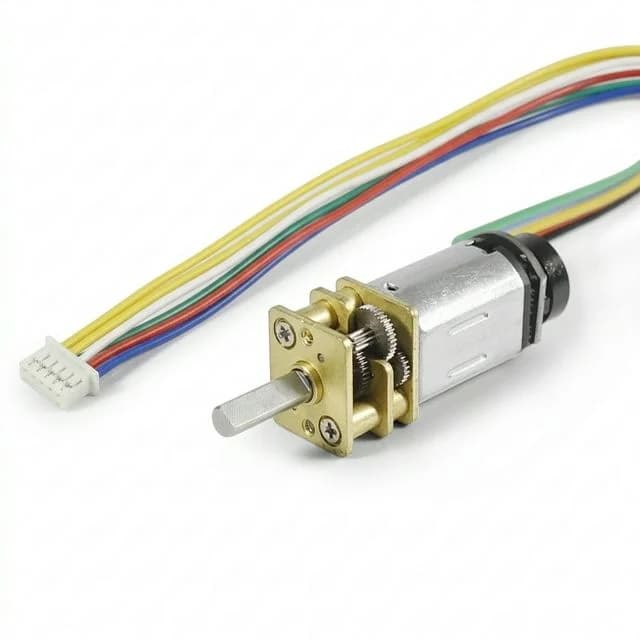
12V micro gear motor with brass gearbox for output-rpm and shaft-fit review
Canonical URL
/learn/12v-micro-gear-motor
Primary decision
Output rpm and loaded torque
Release boundary
Duty, current, thermal evidence
Alias rule
Redirect alias requests here

Gearmotor decision tool

Decide from output load, not catalog title wording

A 12v dc gear micro motor title usually hides the variables that decide fit. Use these four gates before you compare prices or publish a drawing release.

Output rpm first
Target rpm must be stated at the gearbox output shaft, not as the bare-motor no-load speed.

Ask suppliers for no-load rpm, rated-load rpm, ratio, and tolerance on the same line item.

Torque is thermal
Continuous torque needs duty cycle, ambient temperature, and housing airflow before release.

Treat stall torque as a protection design point, not as usable continuous torque.

Driver window
Startup current, brownout margin, current limit, and PWM frequency decide whether the 12V rail is stable.

Bench current waveform must confirm the selected H-bridge or driver IC boundary.

Gearbox life
Higher ratio improves low-speed control but adds gear losses, backlash, noise, and wear sensitivity.

Require backlash, shaft-load, lubrication, and endurance notes before production RFQ close.

Method and process

Six-step pre-RFQ screen for micro gearmotor programs

This is not a supplier guarantee. It is a repeatable screen for engineering and sourcing teams to keep the first RFQ grounded in measurable motor, gearbox, and driver requirements.

  1. 1Write the required output rpm and loaded torque before reading product titles.
  2. 2Calculate mechanical load from output speed and torque, then add gearbox-efficiency uncertainty.
  3. 3Screen the 12V winding by rated current, startup current, driver limit, and supply sag.
  4. 4Separate intermittent positioning use from continuous-duty use; do not reuse stall torque as a rating.
  5. 5Freeze drawing details: body envelope, shaft flat, mounting holes, connector, encoder, and lead exit.
  6. 6Send RFQ with target load point, duty cycle, noise limit, life target, compliance needs, and sample test method.

Application fit

Where a 12V micro gear motor fits, and where it needs proof

ScenarioGood fit whenDo not skip
Battery product actuatorShort moves, known stop positions, current limit available.Gearbox shock load and end-stop stall current need validation.
Mini pump or valve driveOutput rpm is low and torque ripple can be tolerated.Fluid load changes can push current above catalog no-load assumptions.
Instrument or robotics moduleCompact geared output and optional encoder feedback matter.Backlash, audible gear noise, and shaft radial load can dominate the decision.
RFQ minimum fields
Send these before asking for a final sample quote.
  • Output rpm under load and acceptable speed tolerance.
  • Continuous torque, peak torque, and duty cycle.
  • Supply range, driver current limit, and startup condition.
  • Gear ratio preference, backlash limit, noise target, and life target.
  • Drawing, shaft, mounting, connector, encoder, and compliance needs.
Visible risk boundary
The page is a sourcing screen, not production release.

Do not approve a 12V micro gearmotor only because a supplier title contains 12V, high torque, or N20. Production release still needs PN-level current waveform, winding temperature, gearbox temperature, backlash, acoustic, endurance, and compliance evidence under the real load profile.

Request design review

Evidence ledger

Sources to verify before selecting a part number

These references are used as verification prompts. Final values must come from the selected supplier datasheet and bench test.

Pololu Micro Metal Gearmotors reference pages
Use as an example of why voltage, ratio, motor variant, and gearbox drawing must be checked together.
TI DRV8833 motor-driver documentation
Use for brushed-driver current-limit, UVLO, and supply-capacitance review before choosing a driver class.
FAULHABER gearhead technical information
Use for gearbox trade-off language around stages, ratio, torque transfer, backlash, and lifetime boundaries.

FAQ

12V micro gear motor questions answered before RFQ

Is `12v dc gear micro motor` a separate page?
No. This project treats 12v dc gear micro motor as an alias of the canonical 12V micro gear motor page so searchers land on one sizing and RFQ workflow instead of a duplicate route.
How should I size a 12V micro gear motor?
Start with gearbox output rpm and loaded torque, then verify ratio, efficiency, startup current, continuous duty, shaft load, backlash, and the driver current limit before sample approval.
Can a 12V micro gear motor run continuously at stall torque?
No. Stall torque is a short-duration protection boundary. Continuous operation needs rated-load current, winding temperature, gearbox temperature, duty cycle, and endurance evidence.
What should an RFQ include for a 12V micro gearmotor?
Include output rpm under load, torque, duty cycle, supply tolerance, driver or current limit, noise target, life target, shaft drawing, encoder need, compliance requirements, and sample test conditions.