
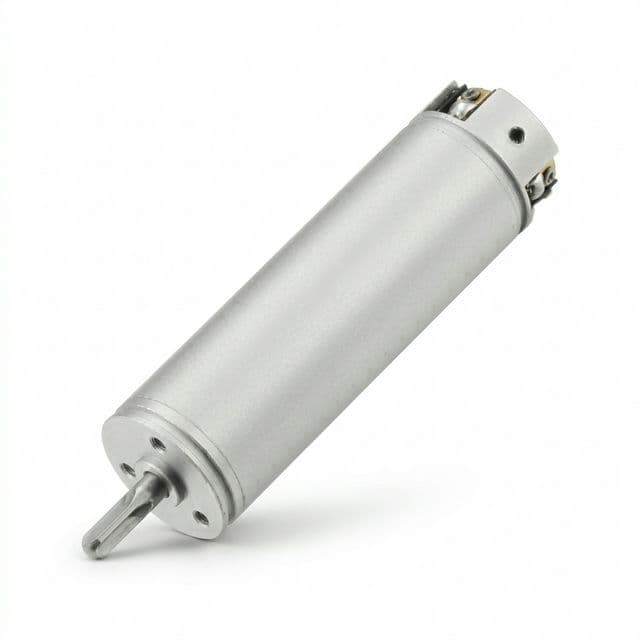
RFQ Checklist for Coreless DC Motor OEM Projects
A practical RFQ checklist to speed up technical alignment, quoting, and sample planning for custom coreless DC motor sourcing.
Procurement and engineering teams can cut 1-2 quote rounds by sending a structured RFQ package from day one.
Why Most Motor RFQs Lose Time
Delays usually come from three gaps:
- Operating targets are not tied to real load points.
- Mechanical interface details are incomplete.
- Sample acceptance criteria are not agreed before build.
RFQ Data Pack Buyers Should Send
Use this as your minimum RFQ template.
| RFQ field | Why it matters | Minimum format |
|---|---|---|
| Application and duty profile | Defines real stress and control mode | One-paragraph use case plus duty cycle (%) |
| Voltage window | Prevents mismatch between nominal and worst-case behavior | Rated, min startup, and max transient voltage |
| Speed and torque targets | Enables usable winding and gear ratio selection | No-load speed, load speed, target torque at each load point |
| Current and power limits | Protects system-level electronics and thermal budget | Continuous current limit and peak duration |
| Envelope constraints | Avoids packaging redesign in later phases | Motor OD, length, shaft dia/length, connector or lead-out direction |
| Noise and vibration limits | Avoids subjective "too noisy" disputes | dBA limit and test distance (for example 10 cm) |
| Lifetime target | Aligns bearing and brush strategy | Hours or cycles under defined load and temperature |
| Environmental conditions | Controls material and lubrication choices | Temperature range, humidity, shock/vibration level |
RFQ Readiness Flow (Use Before Sending to Suppliers)
Commercial Inputs That Improve Quote Accuracy
- Volume split by phase: sample, pilot, and annual mass production.
- Required lead-time window for each phase.
- Compliance list: RoHS, REACH, and any customer-specific file pack.
- Packaging and incoming inspection expectations.
Without these four inputs, "best price" comparisons are often not apples-to-apples.
What Buyers Should Request Back from Suppliers
Ask suppliers to return these items in the first response:
- Performance curve at your actual voltage window, not only nominal voltage.
- Drawing with tolerances for shaft, mounting, and lead exit.
- Current draw and temperature-rise data at each target load point.
- Reliability plan: sample size, test conditions, and pass/fail logic.
- Change-control commitment for winding wire, magnet grade, and key components.
Sample Acceptance Scorecard (Before Mass-Production Decision)
| Checkpoint | Pass rule | Risk if skipped |
|---|---|---|
| Electrical consistency | Key parameters stay within agreed tolerance across sample set | Field return risk from batch drift |
| Startup reliability | Starts at minimum supply voltage and low-temperature boundary | Intermittent no-start in real use |
| Noise and vibration | Meets agreed test method and threshold | Subjective disputes and redesign delay |
| Mechanical fit | Passes fixture and final assembly fit test | Late-stage housing or shaft changes |
| Thermal margin | Temperature rise within system budget at duty cycle | Early failure or derating requirement |
RFQ Completeness Scoring Model (Internal Gate)
Before sending RFQ, score your package on a 100-point scale:
| Module | Weight | Pass threshold | Practical pass check |
|---|---|---|---|
| Load and duty profile quality | 25 | >= 20 | At least 3 real operating points and one peak case are defined |
| Mechanical interface clarity | 25 | >= 20 | Shaft/mounting drawings include tolerance and datum notes |
| Acceptance criteria specificity | 30 | >= 24 | Startup/noise/thermal have numeric thresholds and test method |
| Commercial readiness | 20 | >= 16 | Phase volume, lead-time target, and compliance list are complete |
Recommended internal release rule:
- Total score >= 80.
- No module below its threshold.
- If rule 1 passes but any module fails, hold RFQ and repair that module first.
Common Buyer Mistakes
- Asking for "high speed and high torque" without a load curve.
- Skipping shaft tolerance and coupling details.
- Locking unit price before agreeing sample acceptance criteria.
- Comparing quotes with different test assumptions.
Practical Rule
Treat RFQ quality as a schedule lever, not only a sourcing document.
A complete RFQ package usually saves more time and rework cost than a fast but incomplete quote request.
Downloadable Buyer Templates
Example: RFQ Review in a Typical New Product Program
Use this as a practical baseline when you brief procurement, R&D, and quality in the same meeting:
| Item | Basic RFQ | Structured RFQ |
|---|---|---|
| Technical clarification rounds | 3-4 | 1-2 |
| Time to sample release decision | 3-5 weeks | 1-2 weeks |
| Quote comparability | Low | High |
| Late-stage interface change risk | High | Medium to low |
The exact timing still depends on product complexity and internal approval speed, but this baseline is realistic for most OEM starts.
7-Day RFQ Improvement Sprint (Buyer Team Execution Plan)
| Day | Owner | Output | Done definition |
|---|---|---|---|
| Day 1 | Product + R&D | Load envelope draft | 3 core points plus peak/startup points documented |
| Day 2 | ME | Interface drawing pack | Shaft/mount tolerances reviewed by assembly owner |
| Day 3 | QA | Acceptance criteria draft | Noise/startup/thermal methods and limits defined |
| Day 4 | Procurement | Commercial assumptions | Phase quantities and target lead times approved |
| Day 5 | Cross-functional review | RFQ package v1 | All mandatory fields filled and no placeholder text |
| Day 6 | Supplier-facing rehearsal | Clarification list | Team can answer top 10 likely supplier questions |
| Day 7 | Final sign-off | RFQ release | Internal completeness score meets release rule |
Related Buyer Resources
After your RFQ draft is complete, these pages help finalize commercial and execution controls:
Author
Categories
More Posts
Beyond Unit Price: The 2026 Coreless DC Motor TCO Framework for Procurement
Use this coreless DC motor TCO framework to compare suppliers, quantify hidden assembly, battery, MOQ, and warranty costs, and prepare a stronger RFQ.

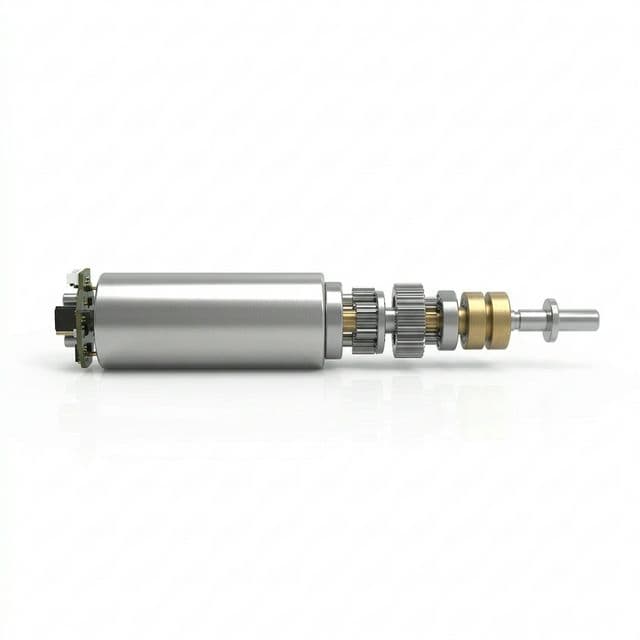
Sourcing Autoclavable Coreless DC Motors for Surgical Hand Tools: Cycle Life, Sealing, and Compliance (2026 Guide)
Coreless DC motor sourcing guide for autoclavable surgical hand tools. Validate cycle life, sealing, compliance evidence, and RFQ risks before supplier review.
OEM Coreless Motor Development Timeline From Sample to Mass Production
A realistic B2B project timeline for custom coreless DC motor programs, including RFQ, sample iteration, validation, and ramp-up milestones.