
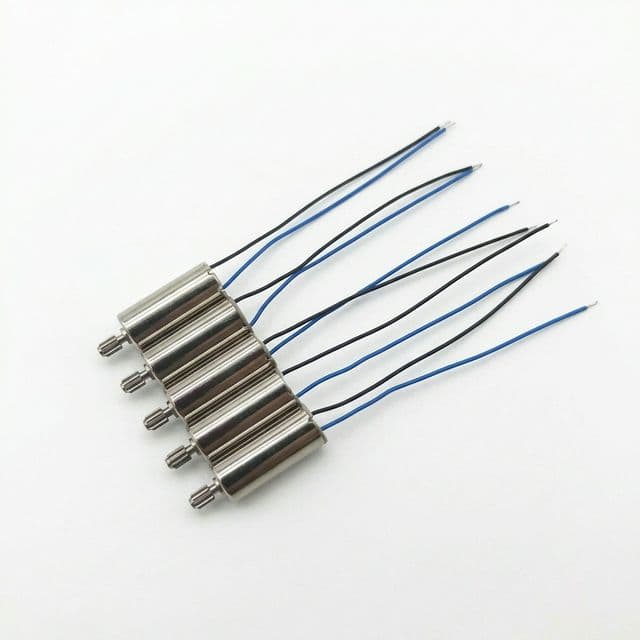
OEM Coreless Motor Development Timeline From Sample to Mass Production
A realistic B2B project timeline for custom coreless DC motor programs, including RFQ, sample iteration, validation, and ramp-up milestones.
OEM teams usually underestimate schedule risk in the middle stage between "sample approved" and "stable mass production."
In most projects, realistic end-to-end timing is around 10-16 weeks depending on customization depth and validation scope.
Stage-Gate Timeline Buyers Can Use
| Phase | Typical duration | Exit criteria | Buyer owner |
|---|---|---|---|
| RFQ and technical clarification | Week 1-2 | Performance target, envelope, and sample scope signed | Procurement + R&D |
| First sample build | Week 2-4 | Measured data package and gap list delivered | Engineering |
| Iteration and tuning | Week 4-7 | Revised design meets key electrical/mechanical targets | Engineering |
| Pilot run and process lock | Week 7-10 | Inspection rules, packaging, and process controls aligned | Quality + Supply chain |
| Ramp to stable mass production | Week 10+ | Output and quality baseline stable across batches | Operations |
Timeline Visibility Map (Critical-Path View)
What Must Be Frozen at Each Gate
Gate 1: Before First Sample
- Voltage window, load points, and duty profile.
- Critical dimensions: motor body, shaft, and mounting interface.
- Acceptance criteria for startup, noise, and thermal rise.
Gate 2: Before Pilot
- Final drawing revision and tolerance assumptions.
- Inspection method and sampling rules.
- Component change-control agreement.
Gate 3: Before Ramp
- Pilot yield baseline and major defect list.
- Final packaging and inbound quality criteria.
- Escalation path for delivery or quality risk.
Critical Path Items Buyers Often Miss
- Late shaft or coupling updates after sample approval.
- Retest cycles triggered by unclear noise test method.
- Long-lead materials without contingency planning.
- Multiple approval owners with no single final decision maker.
These items can add 2-4 weeks even when motor performance is already close.
Weekly Governance Dashboard (Buyer Side)
Track these five indicators every week:
- Open technical gaps and aging days.
- Sample pass rate at agreed load points.
- Pilot defect rate by top failure mode.
- Material readiness for next build window.
- Timeline variance versus baseline plan.
A simple shared dashboard prevents "status optimism" and catches schedule slip early.
Gate Readiness Score (Go / No-Go)
Use a fast numerical gate check before moving to the next phase.
| Gate | Score components | Go threshold | No-go trigger |
|---|---|---|---|
| Gate 1 -> Sample build | Load clarity (40) + interface freeze (40) + acceptance criteria (20) | >= 85 | Any missing startup or thermal threshold |
| Gate 2 -> Pilot | Performance closure (35) + drawing freeze (35) + inspection method (30) | >= 88 | Repeated failure on same key metric across 2 rounds |
| Gate 3 -> Ramp | Pilot yield (40) + supply readiness (30) + escalation readiness (30) | >= 90 | No recovery plan for long-lead material risk |
This score model is useful because it replaces subjective confidence with auditable release logic.
Re-Baseline Rules (When to Reset Timeline)
Re-baseline instead of forcing the old schedule when:
- Critical dimension changes after Gate 2.
- Two consecutive sample rounds fail the same key metric.
- Incoming quality or supplier capacity cannot support pilot commitments.
Resetting early is usually cheaper than shipping unstable quality to hit an artificial date.
Buyer Takeaway
A clear stage-gate model with frozen criteria and single-owner decisions improves delivery predictability, lowers hidden rework costs, and makes supplier performance auditable.
Downloadable Execution Templates
Timeline Stress Test Used in Real Gate Reviews
Use this scenario to pressure-test your plan:
| Event | Potential delay impact | Mitigation |
|---|---|---|
| Shaft interface update after sample approval | +1 to 2 weeks | Freeze critical dimensions before pilot gate |
| Noise retest due to unclear method | +1 week | Define fixture, distance, and load in Gate 1 |
| Long-lead component shortage | +1 to 3 weeks | Build approved alternates before pilot |
| Split ownership and delayed approvals | +3 to 7 days per gate | Assign one decision owner per gate |
This table is designed for project planning workshops where procurement and engineering need one shared risk view.
Baseline vs Stretched Plan Reference
| Workstream | Baseline plan | Stretched (higher risk) plan | What changes |
|---|---|---|---|
| Sample loops | 2 rounds | 3-4 rounds | More tuning cycles and test queue delay |
| Pilot readiness checks | 1 integrated review | 2 fragmented reviews | Approval latency increases |
| Supply risk mitigation | One approved alternate | Alternate not prepared | Material shocks directly hit ramp date |
| Governance cadence | Weekly single-owner review | Ad-hoc multi-owner updates | Decision lag compounds at each gate |
Related Buyer Resources
Use these companion pages to complete your pre-ramp decision package:
Author
Categories
More Posts

Coreless DC Motor Thermal Derating & NdFeB Magnet Sourcing Guide (2026)
A decision-grade sourcing guide for procurement teams addressing coreless motor thermal failures, NdFeB magnet demagnetization risks, and EU Critical Raw Materials Act (CRMA) compliance in 2026.

Coreless Motor OEM NRE and Tooling Cost Breakdown for Buyers
A buyer-first method to evaluate NRE, tooling, validation, and hidden implementation costs before approving a custom coreless motor program.
Coreless DC Motor EMI Suppression: Factory-Integrated vs. External Mitigation Costs (2026)
Use this 2026 coreless DC motor EMI sourcing guide to compare factory varistors, LC filters, and external PCB mitigation costs for IoT and medical RFQs.