
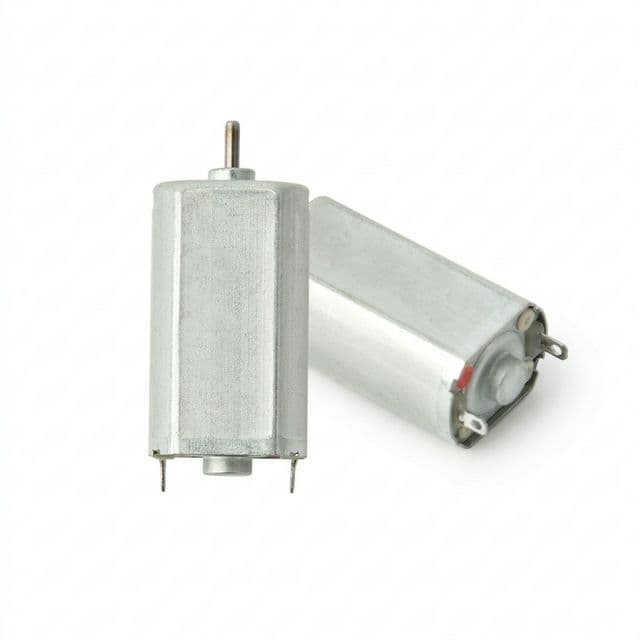
Coreless vs Ironless DC Motors for OEM Sourcing
A procurement-focused comparison of coreless and ironless DC motor options across response, efficiency, noise, and integration risk.
Buyers often treat "coreless" and "ironless" as simple keywords, but purchasing decisions should be based on load profile, interface risk, and validation effort.
Clarify Terms First
In many supplier catalogs, coreless and ironless are used interchangeably for low-inertia rotor structures.
For sourcing decisions, the more useful distinction is not naming, but how each candidate performs under your exact duty profile.
Start with the Application Load Envelope
Before comparing part numbers, define:
- Required speed/torque points under real loads.
- Continuous and peak duty cycle.
- Startup behavior at minimum supply voltage.
- Allowable thermal rise in your final housing.
Without this envelope, most "best model" recommendations are guesswork.
Buyer Decision Matrix
| Buyer priority | What to favor | Why |
|---|---|---|
| Fast response and frequent start-stop | Low inertia options with validated startup under min voltage | Improves control stability in precision cycles |
| Tight thermal budget | Candidate with lower current at your real load points | Reduces heat concentration in compact enclosures |
| Low acoustic signature | Model with defined test method and repeatable dBA data | Prevents subjective noise disputes |
| High assembly reliability | Strong shaft/mounting tolerance control | Lowers integration failure during ramp-up |
| Stable multi-batch supply | Supplier with change-control and traceability practice | Reduces drift risk after qualification |
Data Pack to Request from Every Supplier
Ask each supplier to provide the same structure so quotes are comparable:
| Data item | Required condition | Why buyers need it |
|---|---|---|
| Speed-torque-current curves | At your rated and minimum voltage | Avoids nominal-only marketing data |
| Temperature-rise data | At your key load points and duty cycle | Confirms system thermal margin |
| Mechanical drawing | With shaft and mounting tolerances | Prevents late fit-change risk |
| Acoustic report | With distance, fixture, and load condition | Makes noise claims auditable |
| Reliability method | Sample size, stress condition, pass criteria | Converts "tested" into verifiable evidence |
Comparison Workflow (From Marketing Claims to Verifiable Choice)
Total-Cost Traps in Comparison
Unit price alone usually hides larger costs:
- Rework from shaft mismatch or mounting stress.
- Delays from unclear validation criteria.
- Field returns caused by startup instability at low voltage.
- Re-qualification effort after uncontrolled component changes.
For OEM programs, the lowest landed risk often beats the lowest unit price.
Red Flags During Supplier Evaluation
- Only nominal voltage curves are provided.
- Noise values are shared without test method.
- "Long lifetime" claim without duty-cycle definition.
- No clear statement on material or winding change control.
Weighted Scorecard Template (100 Points)
| Dimension | Weight | Data source | Penalty rule |
|---|---|---|---|
| Startup reliability at min voltage | 20 | Sample test report | Missing cold-start evidence: -8 |
| Thermal margin at real duty cycle | 20 | Temperature-rise test | Only nominal condition data: -6 |
| Acoustic repeatability | 15 | dBA test with fixture details | No method disclosed: -5 |
| Mechanical integration risk | 15 | Tolerance drawing + fit trial | Tolerance not specified: -6 |
| Supply stability and change control | 15 | Process/control statement | No change notice commitment: -5 |
| Total landed commercial cost | 15 | Quote + expected rework model | Hidden retest fees not itemized: -4 |
A practical scoring rule for shortlist decisions:
- Any total score below 70 is not release-ready for pilot.
- A candidate with score >= 78 and no red-flag penalty is usually a better pilot choice than a lower-price score of 70-74.
Practical Decision Rule for Buyers
Choose the candidate that is easiest to validate against your real operating envelope and easiest to reproduce across batches.
If two options are close in cost, prioritize the one with stronger test transparency and process control.
Downloadable Comparison Worksheet
Example Scoring Snapshot from a Typical Supplier Round
If your weighted total score uses 100 points:
| Supplier | Weighted score | Typical interpretation |
|---|---|---|
| Supplier A | 82 | Strong fit with manageable integration risk |
| Supplier B | 75 | Acceptable but more validation effort required |
| Supplier C | 68 | Lower cost possible, but risk controls are weaker |
Keep the same scoring logic, then plug in your own sample data and commercial assumptions.
Evidence Ladder: What Counts as "Strong" Supplier Proof
| Claim area | Weak evidence | Acceptable evidence | Strong evidence |
|---|---|---|---|
| Performance curve | Catalog screenshot only | Curve at rated voltage | Curve at rated + minimum voltage with load points |
| Noise | Single dBA number | dBA with distance noted | dBA with fixture, load, distance, and repeat count |
| Reliability | "Long life" statement | Basic cycle test result | Clear stress profile, sample size, and fail mode summary |
| Process stability | Informal assurance | Basic QC checklist | Defined change-control and lot traceability method |
This ladder helps procurement and engineering use one standard when comparing mixed-quality quotes.
Related Buyer Resources
Use these pages to turn comparison outputs into executable sourcing decisions:
Author
More Posts
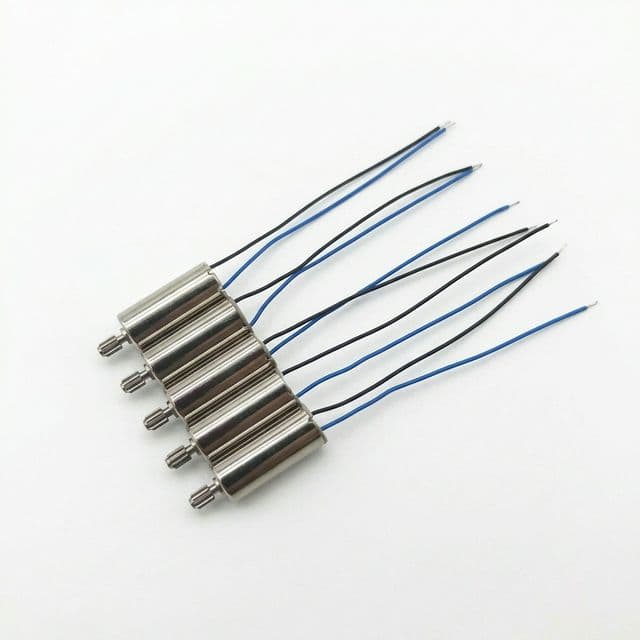
Coreless Motor MOQ and Lead Time Terms B2B Buyers Should Lock Early
A practical guide to lock MOQ tiers, lead-time commitments, and risk-sharing terms in coreless DC motor sourcing programs.

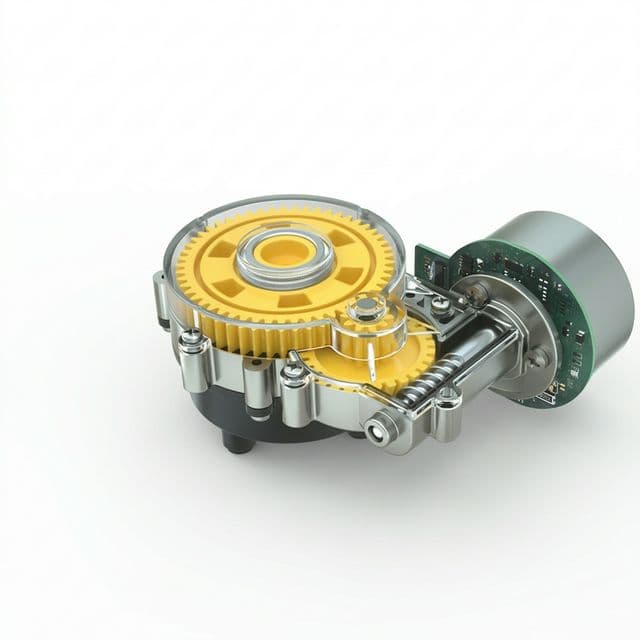
Coreless Motor OEM NRE and Tooling Cost Breakdown for Buyers
A buyer-first method to evaluate NRE, tooling, validation, and hidden implementation costs before approving a custom coreless motor program.

Coreless DC Motor Thermal Derating & NdFeB Magnet Sourcing Guide (2026)
A decision-grade sourcing guide for procurement teams addressing coreless motor thermal failures, NdFeB magnet demagnetization risks, and EU Critical Raw Materials Act (CRMA) compliance in 2026.