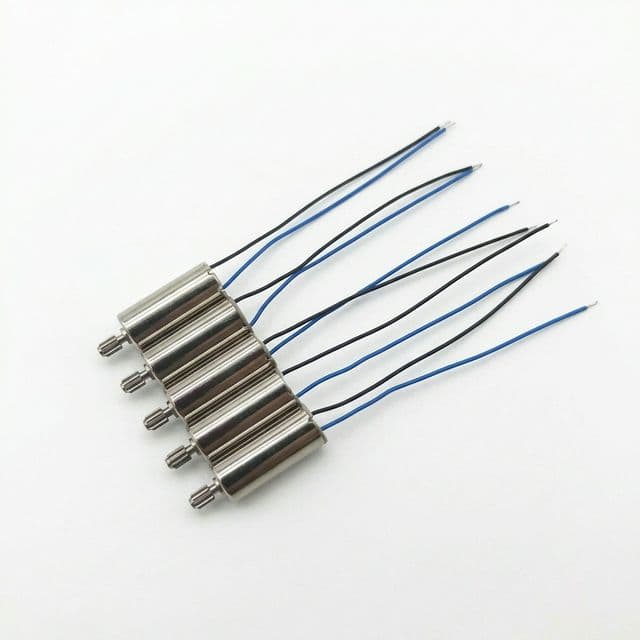
Beyond Unit Price: The 2026 Coreless DC Motor TCO Framework for Procurement
Use this coreless DC motor TCO framework to compare suppliers, quantify hidden assembly, battery, MOQ, and warranty costs, and prepare a stronger RFQ.
In 2026, leading B2B procurement teams are shifting away from traditional unit-price negotiations. The practical reason is simple: assembly labor, battery sizing, compliance documentation, and field returns can move project economics more than a small purchase order discount.
While TCO is a standard metric for large industrial AC motors, evaluating the true lifecycle cost of small, precision OEM components—like coreless DC motors—requires a specialized framework.
If your procurement strategy only optimizes the initial Purchase Order (PO) price, you might be unintentionally inflating your company's assembly, battery, and warranty costs.
Scope, Date, and Assumptions
This framework was published on July 20, 2026 for global OEM procurement and engineering teams comparing brushed coreless DC motors in medical devices, robotics, portable instruments, IoT devices, and compact actuators.
Use it as a sourcing model, not as a substitute for supplier-specific validation, regulatory review, or landed-cost analysis. EU Ecodesign rules are cited as an example of broader efficiency-driven procurement pressure for in-scope induction motors; they do not automatically apply to every small coreless DC motor assembly. Replace every cost input below with your own quote, labor rate, battery BOM, MOQ plan, and expected RMA cost before making a supplier award decision.
Need a cleaner input pack first? Start with the coreless DC motor RFQ checklist before you request supplier pricing.
The TCO Iceberg for Coreless Motors
When sourcing coreless DC motors for medical devices, robotics, or portable electronics, the unit price is only the visible starting point. The hidden cost drivers are the secondary operations and failure modes that appear after the quote is accepted.
The 5 Pillars of Coreless Motor TCO
To accurately forecast costs, procurement and engineering teams should align on the following five pillars.
1. Initial Unit Cost and MOQ Overhead
This is the invoice price per motor, but it must be calculated against the Minimum Order Quantity (MOQ) and inventory holding costs. A supplier offering a motor for $5.00 at a 10,000 MOQ costs you more in early-stage capital than a supplier charging $6.50 at a 1,000 MOQ.
2. Customization and NRE (Non-Recurring Engineering)
Off-the-shelf motors rarely fit perfectly into highly constrained OEM devices. Customizing the shaft length, adding a specific pinion gear, or requesting custom lead wires will incur tooling and NRE costs. Rule of thumb: It is almost always cheaper to pay a slightly higher NRE to have the motor factory install the gear/connector than to manage the secondary assembly in your own facility.
3. Assembly and Integration Costs
If your motor arrives with bare terminals, your assembly line must manually solder wires, which increases labor time and the risk of defective joints (a primary cause of early failure). Specifying pre-assembled wire harnesses reduces your internal cycle time and defect rate.
4. Energy Efficiency and Battery Sizing
Coreless DC motors are chosen for their lack of iron core, which eliminates eddy currents and reduces weight. However, a cheaper, lower-efficiency coreless motor will draw more current. In portable devices, this means you must over-specify your lithium-ion battery capacity—a component that is often far more expensive than the motor itself.
5. Reliability and Warranty Yield
The cost of a single field failure can wipe out the savings from purchasing thousands of cheap motors. For medical devices, the cost of an RMA (Return Merchandise Authorization) and potential regulatory reporting is astronomical.
Comparative Scenario: Price vs. TCO
Let's look at a modeled 3-year production run (50,000 units total) for a battery-powered IoT device. This is an example calculation, not a universal benchmark. It assumes the RMA line includes return handling, replacement motor cost, and customer support time, and it excludes freight, tariffs, VAT, and currency movement.
| Cost Category | Supplier A (Aggressive Unit Price) | Supplier B (TCO Optimized) | Buyer Impact & Rationale |
|---|---|---|---|
| Unit Price | $4.20 | $5.80 | Supplier A appears cheaper on the initial PO. |
| Connector Integration | $1.50 (in-house manual soldering) | $0.00 (factory pre-installed) | Supplier B eliminates internal labor and scrap risk. |
| Battery Upsizing | $2.00 (requires larger 800mAh battery) | $0.00 (runs on standard 500mAh) | Supplier B's higher efficiency saves battery costs. |
| Field Failure / RMA Rate | 2.5% failure rate ($12,500 total RMA cost) | 0.2% failure rate ($1,000 total RMA cost) | Supplier B uses higher-grade precious metal brushes. |
| Excess Inventory (MOQ) | Must buy 20,000/batch (high holding cost) | Flexible 5,000/batch | Supplier B frees up working capital. |
| True Lifecycle Cost/Unit | $7.95 per unit | $5.82 per unit | Supplier B saves 26% overall. |
Formula check: true cost per unit = motor quote + factory/in-house integration cost + battery BOM delta + (total RMA cost / production units) + inventory holding cost if quantified. In the table above, the MOQ line is treated as a working-capital risk rather than added to the per-unit total because carrying-cost rates vary by company.
The Buyer's Coreless Motor TCO Audit Checklist
Before sending your next RFQ (Request for Quote), use this checklist to ensure you aren't leaving hidden costs on the table:
- Define the boundary condition: Are we measuring cost up to the factory door, or through the device's 5-year warranty period?
- Audit the assembly line: Can the motor supplier pre-install gears, pulleys, or connectors to eliminate our internal secondary operations?
- Evaluate the battery tradeoff: If we specify a motor with 10% higher efficiency, can we downgrade our battery pack size to save money?
- Calculate the cost of failure: What is the hard cost of one field RMA? (Multiply this by the expected failure rate).
- Check EMI suppression: Does the motor require external capacitors for EMC compliance, or can the factory build them into the end cap?
- Review phase-based MOQs: Does the supplier offer tiered MOQs for the pilot phase to prevent dead stock if the design changes?
If your quote comparison already has these six answers, send the assumptions to our engineering team for a second-pass review before freezing the supplier shortlist.
Frequently Asked Questions (FAQ)
Q: How does a coreless motor's lifespan affect TCO?
A: Coreless motors use either precious metal brushes (for low current, continuous use) or graphite brushes (for high current, start-stop applications). Selecting the wrong brush type will cause premature wear, driving up warranty costs.
Q: Are custom motors always more expensive in a TCO model?
A: No. While they have an upfront NRE, custom motors often reduce total assembly costs and improve device performance, yielding a lower TCO over production runs larger than 10,000 units.
Q: How do changing environmental regulations impact TCO?
A: Restricted-substance rules and customer compliance lists can force material, plating, insulation, solder, or documentation changes during the product lifecycle. Treat compliance evidence as a TCO input because a missing declaration or late material substitution can create redesign, requalification, and shipment-delay costs.
Take the Next Step
Stop comparing quotes based on unit price alone. If you are developing a new medical tool, robotic joint, or precision instrument, our engineering team can help you map out the exact TCO for your motor sub-assembly.
Download our RFQ Checklist to structure your next sourcing event, or Contact our Engineering Team to discuss integrating connectors and gears directly at our factory, lowering your true assembly costs.
Sources & References
- ENERGY STAR: Institute an ENERGY STAR Purchasing Policy - TCO definition covering acquisition, operating, replacement, and lifecycle costs.
- European Commission: Electric Motors and Variable Speed Drives - Scope and efficiency requirements for regulated electric motors in the EU.
- maxon: Precious Metal vs. Graphite Brushes - Brush-selection trade-offs for continuous low-current and severe start-stop applications.
- European Commission: RoHS Directive - Restricted-substance rules for electrical and electronic equipment.
Author
Categories
More Posts
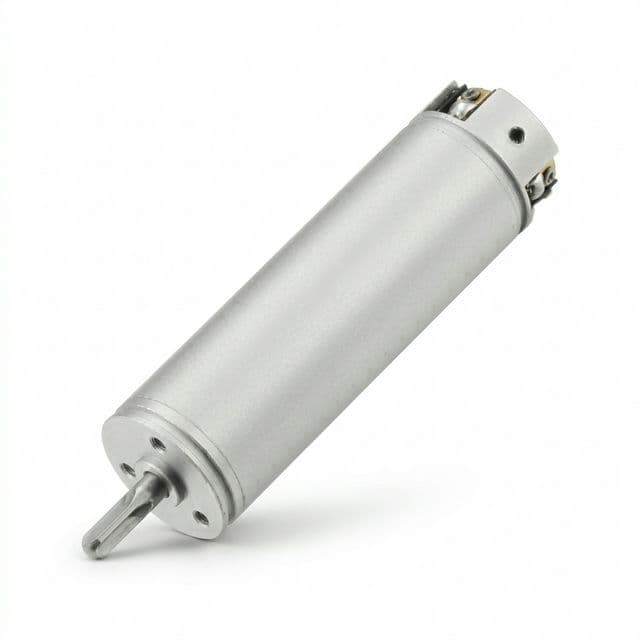
RFQ Checklist for Coreless DC Motor OEM Projects
A practical RFQ checklist to speed up technical alignment, quoting, and sample planning for custom coreless DC motor sourcing.

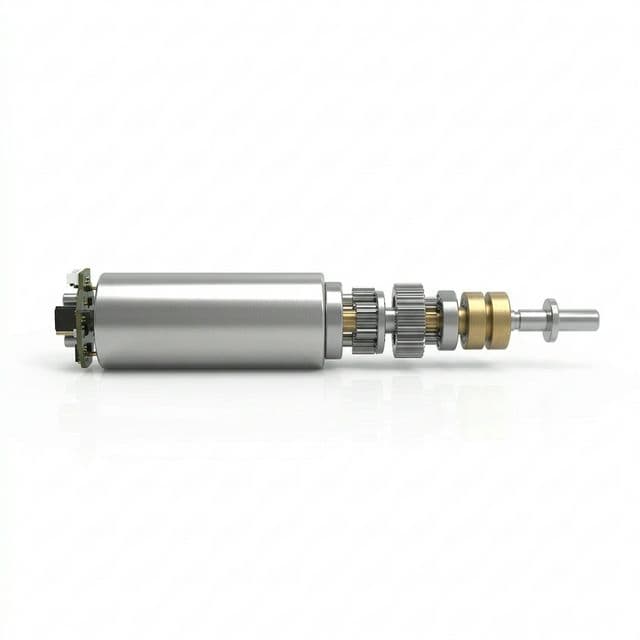
Sourcing Autoclavable Coreless DC Motors for Surgical Hand Tools: Cycle Life, Sealing, and Compliance (2026 Guide)
Coreless DC motor sourcing guide for autoclavable surgical hand tools. Validate cycle life, sealing, compliance evidence, and RFQ risks before supplier review.
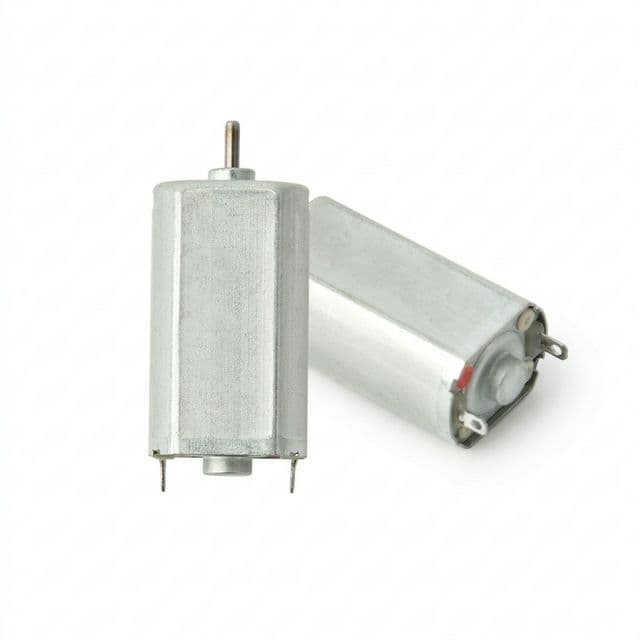
Coreless DC Motor Market Update (2026-W20): Tariff Review Windows, Drive-Safety Compliance, and Sourcing Decisions
A decision-grade update for motion-control and procurement teams on new U.S. Section 301 review windows, IEC 61800-5-1 implementation signals, and supplier-side changes affecting high-speed coreless DC motor programs.