

Coreless DC Motor Thermal Derating & NdFeB Magnet Sourcing Guide (2026)
A decision-grade sourcing guide for procurement teams addressing coreless motor thermal failures, NdFeB magnet demagnetization risks, and EU Critical Raw Materials Act (CRMA) compliance in 2026.
One-Line Decision: If your high-duty robotics or automation program sources coreless DC motors, mandate thermal resistance (Rth) limits, upgrade to SH/UH NdFeB magnet grades for stall-protection, and begin EU CRMA magnet traceability audits before your 2026 production freeze.
Procurement teams are facing a newly converged risk profile in 2026 when sourcing high-power-density coreless DC motors. The aggressive miniaturization of AI-driven robotics, medical devices, and aerospace actuators has pushed standard coreless motors past their continuous thermal limits. Simultaneously, the European Union's Critical Raw Materials Act (CRMA) has introduced strict new traceability and recycling reporting requirements for the permanent magnets—specifically Neodymium (NdFeB)—that give these motors their performance edge.
This guide provides a comprehensive framework to solve the thermal-demagnetization dilemma and align your supply chain with the latest regulatory mandates. It is designed to bridge the gap between mechanical engineering requirements and global procurement strategy.
1. The Coreless Thermal Dilemma: Why Ironless Designs Trap Heat
To source the right motor, buyers must first understand the fundamental physics of the coreless (or ironless) architecture. Unlike traditional brushed or brushless DC motors, a coreless motor features a self-supporting copper winding (the rotor) that spins around a stationary permanent magnet.
While this eliminates iron losses (eddy currents and hysteresis), reduces weight, and provides zero cogging torque, it creates a massive thermal disadvantage: there is no iron core to act as a heat sink.
When a coreless motor is subjected to high continuous loads or frequent stall conditions, the electrical resistance of the copper winding generates $I^2R$ (Joule) heating. Because the coil is suspended in an air gap, the primary path for this heat to escape is through the air, across the housing, and into the ambient environment. Air is a terrible thermal conductor.
Understanding Thermal Resistance (Rth) in Sourcing
When reviewing supplier spec sheets, procurement and engineering must critically evaluate the Thermal Resistance (Rth), measured in Kelvin per Watt (K/W). It is usually split into two components:
- Rth1 (Thermal resistance rotor-to-housing): How easily heat moves from the copper coil across the air gap to the stator housing.
- Rth2 (Thermal resistance housing-to-ambient): How easily heat moves from the motor housing to the surrounding air.
Total thermal resistance is Rth = Rth1 + Rth2. A lower number is always better. If a supplier cannot provide tested Rth values, their motors should be immediately disqualified for continuous-duty applications.
Thermal Flow in a Coreless DC Motor
2. The Fatal Intersection: Thermal Limits and Magnet Demagnetization
While burning out the copper winding is a risk, the more insidious failure mode in coreless DC motors is the irreversible demagnetization of the Neodymium (NdFeB) permanent magnet.
When procurement teams buy "standard" coreless motors for high-duty applications, they often overlook that standard NdFeB magnets (like N35 or N42) have relatively low maximum operating temperatures.
How Demagnetization Happens in the Field
Demagnetization is rarely caused by heat alone. It is the lethal combination of high temperature and high reverse magnetic fields. When a coreless motor is subjected to an overload, sudden acceleration, or stall condition, the motor controller pumps massive amounts of current into the coil. This current creates a strong electromagnetic field that directly opposes the permanent magnet's field.
If the magnet is hot (because the coil has been running continuously and heat has radiated inward), its Intrinsic Coercivity (H_cj)—its resistance to being demagnetized—plummets. The opposing field from the stall current permanently alters the magnet's domain alignment.
The result? The motor permanently loses torque. To achieve the same output, it now requires even more current, generating even more heat, leading to a rapid thermal death spiral.
Sourcing the Right Magnet Grade
To mitigate this, procurement must negotiate for higher-grade NdFeB magnets. The suffix in the magnet grade denotes its temperature rating and coercivity. While higher grades cost more and may slightly reduce overall flux density, they are mandatory insurance policies for continuous-duty applications.
NdFeB Magnet Grade Sourcing Comparison
| Magnet Grade Suffix | Max Operating Temp (T_max) | Procurement Cost Premium | Recommended Application Boundary | Risk of Stall Demagnetization |
|---|---|---|---|---|
| None (N Series) | 80°C | Baseline | Low-duty cycle, intermittent use, cool environments. | High |
| M (Medium) | 100°C | +5% to 8% | Standard robotics, consumer devices. | Medium |
| H (High) | 120°C | +12% to 15% | Industrial automation, AGVs, high-speed spindles. | Low-Medium |
| SH (Super High) | 150°C | +25% to 30% | Surgical robotics, aerospace, continuous high-load. | Low |
| UH (Ultra High) | 180°C | +40% to 50% | Extreme environments, heavy-duty servo applications. | Very Low |
Note: Operating temperatures are guidelines. Actual demagnetization thresholds depend on the specific permeance coefficient of the motor's magnetic circuit.
3. The 2026 Compliance Shock: EU CRMA and Magnet Traceability
Engineering challenges are not the only disruption. In 2026, the implementation phase of the European Union’s Critical Raw Materials Act (CRMA) aggressively targets the supply chains of permanent magnets, specifically Neodymium, Praseodymium, Dysprosium, and Terbium.
If you are importing coreless DC motors or the finished goods containing them into the EU market, your procurement documentation must pass new regulatory gates. The CRMA focuses on supply chain resilience, circularity, and reducing dependency on single-source non-EU processing.
Key CRMA Impacts on Coreless Motor Sourcing (2026-2027 Timeline)
- Mandatory Product Labelling & Information: Products containing permanent magnets must disclose the presence, weight, and chemical composition of the magnets.
- Recycled Content Reporting: Manufacturers must provide transparent reporting on the proportion of recycled rare earth elements recovered from post-consumer waste within the magnets used.
- Design for Removal (Circularity): OEMs must ensure that coreless motors (and their magnets) can be easily removed and identified at the product's end-of-life to facilitate localized EU recycling facilities.
- Supply Chain Audits: Large importers must conduct biennial stress tests on their supply chains to identify concentration risks for rare earth elements.
The Procurement Action: You can no longer accept generic "NdFeB" on a Bill of Materials. You must demand precise material declarations (Full Material Disclosure - FMD), origin of smelting/processing, and end-of-life handling instructions from your coreless motor suppliers. Suppliers who cannot provide this documentation will cause your shipments to be blocked at European customs.
4. The 2026 Coreless Motor RFQ Sourcing Checklist
To ensure your engineering teams get the thermal headroom they need, and your compliance teams get the data required for EU CRMA, embed this checklist into your Request for Quotation (RFQ) packages.
Engineering & Thermal Validation
- Thermal Resistance Data: Supplier provides both Rth1 (coil-to-housing) and Rth2 (housing-to-ambient) values under standardized testing conditions.
- Thermal Time Constant: Supplier provides the thermal time constant (τth) of both the rotor and the stator to model intermittent overload durations.
- Safe Operating Area (SOA) Curve: Supplier provides an SOA graph showing the continuous operating zone vs. intermittent zone based on a specified ambient temperature (e.g., 25°C or 40°C).
- Magnet Grade Specification: RFQ explicitly defines the required NdFeB grade (e.g., N42SH) rather than leaving it to supplier discretion.
Compliance & Supply Chain (EU CRMA Focus)
- Full Material Disclosure (FMD): Supplier commits to providing FMD, specifically breaking down the rare earth composition (Nd, Pr, Dy, Tb).
- Recycled Content Declaration: Supplier states the percentage of recycled rare earths in the supplied magnets, if any, to support corporate ESG reporting.
- Country of Origin Traceability: Traceability extends beyond motor assembly to the magnet sintering and rare earth refining stages.
- End-of-Life (EoL) Instructions: Supplier provides structural drawings demonstrating how the motor can be extracted for permanent magnet recycling.
Commercial & Lead Time
- Capacity Stress Test: Supplier demonstrates secondary sourcing for SH/UH grade magnets, as high-temperature rare earths are highly susceptible to export quotas.
- MOQ for High-Grade Magnets: Supplier clarifies if specifying SH/UH magnets increases the Minimum Order Quantity (MOQ) due to custom magnet batching.
5. Frequently Asked Questions (FAQ)
Q: Can we just use a cooling fan or heat sink to fix the thermal issue? A: Adding a heat sink to the motor housing reduces R_th2 (housing-to-ambient), which is highly beneficial. However, it does not change R_th1 (coil-to-housing). The heat must still cross the air gap. If the coil generates heat faster than it can jump the air gap, the winding will burn out or the magnet will demagnetize regardless of how cold the housing is.
Q: Why don't we switch from Neodymium to Samarium Cobalt (SmCo) magnets to avoid demagnetization? A: SmCo magnets have exceptional thermal stability (operating easily up to 250°C-300°C) and are highly resistant to demagnetization. However, they are significantly more brittle, heavier, and generally offer lower peak magnetic flux density compared to top-tier NdFeB. They are also highly expensive. For aerospace, SmCo is standard; for commercial robotics, upgrading to an SH-grade NdFeB is usually the more cost-effective procurement choice.
Q: How does potting or encapsulating the coreless motor affect thermal resistance? A: Applying thermally conductive potting compounds around the stator can drastically reduce R_th2 and improve shock resistance. However, you cannot pot the air gap where the rotor spins. Furthermore, potting permanently seals the unit, which directly conflicts with EU CRMA "Design for Removal" guidelines, as recycling facilities will struggle to separate the magnet from the epoxy.
Q: Will the EU CRMA ban the import of coreless motors from Asia? A: No. The CRMA is not an import ban. It is a transparency and diversification mandate. It forces OEMs to declare what is in their products and encourages European recycling. Your Asian supply chain remains viable, provided your suppliers can transparently trace their materials and comply with the reporting formats.
Q: If we only sell into the US market, should we care about CRMA? A: Even if your primary market is the US, global motor manufacturers are standardizing their reporting to meet EU specs. Furthermore, US OEMs are increasingly adopting ESG traceability standards that mirror European requirements to satisfy institutional investors and federal procurement guidelines.
6. Action Plan for Procurement Teams
The era of buying coreless DC motors based purely on generic voltage, RPM, and physical dimensions is over. High-duty cycle applications demand rigorous thermal vetting, and global trade environments demand absolute material transparency.
- Audit your current BOMs: Identify any coreless motors used in applications with duty cycles exceeding 50% or subject to frequent stall torque.
- Request updated data: Ask your current suppliers to provide R_th1, R_th2, and the exact NdFeB magnet grade suffix for those specific SKUs.
- Prepare for CRMA: Initiate discussions with your compliance teams regarding how permanent magnet weight and composition will be logged in your PLM (Product Lifecycle Management) systems.
The cost of over-specifying a magnet grade by 15% during the RFQ phase is mathematically negligible compared to the cost of a field recall caused by thermal demagnetization, or a container seized by customs due to missing CRMA documentation.
Ready to secure a compliant, high-performance motion solution? Contact our engineering team to review your thermal application requirements and explore our traceability-ready coreless DC motor portfolio.
Author
More Posts
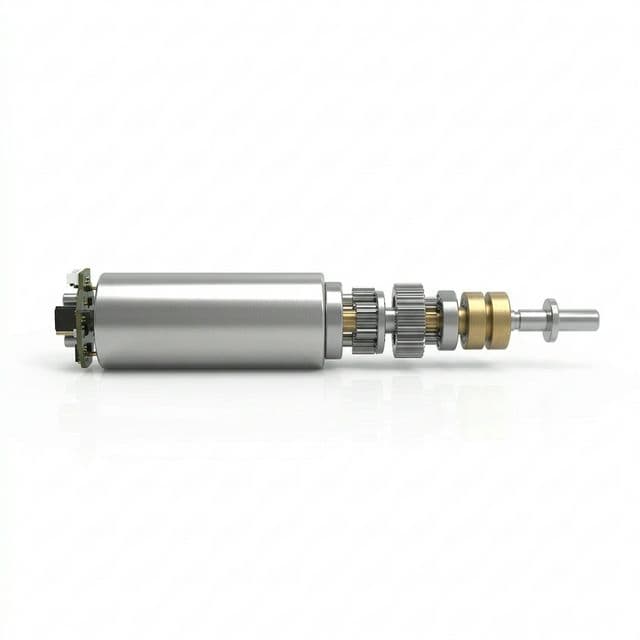
Sourcing Autoclavable Coreless DC Motors for Surgical Hand Tools: Cycle Life, Sealing, and Compliance (2026 Guide)
Coreless DC motor sourcing guide for autoclavable surgical hand tools. Validate cycle life, sealing, compliance evidence, and RFQ risks before supplier review.

Coreless DC Motor Market Update (2026-W20): Tariff Review Windows, Drive-Safety Compliance, and Sourcing Decisions
A decision-grade update for motion-control and procurement teams on new U.S. Section 301 review windows, IEC 61800-5-1 implementation signals, and supplier-side changes affecting high-speed coreless DC motor programs.
Coreless Motor Sourcing for Medical Robotics: Supply Chain Shifts and OEM Strategies in 2026
Coreless motor sourcing guide for 2026 medical robotics. Compare validation, lead-time, and dual-source moves before RFQ release. Request sourcing review.