
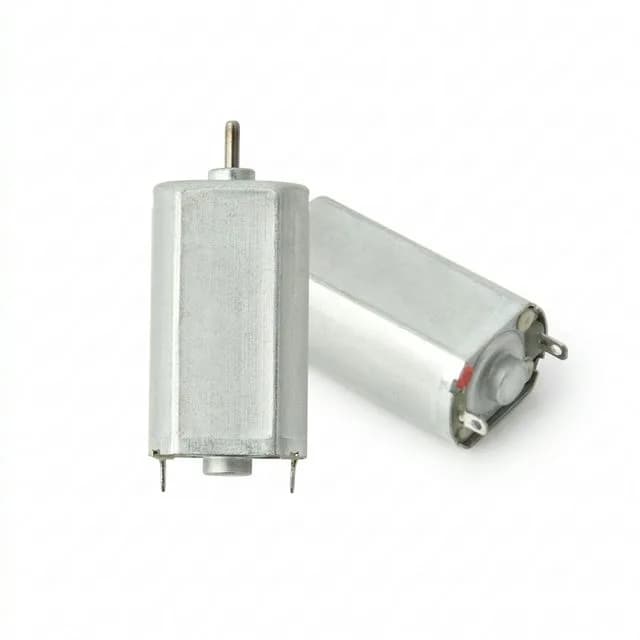
Coreless Motor Sourcing for Medical Robotics: Supply Chain Shifts and OEM Strategies in 2026
Coreless motor sourcing guide for 2026 medical robotics. Compare validation, lead-time, and dual-source moves before RFQ release. Request sourcing review.
Decision-Level Conclusion (2026-W28): Public 2026 signals around da Vinci 5 placement growth, Stealth AXiS clearances, and Automate 2026 coreless motor launches show precision-motion demand widening across medical robotics. OEMs should treat this as a sourcing architecture issue: keep validated tier-1 supply where regulatory timing is tight, but qualify multi-regional DFM options early enough to protect zero-cogging, low-inertia coreless motor capacity for next platforms.
This update analyzes the ongoing shifts in the medical robotics supply chain following Q1/Q2 2026 capacity surges and new supplier entries at Automate 2026. Procurement managers and motion-control engineers must adapt their sourcing strategies to mitigate supply risks while managing strict FDA compliance timelines.
It is written for United States, European Union, and Asia-Pacific OEM teams sourcing coreless DC motors, ironless rotors, and high-speed precision drive modules for surgical, diagnostic, rehabilitation, and medical automation platforms. Pair this brief with the coreless DC motor RFQ checklist, the thermal derating and magnet sourcing guide, and a sourcing review before issuing a supplier nomination.
Applicability and Evidence Boundary (2026-07-10)
This page is a buyer-facing sourcing brief, not a regulatory approval shortcut or a substitute for device-level validation.
| Boundary | What It Means for OEM Buyers |
|---|---|
| Program scope | Applies to new medical robotics platforms, early NPI refreshes, and second-source planning for precision motion assemblies in the United States, European Union, and Asia-Pacific markets. |
| Regulatory limit | Existing FDA-cleared or MDR-certified devices should not swap motors without RA/QA review, risk-file updates, and verification planning. |
| Supplier evidence | Exhibitor and supplier announcements prove availability intent, not medical-device qualification. Treat them as RFQ leads until audits, traceability files, and validation data are reviewed. |
| Planning ranges | Lead-time and cost ranges below are screening assumptions for 2026 sourcing conversations. Confirm them with dated RFQs, PPAP/FAI plans, and supplier capacity statements. |
What Changed: Medical Robotics Capacity Surge
The first half of 2026 has witnessed unprecedented scaling in surgical and medical robotics deployments, placing extreme strain on upstream core-component supply chains, particularly for high-performance ironless and coreless DC motors.
| Date | Event / Signal | Evidence Source / Status | Implication for OEM Sourcing |
|---|---|---|---|
| 2026-04-22 | Intuitive reported 232 da Vinci 5 placements in Q1 2026, up from 147 in Q1 2025. | Official earnings release; high-confidence public demand signal. | More installed systems and variants increase pull on precision motors, encoders, harnesses, and validated motion subassemblies. |
| 2026-02 to 2026-04 | Medtronic announced FDA clearance and CE Mark milestones for Stealth AXiS. | Official Medtronic releases; platform signal, not motor BOM disclosure. | New integrated planning, navigation, and robotics platforms increase RFQ competition for compact, responsive actuation. |
| 2025-03 to 2025-12 | FDA Class 2 da Vinci 5 recall records show connector, control, and system-level correction risks. | FDA recall database; high-confidence quality signal. | Even mature platforms can expose connector and integration issues, so motor changes must include harness and system verification. |
| 2026-04-29 | Yifan Motor announced Automate 2026 coreless DC motors for robotics and medical automation. | Automate/A3 exhibitor release; supplier-readiness signal only. | Asia-Pacific suppliers can expand RFQ options, but OEMs still need QMS, traceability, and medical documentation audits. |
Why It Matters: Technical and Procurement Shifts
For end-effectors and robotic surgical arms, conventional iron-core motors are fundamentally inadequate. They require coreless (ironless) rotors to achieve the zero-cogging (no magnetic preferred positions), ultra-low inertia, and rapid heat dissipation necessary for haptic feedback and sub-millimeter precision.
- Supply Bottleneck at the Top: Historically, medical OEMs relied almost exclusively on a few European legacy giants (like Maxon and Faulhaber). The 2026 capacity surge means relying solely on these top-tier suppliers exposes OEMs to unacceptable lead times.
- Emergence of Validated Alternatives: The launch of high-performance product lines from emerging Asian suppliers changes the landscape. While they may currently only hold internal validations, their entry introduces pricing leverage and capacity relief.
- The DFM Imperative: Procurement teams can no longer source off-the-shelf catalog motors for next-gen robots. They must engage suppliers early in the design phase for custom winding, shaft, and thermal management modifications.
Coreless Motor Sourcing Matrix (2026)
Use this matrix as a first-pass sourcing screen, then confirm each claim through a dated RFQ, supplier audit, and engineering sample build.
| Sourcing Dimension | Traditional European OEMs (e.g., Maxon, Faulhaber) | Emerging Asian Suppliers (e.g., Yifan Motor) |
|---|---|---|
| Lead Time (Scale Production) | 16-24+ weeks when capacity is constrained | 8-12 weeks when inventory and tooling are available |
| NRE & Customization Flexibility | High NRE, strict MOQs for custom windings | Lower NRE, highly cooperative DFM iterations |
| Validation Readiness for Medical | Stronger track record for ISO 13485 documentation, traceability, and medical design history files | Supplier claims may be technically credible, but OEM must prove FDA/MDR device-level suitability |
| Cost at Scale | Premium pricing, stronger lifecycle support | Potential 20-35% unit-cost reduction, subject to qualification, tooling, and yield loss |
Before releasing a second-source RFQ, use the coreless DC motor RFQ checklist to freeze shaft, winding, insulation, connector, encoder, thermal, and cleanliness requirements. For commercial terms, review the MOQ and lead-time negotiation playbook.
Visualizing the Shift: Sourcing Decision Tree
Low-Inertia Sensitivity Radar
The following chart illustrates why coreless technology is non-negotiable for medical robotics compared to standard BLDC or iron-core DC motors.
Who Should Act Now (Buyer Checklist)
| Role | Immediate Action | Expected Artifact | Target Timeline |
|---|---|---|---|
| Procurement Managers | Map existing Tier-1 backlog risks and formally RFQ at least two emerging Asian suppliers for next-gen platforms. | Dual-Source RFQ Package | Within 30 days |
| Motion-Control Engineers | Specify the exact inertia and thermal resistance constraints to avoid over-specifying catalog motors. | Updated Motor DFM Spec | Before next NPI gate |
| Quality/Regulatory Affairs | Audit emerging suppliers for ISO 13485 maturity; assess the gap between internal validation and medical-grade compliance. | Supplier Audit Report | Q3 2026 |
Request a sourcing review if the program needs a second-source shortlist, RFQ package review, or DFM comparison before the next design freeze.
Risks, Limits, and Boundaries
While supply chain diversification is critical, medical OEMs face strict boundaries and evidence gaps when evaluating the 2026 landscape:
2026 Coreless Motor Risk & Vulnerability Matrix
| Risk Factor | Probability | Impact on Sourcing | Mitigation Strategy / Buyer Action |
|---|---|---|---|
| Rare-Earth Material Shortages | High | Limits Tier-1 output of NdFeB magnets used in high-density coreless motors, causing sudden lead-time jumps. | Secure long-term material forecasts with suppliers; assess lower-grade magnet viability for non-critical axes. |
| Validation Latency (FDA/MDR) | High | New Asian suppliers take 12-18+ months to clear device-level testing. | Restrict new suppliers to NPIs (New Product Introductions) rather than swapping mid-lifecycle. |
| Proprietary Actuation "Lock-In" | Medium | Platforms (e.g., Medtronic Stealth AXiS) often use highly customized actuation. Public data on secondary sourcing is an evidence gap. | Push for "Co-engineered Innovation" early in DFM to retain some IP or dual-sourcing rights. |
| Connector/Harness Failures | Medium | As seen in Class 2 device recalls (e.g., da Vinci 5), the motor connector is often the point of failure, not just the motor. | Specify integrated motor-connector validation rather than sourcing them separately. |
- Validation Latency: An emerging supplier like Yifan Motor may have perfected zero-cogging designs internally, but medical-grade validation (FDA 510k/MDR) is an inherently slow process. OEMs must bear the burden of final device-level testing. Switching suppliers mid-lifecycle is cost-prohibitive.
- Hidden NRE Costs: Lower unit costs from emerging suppliers may be offset by higher initial NRE and tooling costs if the OEM requires extreme customization.
- Over-Specification Risk: Engineers accustomed to premium legacy brands often specify parameters that are unnecessarily tight, artificially restricting the usable supplier base. DFM requires relaxing non-critical tolerances.
FAQ
Why are coreless motors mandatory for surgical robots?
Coreless (ironless) rotors lack the iron core found in traditional DC motors. This eliminates "cogging torque" (the jerky magnetic attraction), allowing for perfectly smooth rotation and precise haptic feedback—critical for surgical precision.
Can we swap our Maxon/Faulhaber motor for a cheaper alternative?
Not immediately for existing FDA-cleared products. Any motor change typically triggers extensive re-validation and potential regulatory re-submission. Alternatives should be targeted at new product introductions (NPI) or platforms currently in early R&D.
Are these new Asian suppliers actually ready for medical devices?
Technically, yes; they are demonstrating competitive performance in low-inertia and power density. Regulatory-wise, they often lack the deep medical pedigree of European brands. OEMs must invest engineering resources to bridge the QMS and documentation gap.
When should an OEM avoid qualifying a new motor supplier?
Avoid a supplier change when the device is inside a near-term FDA submission, MDR technical file update, or field-corrective action window. In those cases, use the new supplier for next-generation builds while keeping the current validated motor, connector, and harness stack stable.
Related Buyer Workflows
| Need | Next Page |
|---|---|
| Build a complete RFQ package | Coreless DC Motor RFQ Checklist |
| Model heat rise and magnet constraints | Thermal Derating and Magnet Sourcing Guide |
| Negotiate volume, lead time, and MOQ | MOQ and Lead-Time Negotiation Playbook |
| Plan engineering samples through production | OEM Coreless Motor Development Timeline |
| Review a medical robotics motor shortlist | Contact CML for Sourcing Review |
Sources
| Title | Institution / Publisher | Date | URL / Evidence Link |
|---|---|---|---|
| Intuitive Announces First Quarter Earnings | Intuitive Surgical | 2026-04-22 | Intuitive investor release |
| Intuitive Announces FDA Clearance of Fifth-Generation Robotic System | Intuitive Surgical | 2024-03-14 | Intuitive FDA clearance release |
| Class 2 Device Recall da Vinci 5 | U.S. Food and Drug Administration | 2025-03-12 | FDA recall record Z-1325-2025 |
| Class 2 Device Recall da Vinci 5 | U.S. Food and Drug Administration | 2025-12-19 | FDA recall record Z-0964-2026 |
| Medtronic Receives FDA Clearance for Stealth AXiS Surgical System | Medtronic | 2026-02-13 | Medtronic release |
| Medtronic Announces CE Mark for Stealth AXiS Surgical System | Medtronic | 2026-04-28 | Medtronic CE Mark release |
| Yifan Motor to Unveil High-Performance Coreless DC Motors at Automate 2026 | Automate / A3 exhibitor news | 2026-04-29 | Automate exhibitor release |
| Brushed DC Motors with Innovative Winding Technology | FAULHABER | Current product reference | FAULHABER DC motors |
| IEC 60601-1-2:2014 Medical Electrical Equipment EMC | International Electrotechnical Commission | 2014 | IEC publication page |
| ISO 13485:2016 Medical Devices Quality Management Systems | International Organization for Standardization | 2016 | ISO 13485 page |
Author
Categories
More Posts
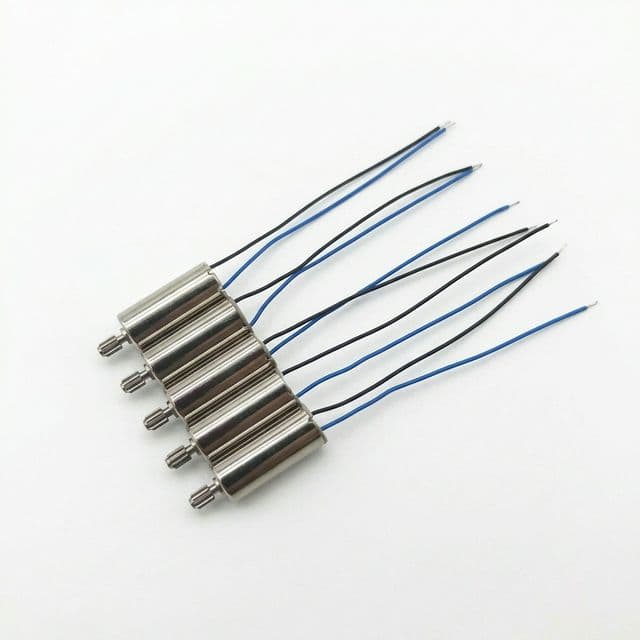
Coreless Motor Gearbox Integration: Pre-Assembled vs Discrete Sourcing (2026)
Compare the hidden costs, warranty risks, and yield impacts of sourcing pre-assembled coreless gear motors versus discrete components for OEM applications.

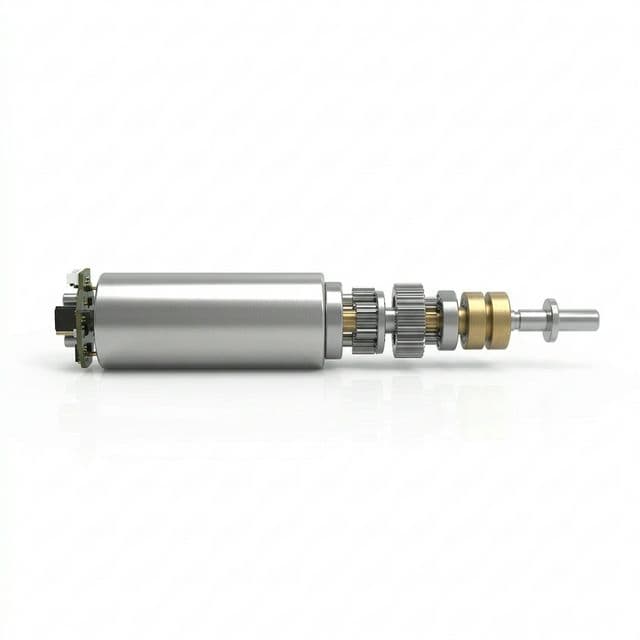
Sourcing Autoclavable Coreless DC Motors for Surgical Hand Tools: Cycle Life, Sealing, and Compliance (2026 Guide)
Coreless DC motor sourcing guide for autoclavable surgical hand tools. Validate cycle life, sealing, compliance evidence, and RFQ risks before supplier review.
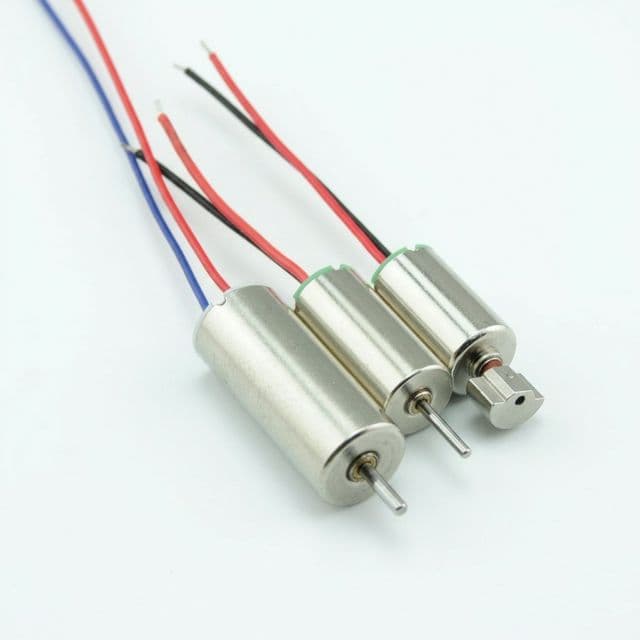
Precious Metal vs Graphite Brushes in Coreless Motors: OEM Sourcing Guide
A procurement-focused breakdown of coreless DC motor commutation options. Learn when to source precious metal vs graphite brushes to balance MTBF, duty cycle, and unit cost.