
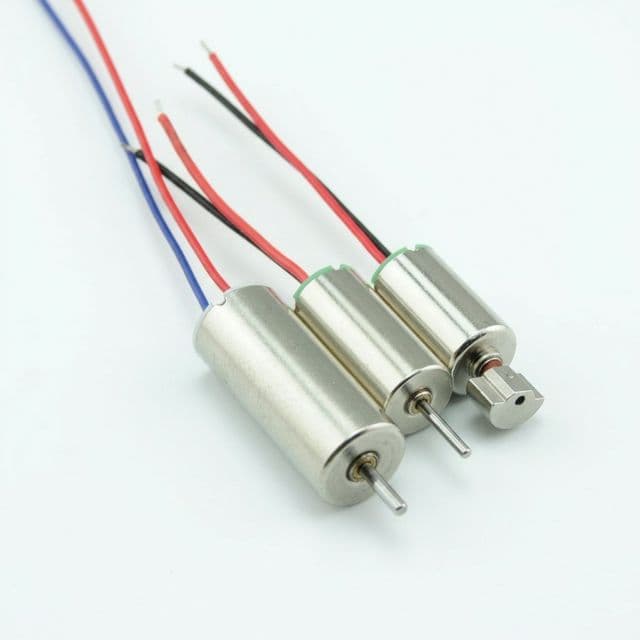
Precious Metal vs Graphite Brushes in Coreless Motors: OEM Sourcing Guide
A procurement-focused breakdown of coreless DC motor commutation options. Learn when to source precious metal vs graphite brushes to balance MTBF, duty cycle, and unit cost.
For buyers and engineers sourcing brushed coreless DC motors, the most critical reliability decision often happens inside the motor case: the choice of commutation system. Selecting between precious metal and graphite brushes is not a matter of "better" or "worse." It is a strict technical tradeoff between current capacity, friction, electrical noise, and operating life.
In B2B purchasing, selecting the wrong commutation for your duty cycle guarantees premature field failures or forces you to overpay for unneeded robustness. This comprehensive guide provides a framework to normalize supplier claims, evaluate lifecycle costs, and match the brush technology to your exact application envelope. By understanding the core engineering differences, environmental boundary conditions, specification dimensions, and failure risks, procurement teams can make highly informed decisions when negotiating with motor OEMs.
Scope note, updated June 24, 2026: This guide applies to small brushed coreless DC motors in global OEM sourcing. It does not replace part-number-level endurance, thermal, acoustic, EMC, or safety qualification, and it does not apply directly to brushless EC motors or large industrial brushed motors.
Related sourcing workflows: pair this brush decision with the coreless DC motor RFQ checklist, the coreless vs ironless terminology guide, and the thermal derating and magnet sourcing guide before requesting samples.
1. The Core Engineering Difference: Physics of Commutation
Brushed coreless motors rely on physical contact to transfer power from the stationary terminals to the spinning rotor. The material used for this contact defines the motor's operating limits, efficiency, and ultimate lifespan. This mechanical interface is a major determinant of the overall system's electromagnetic compatibility (EMC), acoustic profile, and thermal behavior.
Precious Metal Commutation
Typically an alloy of silver, gold, palladium, or platinum, these multi-wire brushes are engineered for ultra-low contact resistance and minimal mechanical friction. The precious metal alloy ensures that oxidation does not impede the electrical connection, even after long periods of standstill. They maintain a very clean electrical signal over their lifespan but cannot survive high current densities or arcing. Precious metal commutators are usually paired with a silver-plated or gold-plated commutator to maintain the low-resistance interface. They excel in continuous, steady-state operation at low speeds and low loads. The multi-fingered brush design ensures multiple points of contact, mitigating the risk of a single point of failure but rendering them highly susceptible to damage from current spikes.
Graphite (Carbon-Copper) Commutation
These robust brushes combine the lubrication of graphite with the conductivity of copper (or silver). They are physically larger, create more friction, and generate some internal dust as they wear. However, they can withstand severe current spikes, PWM driving, and aggressive start-stop reversals without catastrophic failure. Graphite brushes require a harder commutator material, typically a copper alloy, to withstand the mechanical wear. The carbon content provides dry lubrication, which is essential for high-speed operation and continuous heavy loading. While they have a higher voltage drop across the brush-commutator interface, their thermal mass and robust construction make them the default choice for dynamic positioning, high-torque applications, and environments where electrical noise is secondary to mechanical resilience.
2. Decision Matrix: Precious Metal vs. Graphite
When evaluating vendor specifications, use this side-by-side comparison to qualify whether a proposed motor fits your operational reality. A single misalignment here can drastically reduce the Mean Time Between Failures (MTBF).
| Specification / Attribute | Precious Metal Brushes | Graphite Brushes | Sourcing Implication | Buyer Decision Point |
|---|---|---|---|---|
| Optimal Duty Cycle | Continuous operation, stable loads, slow speed | Frequent start-stop, rapid reversing, high speed | Graphite is mandatory for highly dynamic positioning tasks. | Evaluate motion profile. If reversing > 1Hz, reject precious metal. |
| Current Handling | Low (typically < 1A, highly size-dependent) | High (can handle significant peak/stall currents) | Precious metal fails quickly if subjected to repeated stall conditions. | Audit peak current draw. If > rated current, graphite is safer. |
| No-Load Current (Friction) | Extremely low (high efficiency) | Higher due to spring pressure and brush friction | Precious metal is required for battery-operated micro-devices. | For IoT/battery devices, model power budget against graphite's drag. |
| Acoustic & Electrical Noise | Very low EMI, quiet operation | Higher audible noise, more EMI | Precious metal simplifies EMC compliance in medical/signal equipment. | If passing strict medical EMI/EMC standards, prefer precious metal. |
| Starting Voltage | Very low | Higher | Precious metal allows smoother control at very low speeds. | For precision dosing/infusion, precious metal offers better linearity. |
| Size Availability | Down to < 6mm diameter | Usually restricted to > 10mm diameter | Micro-miniaturization often forces the use of precious metal. | Check space constraints. Sub-8mm usually necessitates precious metal. |
| Drive Compatibility | Best with linear drives; needs CLL for PWM | Excellent for high-frequency PWM | Factor in the cost of specific drive topologies during TCO analysis. | If using cheap PWM controllers, graphite prevents premature arcing. |
3. Boundary Conditions and Operating Environments
Understanding where the motor will operate is just as crucial as understanding what it will do. The ambient environment heavily influences brush wear and overall motor longevity.
High Altitude and Vacuum Environments
Graphite brushes rely on moisture in the air to maintain their lubricating film on the commutator. In high-altitude aerospace applications or vacuum environments, the lack of humidity causes graphite to wear at an accelerated rate, sometimes failing in a fraction of its normal lifespan. In these scenarios, special brush formulations (like silver-graphite with specific additives) or entirely different motor technologies (like brushless DC) must be sourced. Precious metal brushes are less sensitive to humidity drops, making them a viable alternative for low-load space or aviation instruments.
Temperature Extremes
Extreme temperatures alter the mechanical properties of the brush system. High heat can soften the spring mechanisms holding graphite brushes against the commutator, reducing contact pressure and increasing electrical noise. Conversely, extreme cold can make graphite brittle. Precious metal brushes maintain more consistent performance across broad temperature ranges due to the inherent stability of the noble metals, provided the current remains strictly within limits.
Corrosive and Chemical Environments
In medical or industrial settings where motors might be exposed to sterilizing gases or corrosive vapors, precious metal brushes offer superior resistance to oxidation. Graphite brushes, while robust mechanically, can absorb chemicals or suffer from degradation of their copper content if exposed to harsh industrial atmospheres.
4. Specification Dimensions for Buyers
When drafting an RFQ, buyers must look beyond the basic speed and torque requirements. The following specification dimensions are critical for ensuring the right commutation choice:
- Terminal Resistance: This dictates the motor's starting current and efficiency. Precious metal motors typically exhibit lower terminal resistance for their size, but this resistance can fluctuate if arcing damages the delicate brush fingers.
- Inductance: High inductance exacerbates arcing when the brush breaks contact with a commutator segment. Buyers must mandate that suppliers provide inductance figures to ensure PWM controllers can be properly tuned to minimize back-EMF spikes.
- Rotor Inertia: In highly dynamic applications, low rotor inertia is desired. While the brush type doesn't directly dictate inertia, motors designed for graphite brushes often have slightly heavier commutators to handle the physical wear, which marginally increases inertia.
- Thermal Resistance: This specifies how well the motor dissipates heat. Graphite-brushed motors often generate more internal heat due to friction and higher current capacity. Buyers must ensure the thermal resistance (housing to ambient) is sufficient for the application's duty cycle.
5. Failure Risks and Lifecycle Degradation
Supplier datasheets highlight ideal conditions. Procurement teams must understand how these motors fail when pushed out of bounds, and how to spot the early warning signs of degradation.
How Precious Metal Commutators Fail
If a precious metal commutator is subjected to high inductance loads or PWM drives without adequate filtering (like CLL - Capacitor Long Life technology), micro-arcing occurs. The extreme heat of the arc melts the fine precious metal wires, causing rapid degradation.
- The Degradation Path: Increased contact resistance -> erratic speed control -> thermal runaway at the contact point -> ultimate open-circuit failure.
- Buyer Defense: Demand suppliers validate the motor's life under your specific drive topology. Require long-term lifecycle testing under the exact PWM frequency and load profile you intend to use.
How Graphite Commutators Fail
Graphite brushes physically wear down, turning into fine conductive dust. In a closed coreless motor, this dust can accumulate in the commutator gaps.
- The Degradation Path: Dust accumulation -> partial short circuits between segments -> increased current draw to maintain torque -> severe overheating -> total motor failure.
- Buyer Defense: For continuous-duty applications where graphite is chosen, request accelerated life test (ALT) data verifying that dust accumulation does not cause premature bridging under your load conditions. Inquire about internal design features that manage or trap graphite dust.
6. Supplier Communication Fields and RFQ Strategies
To avoid procuring the wrong motor, your RFQ must force the supplier to commit to specific operational parameters. Include the following communication fields in your next vendor interaction:
- "Define the Maximum Allowable Peak Current (and duration)." Do not accept a generic "Stall Current" figure. Ask for the maximum current the brushes can handle for 10ms, 100ms, and 1s without suffering permanent degradation.
- "Provide the No-Load Current vs. Temperature Curve." This will reveal how much friction the graphite brushes introduce at different operating temperatures.
- "Detail the recommended PWM frequency and filtering." If sourcing precious metal, force the supplier to specify the exact RC filter (CLL) values required to prevent arcing, or confirm if CLL is integrated.
- "What is the expected wear rate of the brushes under our specified load?" Reputable OEMs will have empirical data on graphite wear rates (e.g., mm per 1,000 hours at nominal load).
For commercial comparison after the technical shortlist, use the coreless motor MOQ and lead-time negotiation playbook so brush technology, sample timing, tooling risk, and unit price are evaluated together.
7. Visualizing the Commutation Lifecycle Trade-off
The following workflow illustrates how duty cycle dictates the commutation choice, ultimately impacting the Total Cost of Ownership (TCO).
8. Procurement & Engineering Acceptance Checklist
Do not accept a quotation without verifying the commutation choice against your system constraints. Use this checklist during supplier RFQ discussions and prototype acceptance:
- Define the PWM Frequency: If using precious metal, verify if the drive frequency and inductance require integrated capacitors (CLL) to prevent brush erosion. Ensure the supplier documents the required drive topology.
- Document Peak Currents: Calculate the absolute maximum stall current. Ensure the selected brush type is rated to survive this, even for milliseconds. Document the acceptance threshold for current spikes.
- Establish the Acoustic Baseline: If your device is patient-facing or office-based, mandate dBA noise thresholds. Precious metal will easily pass; graphite may require tighter mechanical tolerances. Establish a test protocol for acoustic validation.
- Check the Power Source: For battery-operated devices, calculate the acceptable no-load current. Graphite's mechanical friction often drains small cells unacceptably fast. Set a strict mA limit for no-load current.
- Review Expected MTBF in Cycles, Not Just Hours: 10,000 hours of continuous rotation is vastly different from 10,000 hours of 1Hz reversing. Force the supplier to quote MTBF under your specific motion profile and load.
- Verify Dust Management: For graphite models, confirm how the design prevents conductive dust from shorting the commutator over its intended lifespan.
9. Frequently Asked Questions (FAQ)
Real buyer questions regarding commutation choices:
Q: Can we use a precious metal motor for a robotic gripper?
Generally, no. Grippers require frequent stalling against a load, which causes extreme current spikes. These spikes will arc and melt precious metal brushes very quickly. Graphite is the standard for high-torque, stalling applications like grippers and robotic joints.
Q: Why do some suppliers offer "Silver-Graphite" options?
Silver-graphite is a hybrid approach used to bridge the gap. By infusing silver into the graphite, suppliers lower the contact resistance and electrical noise while maintaining much of the mechanical robustness of standard graphite. It carries a price premium but solves specific edge cases in precision automation where both low noise and moderate durability are required.
Q: Are brushless (BLDC) motors always better than either brushed option?
Not necessarily. While BLDC motors eliminate brush wear entirely, they require complex, expensive electronic commutation (controllers) and multi-wire harnesses. For cost-sensitive, high-volume disposable devices, or systems where simple two-wire analog control is mandatory, a properly specified brushed coreless motor remains the most economical and reliable choice.
Q: How does temperature and humidity affect brush wear?
Extreme ambient temperatures alter the lubricant properties in the bearings and the contact mechanics of the brushes. Graphite can handle higher operating temperatures, but humidity is critical. In zero-humidity environments (like high-altitude aerospace or vacuum chambers), standard graphite wears exceptionally fast without specific material additives. Precious metal is generally more stable across humidity variations.
Q: If our application requires PWM control, which brush type is safer?
Graphite is significantly safer for standard PWM control. Precious metal brushes are highly susceptible to arcing caused by the rapid switching of inductive loads. If you must use precious metal with PWM (e.g., for efficiency reasons), you must incorporate a CLL (Capacitor Long Life) circuit or ensure the PWM frequency is optimized to minimize voltage spikes.
10. Conclusion and Next Steps for OEM Sourcing
Navigating motor specifications requires looking past the glossy catalog data. The choice between precious metal and graphite brushes is a foundational engineering decision that dictates the reliability, acoustic signature, and lifecycle cost of your final product.
By establishing whether your application is continuous and battery-sensitive (favoring Precious Metal) or dynamic and torque-heavy (favoring Graphite), you instantly filter out 50% of incorrect supplier proposals. Do not let vendors push a "standard" off-the-shelf motor without validating the commutation technology against your specific boundary conditions, load profile, and required MTBF.
If you are currently evaluating coreless motor suppliers and need to audit their claims, contact our engineering team for a duty-cycle review. We can help you model your load profile, analyze thermal risks, and select the lowest-risk motor architecture for your production ramp.
Sources & Technical References
- Maxon: Precious metal brushes vs. graphite brushes
- FAULHABER: Mechanical commutation
- FAULHABER: Brushed DC Motors with innovative winding technology
- FAULHABER Technical Information: DC Micromotors
Author
Categories
More Posts
Coreless Motor OEM NRE and Tooling Cost Breakdown for Buyers
A buyer-first method to evaluate NRE, tooling, validation, and hidden implementation costs before approving a custom coreless motor program.

Coreless Motor Sourcing for Medical Robotics: Supply Chain Shifts and OEM Strategies in 2026
Coreless motor sourcing guide for 2026 medical robotics. Compare validation, lead-time, and dual-source moves before RFQ release. Request sourcing review.
RFQ Checklist for Coreless DC Motor OEM Projects
A practical RFQ checklist to speed up technical alignment, quoting, and sample planning for custom coreless DC motor sourcing.