
12mm Shaft DC Motor Fit Tool and Guide
Screen speed, torque, duty, and shaft fit before RFQ. A 12v dc motor 12mm query does not say what 12mm measures: motor body, gearbox, or shaft. Confirm the 12V range and selected-part drawing.
Published: 2026-05-14 | Last updated: 2026-10-13
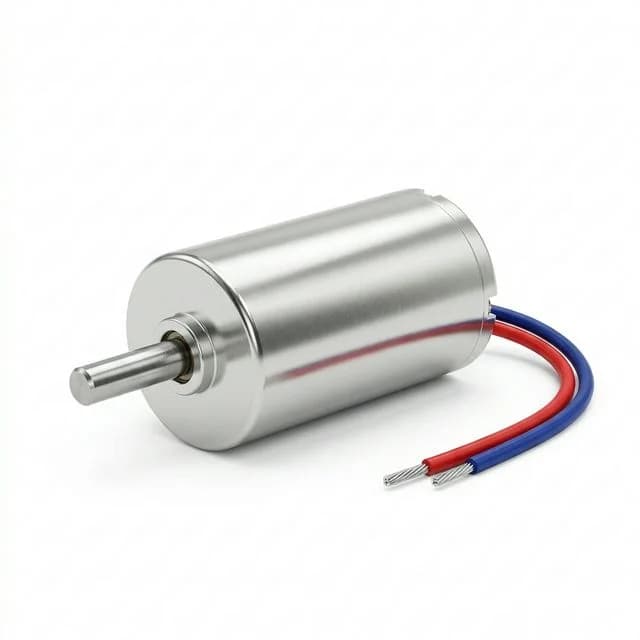
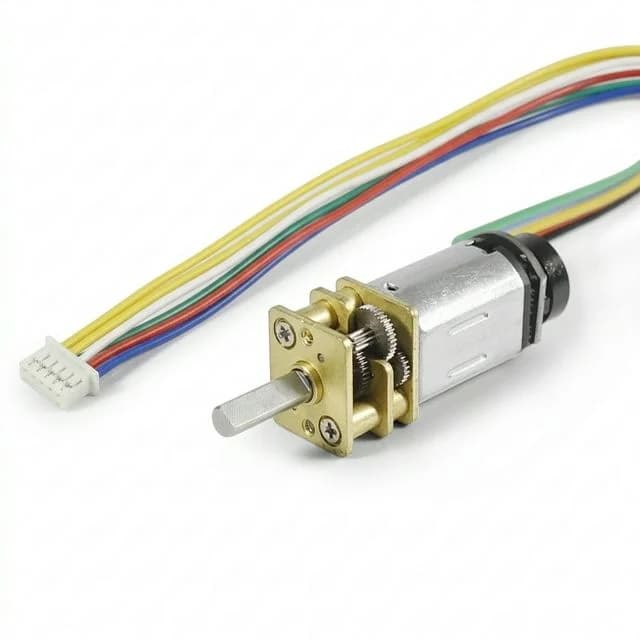
Report summary: conclusions and key numbers
Core conclusions are paired with quantifiable context before deep-dive sections.
Not a complete interface spec
The phrase does not define shaft profile, diameter tolerance, usable length, overhang, or load rating.
3mm D-shaft / 9mm length
One 10x12mm micro-gearbox example only; verify the dimensions on the selected motor drawing.
ISO 286
Use it to specify a fit after choosing nominal shaft and bore sizes; it does not identify a motor shaft.
0.4N radial at 4mm
maxon RE10 Part 256099 example; its 0.15N dynamic axial limit is part-specific, not a 12mm-class guarantee.
Request PN drawings and load limits
Confirm shaft profile, tolerance, length, overhang, runout, coupler fit, and radial/axial ratings before fixture release.
- Need a fast pre-RFQ shortlist for 12mm direct-drive vs geared options.
- Need to verify whether 12mm brushed motor options should stay direct-drive or move to a gearhead.
- Need to identify plastic-bearing parts and verify their material and compliance evidence.
- Need output-speed/torque feasibility check before choosing ratio and driver class.
- Need to confirm shaft profile, length, load, overhang, and drawing details.
- Need one concise sourcing brief with evidence boundaries and next actions.
- Safety-critical products needing certified thermal/lifetime tests.
- Projects requiring guaranteed output-speed tolerance without supplier test data.
- Projects trying to infer resin, gear material, or compliance status from `12mm plastic dc motor` wording alone.
- Projects treating `12mm shaft dc motor` as proof of a specific shaft diameter, shaft profile, or bearing-load rating without selected-PN drawings.
- Applications with explosive atmosphere compliance or IP67 guarantee.
- Mass production release without bench validation and sample approval.
Methods and evidence
Transparent formulas, dated sources, and explicit known/unknown boundaries.
| Method block | Formula / rule | Decision value |
|---|---|---|
| Mechanical power estimate | P = 2 * pi * n / 60 * T | Converts speed and torque into shaft mechanical load. |
| Modeled current estimate | I ~= P / (V * eta_plan) + 0.08 A; eta_plan = 58% (cost), 62% (noise), 67% (life) | Priority-based planning proxy only; not a selected motor or supplier-rated current. |
| Power-loss estimate | P_loss ~= P_mech * (1 / eta_plan - 1) | Uses the same planning-efficiency proxy; excludes PN-specific motor, gearbox, driver, and thermal-path losses. |
| Geared output speed estimate | n_out ~= n_motor / i | Provides first-pass speed estimate before tolerance and load corrections. |
| Startup surge estimate | I_start ~= 2.4x to 5.2x * I_rated | Uses fixed-model baseline plus vendor-observed LP/MP/HP envelope to avoid optimistic startup-current assumptions. |
| Startup droop guardrail | V_min ~= V_nom - I_start * R_source (0.15-0.30 ohm placeholder) | Illustrative source-resistance range only; replace it with measured worst-case pack, wiring, and connector resistance before driver selection. |
| Bulk-capacitance first pass | C_bulk >= I_step * dt / dV | Use datasheet-level ripple targets as initial sizing, then validate with oscilloscope waveforms. |
| Driver thermal check | P_driver ~= I_rms^2 * RDS(on) | RMS current governs thermal stress; peak-current labels are not continuous-use guarantees. |
| Driver junction-rise estimate | DeltaT_j ~= P_driver * RthetaJA (DRV8833 RTY ~40.5C/W; DRV8212 DRL/DSG ~138.5/77.9C/W) | Same current profile can produce very different junction rise depending on package and PCB thermal path. |
| DRV8833 package-current boundary check | I_rms <= 0.5A (PW) or 1.5A (PWP/RTY) | DRV8833 current ceiling depends on package; selecting the wrong package can invalidate continuous-current assumptions. |
| Winding-temperature drift check | R(T) ~= R22 * (1 + 0.004 * (T - 22C)) | Adds resistance drift to current planning; hot windings can shift effective current and torque behavior. |
| RE10 thermal budget cue | T_winding ~= T_ambient + P_loss * (37.5 + 9.0) K/W | Use maxon RE10 thermal constants as a first-pass check and avoid exceeding winding-temperature boundaries (for example 85C on PN256099). |
| Shaft-load boundary check | F_radial <= 0.4N @ 4mm and F_axial(dynamic) <= 0.15N | Micro-motor side-load limits are small; wheel/pulley overhang can invalidate direct-drive assumptions even when torque/current appear feasible. |
| Shaft-interface check | shaft profile + diameter tolerance class + usable length + overhang + bearing support | A listing for `12mm shaft dc motor` does not define the shaft interface; use drawing-controlled evidence. |
| Driver absolute-max + wake gate | VM_transient < 11.8V and t_wake >= 1ms | Prevents invalid sequencing where the driver is commanded before full wake-up or exposed to voltage overshoot. |
| Standby-current budget check | I_sleep_total ~= I_driver + I_system (DRV8833 ~1.6uA, DRV8212 ~7nA typ.) | Battery-life planning for long-sleep products should include driver standby current, not only active-load behavior. |
| Current-chop sizing baseline | I_chop ~= 200mV / R_sense | Connects DRV8833 current regulation to measurable R_sense values and the 3.75us blanking window. |
| Direct-drive speed margin | speed_margin = n_ref_max - n_target | Flags when target speed exceeds RE10-class 14k rpm reference envelope. |
| Brushed speed-life window | Prefer ~4,000-9,000 rpm for life/efficiency tradeoff | At low-speed targets, a gearhead path is often more practical than forcing direct-drive operation. |
| Nominal-to-exact ratio guardrail | n_out exact ~= n_motor / i_exact | For high-ratio gearheads, use exact ratio and tolerance instead of nominal shorthand. |
| GPX10 stage-penalty check | eta_max(1..5) = 90%, 81%, 73%, 65%, 59% | Stage count increases ratio but typically lowers efficiency and increases backlash. |
| REACH article communication gate | SVHC > 0.1% (w/w) => Art.33 info flow; Art.7(2) notification when applicable | RoHS-only declarations are not sufficient for EU article-level chemical communication workflows. |
| Plastic material declaration gate | Plastic/resin grade + additives + flame retardants + phthalates + drawing-controlled parts | `Plastic dc motor` wording must become a material and compliance evidence request, not a generic material promise. |
| Plastic family counterexample gate | plastic gearmotor family != 12mm N20 family; gear material and accessory material must be read from PN pages | Pololu examples show plastic DC gearmotors and micro metal gearmotors are different public product families, so plastic wording cannot be used as a geometry or gear-material guarantee. |
| RoHS timing and exemption gate | RoHS phthalate restrictions: general EEE 2019-07-22; medical/monitoring 2021-07-22; verify exemptions separately | A valid compliance packet needs substance coverage, category timing, and exemption mapping instead of a generic RoHS statement. |
| SVHC dataset boundary check | Candidate List entries != Registry intentions entries | Use Candidate List for legal obligations and use Registry of intentions for forward-looking watchlists only. |
| Confidence score | Base 91 - condition penalties | Reduces confidence in high duty, high heat, low voltage cases. |
| 12V-to-6V current scaling rule | I_stall(12V) ~= 0.5 * I_stall(6V) for same mechanical power class (e.g. 0.75A vs 1.6A) | Allows reuse of 6V mechanical specs while halving the driver current budget, easing driver thermal stress. |
| 12V N20 brush-life tradeoff | Carbon brushes (HPCB) > Precious metal (LP/MP) for longevity | 12V N20 selection often forces a move to carbon brushes, increasing life but also increasing base friction and starting voltage. |
| Source | Date | Coverage | Known / Unknown |
|---|---|---|---|
| Pololu Micro Metal Gearmotors datasheet (Rev 6.2) | Published 2026-02 (accessed 2026-05-14) | 10x12mm form factor family; exact ratios for each nominal ratio (150:1 maps to 150.58:1), and no-load speed/current tolerance notes (about +/-20% speed, +/-50% current). | Known with vendor scope |
| Pololu 3046 resource page (1000:1 reference) | Accessed 2026-05-27 | Public page confirms 10x12mm gearbox cross-section, 9mm x 3mm D-shaft geometry, hardened stainless-steel gears, brass/steel gearbox plates, optional plastic encoder housing/brackets, +3.5mm motor-length delta for 1000:1 variants, and instantaneous-torque cautions (20/25 kg.mm by ratio class). | Known with vendor scope |
| Pololu Plastic DC Gearmotors category | Accessed 2026-06-04 | Public category page separates plastic DC gearmotors from micro metal gearmotors: examples include 6mm sub-micro plastic planetary gearmotors and mini plastic gearmotors intended around 4.5V (3-6V range) with 9.7mm x 3mm D-shaft output. | Known with product-family scope |
| Pololu 150:1 Micro Metal Gearmotor LP 6V specs | Accessed 2026-05-14 | Typical no-load speed 90 rpm, max output power 0.25W, stall torque 1.1 kg.cm, stall current 0.36A, and current-at-max-efficiency 0.11A for LP 6V at nominal 150:1 (status: Active and Preferred). | Known with vendor scope |
| Pololu 150:1 Micro Metal Gearmotor MP 6V specs | Accessed 2026-05-14 | Typical no-load speed 150 rpm, max output power 0.48W, stall torque 1.3 kg.cm, stall current 0.67A, and max-efficiency point near 110 rpm / 0.26 kg.cm for MP 6V 150:1 (status: Active and Preferred). | Known with vendor scope |
| Pololu 150:1 Micro Metal Gearmotor HP 6V specs | Accessed 2026-05-14 | Typical no-load speed 210 rpm, max output power 1.2W, stall torque 2.4 kg.cm, stall current 1.6A, and current-at-max-efficiency 0.31A for HP 6V 150:1 (status: Active and Preferred). | Known with vendor scope |
| Pololu 150:1 HP 6V FAQ | Accessed 2026-05-14 | Pololu advises continuous operation around/below about 25% of stall current or torque and warns high-ratio gears can be damaged if stalled. | Known with boundary |
| maxon RE10 product page (Part No. 256105) | Accessed 2026-04-26 | 12V reference with 12,500 rpm no-load speed, 14,000 rpm max speed, 1.55 mNm nominal torque, 0.36A stall current, and NRND lifecycle flag. | Known |
| maxon RE10 product page (Part No. 256099) | Accessed 2026-05-27 | 4.5V RE10 reference includes thermal constants (37.5 K/W housing-ambient, 9.0 K/W winding-housing), 85C max winding temperature, and shaft-load limits (0.4N radial at 4mm, 0.15N dynamic axial). | Known |
| ISO 286-1 public standard page | Published 2010-04; reviewed/confirmed 2026; accessed 2026-10-10 | Defines the ISO code system, concepts, terminology, and general-purpose tolerance-class selection for linear-size fits. It supports coupler-fit specification, but it does not define a universal 12mm motor shaft diameter, shaft profile, material, or bearing-load limit. | Known with standards-scope boundary |
| ISO 286-2 public standard page | Published 2010-06; reviewed/confirmed 2026; accessed 2026-10-10 | Provides standard tolerance classes and limit deviations for holes and shafts calculated from ISO 286-1. This is fit-table evidence, not proof of the shaft a supplier will ship for a 12mm motor listing. | Known with standards-scope boundary |
| maxon GPX10 catalog page (EN-373) | Accessed 2026-04-26 | Reduction 4:1/16:1/64:1/256:1/1024:1 with 1-5 stages; max efficiency 90/81/73/65/59%; average backlash 1.5°-2.5°; continuous input speed 12,000 rpm; catalog page marks data as provisional. | Known with provisional boundary |
| FAULHABER Precision Gearheads Technical Information | Accessed 2026-04-26 | Intermittent torque should be limited to short intervals and <=5% duty cycle; exceeding continuous torque can reduce service life; recommended motor steady-state temperature 60-70C to protect lubricant. | Known with boundary |
| FAULHABER DC Motors Technical Information | 19th edition 2026 (accessed 2026-05-14) | Precious-metal commutation is positioned for continuous duty near highest-efficiency points, graphite for dynamic high-power/periodic overload use; operational lifetime is typically 1,000-5,000 h under typical load; winding resistance temperature coefficient alpha22 is 0.004 K^-1; PWM recommendation at/above 20 kHz. | Known with scope |
| TI DRV8833 product page + datasheet | Accessed 2026-05-09 | VM range 2.7V-10.8V, 360mOhm HS+LS RDS(on), sleep current around 1.6uA, and package-dependent full-scale current: 1.5A RMS per H-bridge in PWP/RTY vs 0.5A RMS in PW (parallel outputs: 3A vs 1A RMS). | Known |
| TI DRV8833 datasheet (Rev.E) | Accessed 2026-05-14 | Absolute max VM is 11.8V; UVLO falling threshold is around 2.6V with 90mV hysteresis; wake-up time is up to 1ms; nSLEEP guidance includes ~6.5V clamp and 20-75k pull-up range when tied to VM; OCP threshold is about 2.0-3.3A with ~4us deglitch, TSD around 150C with about 45C hysteresis, and package thermal resistance near 40.5C/W. | Known |
| TI DRV8212 product page | Accessed 2026-05-09 | VM range 1.65V-12V, peak output current 4A, 280mOhm HS+LS RDS(on), and typ sleep current around 7nA on product details. | Known with boundary |
| TI DRV8212 datasheet (Rev.B) | Accessed 2026-05-09 | UVLO thresholds are 1.65V rising / 1.30V falling with 80mV hysteresis and about 3.8us UVLO deglitch; wake delay is about 100us; current capability depends on PCB/system thermal design and thermal examples derate RDS(on) by ~1.5x at 85C; package thermal resistance differs materially (~138.5C/W DRL vs ~77.9C/W DSG). | Known with boundary |
| TI Application Report SLVA505A | Published 2024-07 (accessed 2026-05-09) | Driver current limits are thermally constrained by RMS current and conduction losses scale with I^2 * RDS(on). | Known |
| EUR-Lex Directive 2011/65/EU (RoHS baseline) | Accessed 2026-04-26 | RoHS framework and Annex II concentration-limit structure for homogeneous materials. | Known |
| EUR-Lex Directive (EU) 2015/863 | Accessed 2026-04-26 | Annex II expanded to 10 substances including DEHP/BBP/DBP/DIBP at 0.1%; general applicability from 2019-07-22 and medical/monitoring categories from 2021-07-22; exemption and category scope still require selected-PN review. | Known |
| ECHA news: ECHA adds two hazardous chemicals to the Candidate List | Published 2026-02-04 (accessed 2026-05-27) | ECHA states Candidate List now has 253 entries after adding two substances and reiterates Article 33/7 obligations with the six-month notification window counted from 2026-02-04. | Known |
| ECHA Candidate List table | Accessed 2026-10-13 | Candidate List table shows 253 results and states the website list is the authentic version for legal obligations. ECHA currently plans to maintain this legacy dataset through December 2026 during the ECHA CHEM transition. | Known |
| ECHA Registry of SVHC intentions until outcome | Accessed 2026-05-09 | Registry page states last updated 2026-02-04 and contains 273 unique substances/entries; it also notes transition to ECHA CHEM (available since 2025-09-16), and the registry tracks intentions-until-outcome rather than current Candidate List obligations. | Known |
| ECHA: Information on Candidate List substances in articles | Accessed 2026-05-09 | Legacy substances-in-articles dataset reports last update at 2019-12-18 and indicates no further updates, redirecting users to SCIP and ECHA CHEM-era data sources. | Known with limitation |
| ECHA SCIP database guidance | Accessed 2026-04-26 | SCIP notification duty applies from 2021-01-05 for EU-supplied articles containing Candidate List SVHC above 0.1% w/w; submission timing is tied to market placement duties and supplier role. | Known with role boundary |
| EUR-Lex Directive (EU) 2018/851 (Waste Framework update) | Accessed 2026-04-26 | Article 9 provisions establish article-level information obligations that feed SCIP workflows for SVHC-containing products in EU supply chains. | Known |
| maxon: The selection of brushed DC motor (Technical article 130) | Published 2019-11 (accessed 2026-04-26) | Brushed operation often prefers ~4,000-9,000 rpm for efficiency/life tradeoff; cited life ranges vary from <100 h to >10,000 h depending on commutation system and load. | Known with scope |
| On-page sizing model (this tool) | 2026-05-14 | Pre-RFQ current/power/fit scoring; not a substitute for PN-level endurance validation. | Known |
| Public standards for 12mm motor electrical and thermal limits | Pending | No reliable public standard dataset found; vendor PNs remain authoritative. | Pending confirmation / no reliable public dataset |
What the published evidence establishes
These source-backed examples show where motor and shaft labels are useful, where they stop, and what to confirm on the selected part number.
| Topic | New fact | Applicable condition | Decision effect | Certainty |
|---|---|---|---|---|
| What a 6V N20 150rpm label does and does not specify | Pololu Rev 6.2 maps nominal 150:1 to exact 150.58:1 and explicitly treats speed/current figures as typical no-load values. | Applies to Pololu micro metal gearmotor family and should be treated as vendor-scope evidence, not a global N20 standard. | Do not treat the nominal ratio and speed label as a production specification; confirm the exact ratio and vendor PN before RFQ commitment. | Known with vendor scope |
| Plastic wording and material scope | `12mm plastic dc motor` is not a material certificate; it can refer to a plastic housing, gear or cover, molded bracket, insulation, or a compliance-material concern. | Applies when a request says plastic but does not identify resin grade, additive package, flame-retardant class, or drawing-controlled plastic parts. | Identify the selected product family, then require resin/material declarations, part drawings, RoHS phthalate coverage, and REACH article-level evidence before supplier release. | Known as routing decision; material evidence remains supplier-specific |
| Plastic gearmotor family counterexample | Pololu separates Plastic DC Gearmotors from Micro Metal Gearmotors: plastic examples include 6mm sub-micro plastic planetary units and mini plastic gearmotors around 4.5V, while the 10x12 micro metal family uses hardened stainless-steel gears and optional plastic encoder housings/brackets. | Applies as a public vendor counterexample, not as a universal taxonomy for every supplier listing. | Do not infer 12mm geometry, plastic geartrain, or compliance status from plastic wording. Ask whether plastic means gearbox gears, encoder cover, bracket, fan/impeller, lead insulation, or another drawing-controlled part. | Known with vendor-scope counterexample |
| LP/MP/HP split at same ratio | At 6V and nominal 150:1, Pololu LP/MP/HP variants list about 90/150/210 rpm no-load speed and 0.36/0.67/1.6A stall current. | Same nominal ratio does not imply same electrical load, speed, or thermal behavior across motor variants. | Split RFQ branches by LP/MP/HP motor type and re-run driver/rail sizing per branch. | Known with vendor scope |
| LP/MP/HP mechanical-output spread at same ratio | At 6V and nominal 150:1, Pololu LP/MP/HP variants span stall torque 1.1/1.3/2.4 kg.cm and max output power 0.25/0.48/1.2W. | Applies to published LP/MP/HP variant pages and highlights that ratio labels alone do not define one output class. | Include variant-level torque/power envelope in RFQ instead of sourcing by nominal ratio phrase only. | Known with vendor scope |
| Startup-current multiplier boundary from vendor data | From current-at-max-efficiency to stall-current points, Pololu LP/MP/HP imply about 3.3x/4.5x/5.2x current multiples, exceeding a fixed 2.4x heuristic in many branches. | This envelope is vendor-specific and should be treated as a guardrail, not a universal motor law. | Use conservative startup-current envelope checks for rail and driver sizing; avoid relying on one fixed multiple. | Known with vendor scope |
| 12mm naming vs package-geometry boundary | Pololu 3046 data shows a 10x12mm gearbox profile with 9mm x 3mm D-shaft, and 1000:1 versions are about 3.5mm longer than non-1000:1 variants. | The phrase `12mm diameter dc motor` does not guarantee a round 12mm cylindrical envelope or identical shaft interface. | Lock mechanical interface by drawing dimensions (cross-section, shaft, overhang) before committing mount design or tooling. | Known with vendor scope |
| 12mm shaft wording boundary | `12mm shaft dc motor` does not specify shaft profile, tolerance, usable length, side-load rating, or whether the shaft is direct-drive output, gearbox output, or encoder-side extension. | Applies to RFQs that include shaft wording but omit selected-PN drawings and load cases. | Require drawing-controlled shaft profile, diameter, length, overhang, radial/axial load budget, and coupler-fit evidence before fixture release. | Known as routing decision; mechanical evidence remains supplier-specific |
| Shaft tolerance and fit boundary | ISO 286-1 (2010-04) and ISO 286-2 (2010-06) provide the ISO code system and tolerance/deviation tables for linear-size fits, and the ISO pages mark the editions as reviewed and confirmed in 2026. | Applies when an RFQ or coupler design needs a tolerance language such as nominal shaft size plus tolerance class; it does not identify which motor shaft a supplier will ship. | Specify shaft nominal diameter, tolerance class or explicit limits, profile, runout/concentricity target, and inspection method in the drawing package; keep bearing/load limits tied to the selected motor PN. | Known with standards-scope boundary |
| 150rpm is not loaded-speed guarantee | For MP 6V 150:1, Pololu lists ~150 rpm no-load and max-efficiency near 110 rpm at 0.26 kg.cm. | Output-speed commitments must be derived from torque-speed interpolation under application load, not from catalog no-load headline. | Quote loaded-speed range (min/typ/max) in RFQ, not a single no-load rpm value. | Known with vendor scope |
| Encoder scaling boundary at high ratio | Pololu encoder note states 12 counts/rev on motor shaft, which scales to about 1807 counts/rev at output for 150.58:1. | Applies when selecting integrated encoder variants or external closed-loop control assumptions. | Validate MCU counter bandwidth and filtering plan before freezing loop frequency. | Known with boundary |
| Continuous-duty near-stall risk | Pololu FAQ guidance recommends keeping continuous operation around/below ~25% of stall current/torque and warns high-ratio gears can be damaged by prolonged stall. | Guidance is vendor-specific but directly relevant to `150 rpm` class micro gearmotor duty planning. | Treat stall-region operation as short-event exception only and enforce current-limit + duty-cycle gates. | Known with boundary |
| Stall can damage in seconds (not just long-term wear) | Pololu 150:1 HP FAQ states stalls can cause rapid thermal damage to windings and brushes, potentially on the order of seconds. | Applies directly to brushed 10x12mm micro gearmotors where stall torque/current values are extrapolated rather than continuous-duty approvals. | Treat stall numbers as short-transient limits; do not use them for continuous torque/current planning. | Known with boundary |
| Instantaneous-torque limit is ratio-dependent | Pololu Rev 6.2 lists maximum recommended instantaneous torque near 20 kg.mm for most ratios and 25 kg.mm for 380:1 and 1000:1 units. | These are instantaneous limits, not continuous-duty approvals, and gearbox damage can occur when stall-like loads are sustained. | Use torque-limit and dwell-time protections in firmware/mechanics before accepting high-ratio RFQs. | Known with boundary |
| 12mm direct-drive boundary | maxon RE10 Part 256105 currently lists a 12V nominal point with 12,500 rpm no-load speed, 14,000 rpm max speed, 1.55 mNm nominal torque, 0.36A stall current, and NRND status. | Reference is one public PN, used as a class-level boundary indicator rather than a universal motor limit. | Use this PN for class-level boundary checks, not as default continuity-safe sourcing for mass-production RFQs. | Known |
| Direct-drive shaft-load and winding-temperature boundary | maxon RE10 Part 256099 lists radial load 0.4N at 4mm, dynamic axial load 0.15N, max winding temperature 85C, and thermal constants 37.5K/W + 9.0K/W. | Applies to the referenced PN and should be used as a conservative micro-frame boundary rather than a universal RE10 guarantee. | Add shaft-load and winding-temperature checks to release gates before approving direct-drive architecture. | Known with boundary |
| Stage-count tradeoff (GPX10) | maxon EN-373 catalog shows 1-5 stage efficiency falling from 90% to 59% and average backlash increasing from 1.5 degrees to 2.5 degrees, with 12,000 rpm continuous input speed limit. | Catalog data is platform-specific and explicitly provisional. | When selecting high ratios, reserve margin for stage losses/backlash growth and lock final commitments only on quote-controlled data. | Known with provisional boundary |
| Low-voltage driver path split | TI DRV8833 lists 2.7V minimum VM with 1.5A RMS / 2A peak, while TI DRV8212 lists 1.65V minimum VM with 4A peak and 1.65V / 1.30V UVLO thresholds in datasheet Rev.B. | DRV8212 product page emphasizes peak current; continuous thermal capability still requires datasheet + PCB thermal validation. | For 1.65V-2.7V programs, do not auto-reject architecture, but force a driver thermal validation gate before RFQ freeze. | Known with boundary |
| DRV8833 package-dependent current boundary | TI DRV8833 product details split continuous output by package: 1.5A RMS per H-bridge in PWP/RTY versus 0.5A RMS in PW (parallel mode 3A vs 1A RMS). | Applies when DRV8833 package choice is not fixed early in the design freeze process. | Bind package code to current-budget assumptions in RFQ and validation plans. | Known with boundary |
| Standby-current tradeoff between low-voltage drivers | TI product pages list typical sleep current around 1.6uA for DRV8833 and about 7nA for DRV8212. | Meaningful mainly for long-standby battery products where idle-current budget affects mission life. | Add standby-current budget checks to architecture selection; do not compare drivers on active-load specs only. | Known with boundary |
| Startup UVLO recovery boundary (DRV8833) | DRV8833 datasheet sets VM undervoltage lockout around 2.6V falling with about 90mV hysteresis, and recommends >=10uF VM bulk capacitance. | Nominal rail checks are insufficient when startup surge causes transient droop. | Use startup waveform capture and UVLO recovery margin checks before freezing 2.7V-class driver paths. | Known |
| DRV8212 thermal and ripple boundary | DRV8212 datasheet Rev.B states current capability depends heavily on PCB/system thermal design, shows UVLO hysteresis around 80mV with about 3.8us UVLO deglitch, uses ~1.5x RDS(on) derating at 85C in thermal examples, and calls for local bulk capacitance sizing by system ripple targets. | Peak-current label (4A) does not provide continuous-current approval by itself. | Keep DRV8212 as a valid low-voltage option, but require thermal modeling + bench validation as a release gate. | Known with boundary |
| Nominal-ratio counterexample + stall-current margin | Pololu data shows nominal 150:1 corresponds to exact 150.58:1 and continuous operation should stay around or below ~25% of stall current/torque region. | Tolerance and load guidance are vendor-family-specific but directly illustrate common micro-gearmotor pitfalls. | Do not commit exact output rpm from nominal labels and avoid designing continuous operation close to stall regions. | Known with vendor scope |
| Driver capability boundary | TI DRV8833 guidance lists 1.5A RMS continuous and 2A peak output current with 360mOhm combined HS+LS on-resistance. | Applies when DRV8833-class topology is selected for brushed 12mm systems. | Map estimator rated current to RMS limit and startup surge to peak limit before driver selection is frozen. | Known |
| Driver protection and package-thermal counterexample | DRV8833 datasheet Rev.E lists OCP about 2.0-3.3A with ~4us deglitch and TSD around 150C; DRV8212 datasheet shows wake around 100us and package-dependent thermal resistance (~138.5C/W DRL vs ~77.9C/W DSG). | Peak/current headlines are insufficient without protection-trigger and thermal-path context. | Keep protective thresholds and package type in the RFQ driver checklist; do not compare drivers on peak current alone. | Known with boundary |
| Driver thermal interpretation rule | TI SLVA505A states motor-driver thermal stress is governed by RMS current and conduction losses scale with I^2 * RDS(on). | Rule is generic to MOSFET-based H-bridges and should be applied alongside each driver datasheet. | Do not treat peak-current labels as steady-state capability; run thermal checks on RMS current profile. | Known |
| DRV8833 absolute-max and wake-sequencing boundary | TI DRV8833 datasheet Rev.E sets VM absolute max at 11.8V and wake delay up to 1ms; it also documents nSLEEP clamp behavior near 6.5V with recommended pull-up in the 20-75k range when tied to VM. | Critical when designers reuse DRV8833 on nominal 12V rails or drive nSLEEP immediately after wake. | Add transient-overvoltage checks and startup sequencing gates before releasing DRV8833-class designs. | Known |
| Driver current-chop calibration boundary | DRV8833 current regulation references 200mV on xISEN and includes about 3.75us blanking. | Applies when startup/stall control is implemented through current chopping instead of open-loop PWM. | Require explicit R_sense selection and bench waveform validation in release documentation. | Known |
| Gearhead overload duty boundary | FAULHABER precision gearhead guidance limits intermittent torque use to short intervals and <=5% duty cycle, and recommends motor steady-state temperature around 60C-70C to protect lubricant life. | Applies as boundary guidance; exact duty allowances vary by gearhead family. | Treat intermittent torque as exception mode; force thermal + duty evidence in RFQ technical package. | Known with boundary |
| Brushed speed-life planning window | maxon brushed-motor selection guidance highlights ~4,000-9,000 rpm as an efficiency/life-friendly operating zone and reports life ranging from under 100 h to over 10,000 h depending on load and commutation system. | Values are architecture- and duty-dependent, so they are planning boundaries rather than guaranteed contractual metrics. | For low-speed targets, prefer gearhead architecture over forcing low-rpm direct-drive operation. | Known with boundary |
| Commutation-type selection boundary | FAULHABER 2026 technical guidance states precious-metal commutation performs best in continuous duty near maximum efficiency, while graphite commutation is better suited to dynamic high-power and periodic-overload operation; typical life is around 1,000-5,000 h under typical load. | This is a duty-profile boundary, not a universal guarantee, and still requires PN-level validation. | Do not finalize RFQ using speed/torque only; include commutation type in the mandatory technical data package. | Known with boundary |
| Winding-temperature drift boundary | FAULHABER documentation gives winding resistance temperature coefficient alpha22 around 0.004 K^-1 and recommends PWM control at/above 20 kHz. | Hot winding conditions and low PWM frequencies can shift current behavior and accelerate wear/noise. | Include temperature-adjusted current checks and PWM-frequency evidence in pre-release validation logs. | Known with boundary |
| RoHS scope boundary | Directive (EU) 2015/863 extends Annex II to 10 restricted substances, including four phthalates at 0.1%, with staged applicability from 2019-07-22 for general EEE and 2021-07-22 for medical/monitoring categories. | Applies to covered EEE categories and relevant exemption context; selected-PN declarations must state homogeneous-material scope and exemptions. | RFQ compliance packs must include phthalate declarations, not just Pb/Cd/Hg style metal declarations. | Known |
| REACH article communication boundary | ECHA news release dated 2026-02-04 states the Candidate List now has 253 entries and reiterates Article 33/7 duties: communicate safe-use information above 0.1% w/w in articles and notify ECHA within six months from the inclusion date when Article 7(2) conditions apply. | Article 33 communication and Article 7(2) notification applicability depend on article-level composition and supply-chain role. | Add REACH article-level declarations and six-month notification checks to RFQ compliance gate, not only RoHS declarations. | Known |
| Candidate List vs intentions-registry boundary | As retrieved on 2026-05-09, Candidate List table shows 253 results while Registry of SVHC intentions (last updated 2026-02-04) shows 273 unique entries. | Registry entries reflect intentions-until-outcome and are not equivalent to legally effective Candidate List entries. | Use Candidate List counts for Article 33/7 and SCIP legal screening; use intentions registry for horizon-scanning only. | Known |
| SCIP execution boundary | ECHA SCIP guidance and Directive (EU) 2018/851 establish article-level submission duties for EU-supplied products containing Candidate List SVHC above 0.1% w/w; ECHA identifies 2021-01-05 as the duty start date. | Applies to article suppliers placing applicable products on the EU market; role and composition data define exact obligation path. | Add a dedicated SCIP checklist step (role, threshold, submission ID traceability) before procurement release. | Known with role boundary |
| Open question | Why evidence is insufficient | Decision impact |
|---|---|---|
| Cross-vendor, normalized life curves for 12mm motor outputs under matched duty/load profiles. | Public datasets use different rigs, lubrication packages, and load profiles. | Cannot issue strong life claims; procurement should require PN-level endurance report. |
| Cross-vendor performance limits for 12mm motor labels. | No reliable cross-vendor public standard was identified in this iteration. | Purchasing by package label alone remains high-risk without PN-level datasheets. |
| A standard mapping 12mm plastic motor listings to one resin, gear material, additive package, and compliance status. | Plastic wording is not normalized across suppliers; public listings can describe different product families, and often omit resin grade, flame-retardant system, plasticizer/additive detail, and article-level SVHC mapping. | Cannot infer compliance or durability from the phrase alone. RFQ must request material declarations and selected-PN drawings. |
| A universal shaft specification for 12mm shaft DC motors. | Public listings mix direct-drive round shafts, N20 D-shafts, gearmotor outputs, and custom shaft options without one normalized cross-vendor interface standard. ISO 286 helps specify tolerance classes once a nominal shaft is chosen, but it does not choose the motor shaft geometry or load rating. | Cannot freeze couplers, pulleys, bearings, or fixture tooling from the phrase alone. Use selected-PN drawings and shaft-load tests. |
| Universal durability ranking for plastic gears vs metal gears in 12mm-class motors. | Public pages show family-level material differences, but gear life depends on resin, metal alloy, tooth geometry, lubrication, load spectrum, temperature, and stall protection. | No reliable public data supports a universal life ranking. Use selected-PN endurance tests and overload gates instead of material shorthand. |
| Backlash growth vs service life across different 12mm gearhead platforms. | Most public publications report initial backlash but not life-cycle drift under matched duty. | Backlash-sensitive applications need vendor endurance data before freezing architecture. |
| Continuous-current derating model for DRV8212-class low-voltage paths under specific PCB thermal designs. | Datasheet confirms method-level thermal dependencies, but no universal continuous-current number exists without board-specific thermal characterization. | Low-voltage rails can be misclassified as safe if peak-current figures are used without thermal qualification. |
| Standardized electrical envelopes for LP/MP/HP micro gearmotor labels. | Public pages use inconsistent naming and test conditions; no harmonized registry links one label to one guaranteed 12mm N20 motor profile. | Procurement decisions based on search phrase alone can mis-spec current budget, output-speed tolerance, and thermal plan. |
| Cross-vendor disclosure coverage for brush-system type (precious metal vs graphite) in 12mm datasheets. | Many public listings expose speed/torque only and do not consistently disclose commutation material or duty-lifetime context. | Commutation-path mismatches can survive RFQ screening and appear as late-stage endurance failures. |
| Real-time synchronization of Candidate List vs intentions-registry counts during ECHA CHEM migration. | Public pages are transitioning and automated retrieval can be inconsistent across legacy pages and CHEM endpoints. | Compliance dashboards can drift if dataset type and retrieval timestamp are not preserved per release cycle. |
Alternative comparison
Use reproducible dimensions (voltage, torque, response, cost, fit) instead of generic claims.
| Option | Voltage band | Torque band | Dynamic response | Cost class | Best-fit scenario | Boundary / counterexample |
|---|---|---|---|---|---|---|
| 12mm direct-drive (RE10-class reference) | 3V-12V (PN-specific) | 1-8 mNm (class-level planning range) | Very fast | Low to medium | Good for compact high-speed, low-load tasks | Counterexample: low-speed or sustained medium/high torque requests usually require gearing; micro shaft-load limits (0.4N radial @4mm / 0.15N axial dynamic on RE10 reference data) and winding-temperature ceilings can invalidate direct-drive layouts early. |
| 12mm motor + GPX10-class gearhead | 3V-12V (motor-dependent) | 35-1000 mNm (catalog stage-dependent) | Medium | Medium | Good when output torque and lower output rpm dominate requirements | High ratio adds efficiency/backlash penalties (max efficiency 90%->59%, backlash 1.5°->2.5°); catalog values are provisional. |
| 10x12 micro metal gearmotor class (commodity reference) | 3V-6V | Vendor- and ratio-specific | Fast | Low to medium | Useful for cost-sensitive builds needing common ratio options | Ratio nomenclature and tolerance must be read from exact-ratio tables, not nominal labels alone; package is 10x12mm with ratio-dependent length changes, and even one nominal ratio can span large LP/MP/HP output spread (stall torque 1.1-2.4 kg.cm; max output power 0.25-1.2W). |
| Mini BLDC + gearhead | 5V-12V | 15-120 mNm (architecture-dependent) | Fast | Medium to high | Better lifetime/noise at the cost of controller complexity | Often unsuitable for low-voltage and cost-constrained 12mm programs. |
Brush-System Boundary (Precious Metal vs Graphite)
Commutation type is a decision variable, not a cosmetic attribute. Duty profile and overload behavior should drive this choice.
| Commutation path | Use when | Avoid when | Misfit risk | Required action |
|---|---|---|---|---|
| Precious metal commutation | Continuous low-current duty around the highest-efficiency operating zone. | Repeated high-current overload and aggressive start/stop near thermal limits. | Electrical wear can accelerate when load and speed move deep into high-stress regions. | Keep continuous points near nominal-efficiency zone and validate life with PN-level endurance tests. |
| Graphite commutation | Dynamic high-power duty with periodic overload, fast start/stop, or higher thermal headroom requirements. | Ultra-low-current battery use-cases where contact resistance and micro-signal cleanliness dominate. | Can be over-specified on low-load programs, increasing cost and complexity without proportional gain. | Use when duty cycle and current profile repeatedly challenge precious-metal brush limits. |
| Undisclosed brush system (supplier page only) | Early shortlist only, before compliance and endurance freeze. | Final sourcing decisions for high-duty or long-life programs without commutation disclosure. | High misclassification risk for duty/life planning when commutation material is unknown. | Request PN datasheet with brush/commutation details before locking duty, driver, and warranty commitments. |
Driver window and rail boundary
Low-voltage rails need explicit driver-window mapping, not one-line pass/fail labels.
| Driver path | VM window | Current window | Conduction reference | Best-fit use | Boundary / counterexample |
|---|---|---|---|---|---|
| TI DRV8833 | 2.7V-10.8V | 1.5A RMS (PWP/RTY) or 0.5A RMS (PW); 2A peak | 360mOhm HS+LS | Mainstream low-voltage rails above 2.7V with known RMS profile and startup sag margin. | VM UVLO falls near 2.6V (about 90mV hysteresis), absolute max VM is 11.8V, wake-up requires up to 1ms, and protection thresholds include OCP around 2.0-3.3A with ~4us deglitch. Package code changes RMS capability (3A parallel in PWP/RTY vs 1A in PW). |
| TI DRV8212 | 1.65V-12V | 4A peak (continuous value depends on thermal design), sleep ~7nA typ. | 280mOhm HS+LS | 1.65V-2.7V rails that need integrated H-bridge path and lower conduction-loss reference. | Datasheet UVLO uses VCC thresholds (1.65V rising / 1.30V falling); wake is about 100us; current capability and ripple tolerance are PCB-dependent and thermal resistance differs by package (~138.5C/W DRL vs ~77.9C/W DSG). Active-load advantage can be offset if standby-current budget is not defined. |
Shaft interface gates
The phrase `12mm shaft dc motor` does not identify a universal shaft. Confirm drawing, load, and coupler evidence for the selected part number.
| Check field | Why it matters | Minimum evidence | Failure mode |
|---|---|---|---|
| Shaft profile and diameter | `12mm shaft dc motor` can mean a round direct-drive shaft, a 3mm D-shaft on a 10x12 micro gearbox, or a custom machined output. | Drawing states shaft profile, nominal diameter, ISO 286-style tolerance class or explicit limit dimensions, flat/key dimensions, and mating coupler requirement. | Motor passes electrical fit but fails coupler grip, concentricity, or fixture assembly. |
| Usable shaft length and overhang | Public N20 references can list 9mm output shaft length, while direct-drive micro references use different overhang/load assumptions. | Drawing distinguishes total shaft length, usable engagement length, shoulder/flange offsets, and pulley/wheel overhang. | Coupler bottoms out, wheel sits beyond supported overhang, or bearing load rises above the micro-frame limit. |
| Radial and axial load budget | RE10 reference data shows low load boundaries (0.4N radial at 4mm; 0.15N dynamic axial). | Worst-case belt, wheel, gear, shock, and assembly loads are calculated at actual distance from bearing support. | Premature bearing noise, shaft bend, gearbox wear, or high-current draw from mechanical binding. |
| Output role verification | Shaft wording can hide whether the visible shaft is motor output, gearbox output, encoder-side extension, or an accessory interface. | Selected PN drawing and datasheet identify the shaft function and speed/torque relation to motor and gear ratio. | Firmware or mechanics assume gearbox-output speed while the shaft is actually pre-gear/encoder-side or not rated for power take-off. |
| Custom shaft release scope | OEM programs often change shaft length, flat, knurl, material, or plating after sample review. | RFQ lists revision-controlled shaft drawing, inspection method, runout/concentricity target, and sample approval criteria. | Late shaft edits force fixture redesign, supplier retooling, or repeated pilot failures. |
Plastic material gates
The phrase `12mm plastic dc motor` can refer to different components. Identify each plastic-bearing part and verify its material and compliance evidence.
| Check field | Why it matters | Minimum evidence | Failure mode |
|---|---|---|---|
| Plastic part scope | `Plastic dc motor` can refer to housing, cover, gearbox, bracket, fan, encoder housing, or lead-wire insulation; public vendor pages also separate plastic gearmotor families from 10x12 metal-gearmotor families. | Supplier drawing identifies each plastic part and whether it is structural, cosmetic, electrical insulation, or geartrain load path. | Fixture, heat, and compliance reviews assume the wrong material-bearing part. |
| Plastic geartrain vs plastic accessory | A 6mm plastic planetary gearmotor is not the same product family as a 10x12mm micro metal gearmotor with optional plastic encoder housing or bracket. | Selected PN page or drawing states gear material, gearbox plate material, accessory material, and which parts are included in the supplied article. | Procurement approves plastic wording while engineering expects metal gears, or engineering assumes metal gear durability while sourcing receives plastic geartrain parts. |
| Resin and additive identity | PA/POM/ABS/PC blends and additives behave differently under heat, lubricant exposure, and wear. | Resin family, grade or equivalent, lubricant/grease compatibility note, and flame-retardant/additive disclosure where applicable. | Plastic gear or cover passes room-temperature fit but fails wear, creep, or chemical exposure checks. |
| RoHS phthalate coverage | Directive (EU) 2015/863 added DEHP, BBP, DBP, and DIBP to RoHS Annex II at 0.1% maximum concentration values, with staged applicability from 2019-07-22/2021-07-22. | RoHS declaration covers all 10 Annex II substances, including the four phthalates, at homogeneous-material level; category scope and exemptions are stated. | A generic six-substance RoHS statement misses plasticizer risk in molded or cable-related materials. |
| REACH article evidence | ECHA Candidate List tracking is article-level; the 2026-02-04 update lists 253 entries and can trigger communication/notification workflows. | Candidate List declaration, article-level SVHC >0.1% assessment, SCIP duty determination for EU article supply, and retrieval date. | Plastic material risk is treated as a motor-only electrical issue and misses article communication duties. |
Risk and mitigation
Covers misuse risk, cost risk, and scenario mismatch risk with direct mitigation actions.
| Risk | Impact | Probability | Mitigation path |
|---|---|---|---|
| Assuming `12mm plastic dc motor` identifies a specific geartrain or material | High | Medium | Identify plastic-bearing parts by drawing position and request resin, material, and compliance evidence for each selected part number. |
| Treating `12mm diameter dc motor` as a standardized performance specification | High | Medium | Require PN-level datasheet + drawing package and verify electrical constants before RFQ freeze. |
| Assuming `12mm` package wording guarantees a round-can mechanical envelope | High | Medium | Freeze cross-section, shaft type, shaft length, and ratio-specific body length from vendor drawings before fixture/mount release. |
| Selecting ratio by nominal label only (ignoring exact ratio and tolerance) | High | High in high-ratio requests | Translate nominal ratio into exact-ratio/tolerance output-speed range and validate on load. |
| Interpreting driver peak-current rating as continuous current capability | High | Medium | Map estimated rated current to RMS limits and startup surge to peak limits, then run thermal checks with I^2 * RDS(on). |
| Using DRV8833 current limits without locking package code (PW vs PWP/RTY) | High | Medium | Tie BOM package code to current budget and require package-correct waveform evidence before release. |
| Ignoring driver protection thresholds (OCP/TSD/deglitch) in repetitive startup/stall events | High | Medium | Validate OCP trigger/recovery behavior on bench and ensure firmware fallback does not create oscillating restart loops. |
| Operating above continuous gearhead torque envelope | High | Medium | Use vendor continuous/intermittent torque rows and duty-cycle limits as procurement gates. |
| Undersized startup current budget | High | Medium | Run both model and vendor-envelope checks: reserve at least 2.4x baseline and validate against 3.3x-5.2x envelope before sign-off. |
| VM droop below motor-driver floor (or UVLO threshold) | Medium | Medium | Split low-voltage paths by driver floor (2.7V-class vs 1.65V-class), then verify transient droop and startup waveform on oscilloscope. |
| Nominal VM passes static check but fails UVLO during startup transients | High | Medium to high on weak battery rails | Validate UVLO margin with startup waveform capture and apply bulk-capacitance sizing from current-step + ripple targets. |
| Thermal drift at high duty cycle without endurance curves | Medium | Medium | Run duty derating and include enclosure thermal path review. |
| Direct-drive shaft side-load exceeds micro-frame limits | High | Medium | Add radial/axial load calculations and test fixtures; move to supported bearing architecture if limits are exceeded. |
| Treating `12mm shaft dc motor` as a guaranteed shaft interface | High | Medium | Request selected-PN shaft drawing, tolerance, length, output-role mapping, and radial/axial load limits before coupler or fixture release. |
| Using tolerance-system language as if it proved the shipped shaft interface | High | Medium | Use ISO 286-style tolerance classes only after selecting the nominal shaft/profile; still require supplier drawings, measured samples, and PN-specific load ratings. |
| RoHS-only compliance assumed while REACH article obligations are skipped | High | Medium | Collect supplier declaration and exemption mapping plus REACH Candidate List article declarations (0.1% w/w communication and notification checks). |
| Generic plastic wording accepted without resin, additive, and phthalate evidence | High | Medium | Request part-level material declarations, RoHS Annex II phthalate coverage, REACH Candidate List statement, and drawing-controlled plastic part scope before RFQ award. |
| Plastic gearmotor family confused with 10x12 micro metal gearmotor family | High | Medium | Classify the selected PN by product family and drawing evidence: plastic planetary/mini plastic gearmotor, 10x12 metal gearmotor, or metal gearmotor with plastic encoder/bracket accessories. |
| RoHS badge treated as complete material-release evidence | High | Medium | Require 10-substance homogeneous-material declaration, phthalate coverage, category/exemption mapping, and date-controlled applicability review before release. |
| Using Registry of SVHC intentions count as if it were the legally effective Candidate List count | High | Medium | Log dataset type and date in compliance records; use Candidate List for legal obligations and reserve registry data for watchlist planning. |
| Candidate List legacy-page sunset during ECHA CHEM transition is not reflected in compliance evidence workflow | Medium | Medium | Add source-system/version tracking and refresh evidence from ECHA CHEM endpoints before any post-migration compliance sign-off. |
| REACH communication completed but SCIP submission duty is missed for EU article supply | High | Medium | Add explicit SCIP role/threshold review and require SCIP ID traceability before EU shipment release. |
| Using product-card peak current as continuous-current approval in low-voltage driver selection | High | Medium | Require datasheet thermal modeling and board-level validation before approving 1.65V-class paths for repetitive duty. |
| Standby-current budget omitted in battery-first architecture decisions | Medium | Medium | Add driver sleep-current verification to mission-life budgeting and confirm system standby current on hardware. |
| Using provisional catalog values as frozen procurement commitments | Medium | Medium | Treat catalog numbers as planning references and lock final commitments to supplier technical offers and drawings. |
| Selecting an NRND reference PN for new mass-production plans | High | Medium | Request active-production alternatives and lifecycle statements before awarding production RFQ. |
| A product label is treated as a complete motor specification | Medium | Medium | Identify the selected motor family, gearbox, and output shaft from the supplier drawing and datasheet. |
| Applying DRV8833 directly to a nominal 12V rail without transient headroom analysis | High | Medium | Verify startup/braking transients against the 11.8V absolute maximum and add surge-clamp strategy before release. |
| Driving DRV8833 immediately after wake or tying nSLEEP to high VM without resistor planning | High | Medium | Respect up to 1ms wake delay and use the datasheet pull-up strategy when VM can exceed the nSLEEP clamp region. |
| Selecting commutation type without duty-profile evidence | High | Medium | Require precious-metal vs graphite commutation disclosure and map it to duty cycle, overload profile, and life target. |
| Ignoring winding resistance temperature drift in current budgeting | Medium | Medium | Apply alpha22 resistance drift checks and validate hot-condition current on bench before RFQ freeze. |
Pre-RFQ release gates
Each gate has a measurable check and a pass condition to prevent soft assumptions from entering purchase decisions.
| Gate | Measurement | Pass condition | Reference basis |
|---|---|---|---|
| 150rpm loaded-speed gate | Measure output speed under real target torque, not only no-load bench condition. | Measured loaded-speed band is documented and accepted against tolerance; do not release based only on 150 rpm no-load headline. | Pololu 150:1 LP/MP/HP specs + datasheet tolerance notes |
| Motor-variant branch gate (LP/MP/HP) | Map selected PN to LP/MP/HP class and recalculate rail, current limit, and thermal margins. | Driver/power path is verified for variant stall-current envelope (0.36A to 1.6A at 6V family examples) with margin. | Pololu 150:1 LP/MP/HP specs |
| Startup-current envelope gate | Calculate startup current with both fixed-model and vendor-envelope multipliers, then validate rail sag and peak-current events. | Release checks include at least 2.4x baseline and 5.2x conservative multiplier bounds, with measured waveforms showing acceptable margins. | Pololu LP/MP/HP specs (stall and max-efficiency current points) |
| Mechanical-envelope gate | Verify gearbox cross-section, shaft geometry, and ratio-specific body length against CAD/mount stack. | Assembly drawing explicitly matches 10x12mm envelope and 9mm x 3mm D-shaft assumptions; ratio-specific length deltas (for example +3.5mm on 1000:1) are closed. | Pololu 3046 resource page + Rev 6.2 datasheet |
| Plastic material scope gate | List all plastic-bearing parts and map each to drawing position, function, material declaration, and compliance evidence. | `12mm plastic dc motor` is converted into part-level evidence: selected product family, gear/accessory material split, resin/material scope, RoHS phthalate coverage, REACH Candidate List declaration, and selected-PN drawing references. | Pololu plastic/metal gearmotor pages + EUR-Lex Directive (EU) 2015/863 + ECHA Candidate List guidance |
| Plastic family counterexample gate | Check whether the selected offer is a plastic planetary/mini plastic gearmotor family or a 10x12 micro metal gearmotor with plastic accessories. | Product-family classification is explicit; no RFQ line treats `12mm plastic dc motor` as proof of 12mm geometry, plastic geartrain, or metal-gearmotor durability. | Pololu Plastic DC Gearmotors category + Pololu 3046 resource page |
| Shaft-load gate | Calculate radial and axial loads at the actual overhang distance under worst-case torque and shock events. | Direct-drive branch stays within micro-frame reference limits (radial <=0.4N at 4mm and dynamic axial <=0.15N) or moves to supported bearing architecture. | maxon RE10 Part 256099 |
| Shaft-interface gate | Verify shaft profile, diameter tolerance class or explicit limits, usable length, overhang, role, and mating coupler/bearing stack against selected-PN drawings. | Require drawing-controlled shaft evidence; do not infer a universal interface from the phrase or a public 3mm D-shaft example. | Pololu 3046 resource page + maxon RE10 shaft-load data + ISO 286 tolerance system pages |
| Coupler tolerance-fit gate | Define nominal shaft size, tolerance class or min/max limits, coupler bore tolerance, flat engagement, runout target, and sample inspection method. | Drawing/release pack uses ISO 286-style fit language where applicable and still ties shaft-load approval to selected-PN data; `12mm shaft dc motor` alone is never accepted as fit evidence. | ISO 286-1/286-2 public pages + selected-PN drawing requirement |
| DRV8833 absolute-max and wake-sequencing gate | Capture VM transients during startup/braking and log nSLEEP-to-drive timing in firmware/hardware tests. | Observed VM transients stay below 11.8V absolute maximum, and drive commands are delayed by at least 1ms after wake-up. | TI DRV8833 datasheet Rev.E |
| Current waveform gate | Capture startup peak and steady-state RMS current at min/nom/max voltage and target duty. | RMS current stays below selected driver continuous limit; startup peak respects pulse/thermal envelope. | TI DRV8833 + SLVA505A thermal interpretation |
| DRV8833 package-code gate | Bind schematic/BOM package code (PW vs PWP/RTY) to the current-budget worksheet and measured waveform evidence. | Continuous-current assumptions match selected package rating (0.5A RMS PW or 1.5A RMS PWP/RTY per H-bridge) and parallel-output assumptions are package-correct. | TI DRV8833 product details |
| Rail-transient and UVLO gate | Record VM minimum and recovery behavior during startup at low-temperature and weak-battery conditions. | Startup droop stays above UVLO falling thresholds with recovery margin; if DRV8212-class path is used, control rail droops that approach UVLO longer than about 3.8us and keep VM ripple within the datasheet-oriented planning target before final validation. | TI DRV8833 + DRV8212 datasheets |
| Bulk-capacitance gate | Size and verify VM bulk capacitance from startup current step, expected pulse width, and allowable ripple. | Calculated and measured VM ripple is controlled (planning target <=10%), and minimum bulk-cap guidance is not below datasheet baseline values (for example >=10uF on DRV8833-class rails). | TI DRV8833 + DRV8212 power-supply sections |
| DRV8833 current-chop configuration gate | Document xISEN resistor values, target chopping current, and measured current waveform under startup/stall-like events. | Current-limit implementation is traceable to 200mV reference and shows stable behavior across the 3.75us blanking window. | TI DRV8833 datasheet Rev.E |
| Driver protection-threshold gate | Trigger controlled overload/short-like events and log OCP/TSD behavior, retry timing, and firmware fallback. | Protection behavior is validated against DRV8833 OCP (2.0-3.3A) and deglitch (~4us) with no unstable restart loops near TSD (150C typ). | TI DRV8833 datasheet Rev.E |
| Driver package-thermal path gate | Capture junction-proxy or board hotspot temperature for each package/layout candidate at representative RMS load. | Thermal evidence includes package-dependent RthetaJA assumptions (for example DRV8212 DRL/DSG ~138.5/77.9C/W) and confirms selected layout margin. | TI DRV8212 datasheet Rev.B |
| Standby-current budget gate | Measure system sleep current with selected motor driver and power-state logic under battery-life representative conditions. | Sleep-current budget is documented and accepted versus mission targets, with driver contribution verified (for reference: DRV8833 ~1.6uA typ, DRV8212 ~7nA typ on product pages). | TI DRV8833 and DRV8212 product pages |
| Gearhead duty gate | Map requested duty profile against continuous/intermittent torque definitions. | Intermittent overload remains short-interval and <=5% duty; continuous torque stays within rated envelope. | FAULHABER precision gearheads technical info |
| Steady-state thermal gate | Run stabilized thermal test at representative load and enclosure condition. | Motor steady-state temperature stays near 60C-70C guidance window for gearhead lubricant protection. | FAULHABER precision gearheads technical info |
| EU compliance gate | Collect RoHS Annex II + REACH Candidate List article declarations at PN and article level. | RoHS package identifies 10-substance homogeneous-material coverage, applicability timing/exemptions, and 0.1% w/w SVHC communication obligations; any required ECHA notification timeline is tracked from current Candidate List updates (latest referenced inclusion date: 2026-02-04). | EUR-Lex RoHS + ECHA Candidate List obligations |
| SVHC dataset-boundary gate | Record Candidate List count and Registry of SVHC intentions count with source URLs and retrieval dates in the compliance memo. | Procurement/legal decisions use Candidate List entries (253, latest referenced inclusion 2026-02-04), while intentions-registry counts (273, registry stamp 2026-02-04) are treated as horizon-scanning only. | ECHA Candidate List table + ECHA Registry of SVHC intentions |
| ECHA source-continuity gate | Track whether compliance evidence is sourced from legacy list pages or ECHA CHEM during migration. | Compliance records include source system and retrieval date; if release occurs after legacy-page sunset, refresh legal-duty evidence from ECHA CHEM endpoints before shipment approval. | ECHA Candidate List table + ECHA Registry transition banners |
| SCIP submission gate (EU article supply) | Determine supplier role, Candidate List concentration (>0.1% w/w) status, and EU market-placement timing for each article. | SCIP submission duty is resolved before shipment where required, duty timing is checked against 2021-01-05, and SCIP IDs are retained with procurement records. | ECHA SCIP + Directive (EU) 2018/851 |
Scenario examples
Each scenario includes assumptions, modeled output, and the minimum next action.
| Scenario | Assumption | Estimated result | Action |
|---|---|---|---|
| A sourcing request describes a `12mm plastic dc motor` without a part number | Buyer treats plastic wording as enough to identify material and geartrain. | Material scope is unknown until the parts and selected PN are identified. | Use this page for electrical fit, then request resin grade, plastic part drawing scope, RoHS 10-substance declaration, and REACH article evidence. |
| Marketplace result says plastic but engineering expects N20 metal geartrain | Supplier offer may be a plastic planetary/mini plastic gearmotor family rather than a 10x12 micro metal gearmotor. | Conditional with high family-mismatch risk. | Ask for selected-PN drawing, gear material, gearbox plate material, accessory material, and product-family confirmation before comparing speed/current data. |
| A 6V 150rpm request assumes one fixed motor profile | Buyer requests `12mm diameter dc motor` as if LP/MP/HP variants were electrically identical. | Conditional with high mis-spec probability. | Force PN-level branch selection (LP/MP/HP), then re-run driver current and thermal gates per branch. |
| `12mm` package wording is used to set a round-can fixture without drawing review | Team assumes all shortlisted options share cylindrical 12mm mounting geometry and ignores 10x12 micro-gearbox profiles. | Conditional with high mechanical rework risk. | Freeze CAD using vendor cross-section, shaft profile, and ratio-specific length data before tooling release. |
| 150 rpm target quoted as guaranteed loaded speed | Program copies 150 rpm no-load headline into contract without load-line interpolation. | Conditional fit with high spec-risk. | Document loaded-speed min/typ/max at target torque and include tolerance envelope in RFQ. |
| 150:1 variant selected near stall-zone duty | Duty profile keeps operating point close to stall-region torque for long intervals. | Conditional fit (gearhead optional). | Apply ~25% stall-region continuous-duty guardrail and verify current + temperature on endurance bench. |
| Low-voltage brushed path near 2.7V driver floor | 2.0V rail with DRV8833-class floor constraints and startup surge | Conditional with architecture split required. | Evaluate 1.65V-class driver path (or boosted rail) and validate continuous thermal behavior before RFQ lock. |
| Nominal 2.9V rail dips below UVLO at startup | Cold battery ESR + startup surge push VM below the 2.6V-class UVLO falling boundary. | Conditional with high startup-reset risk. | Increase bulk capacitance, reduce startup current profile, and verify VM minimum with oscilloscope before component freeze. |
| Startup surge passes bench, but RMS current exceeds driver thermal envelope | Estimated rated current >1.5A with repetitive duty; selected driver only has 2A peak margin. | Conditional to not recommended for production without driver change. | Re-select driver on RMS thermal rating, then validate with current waveform and temperature-rise tests. |
| DRV8833 package is fixed to PW while design assumes 1.5A RMS capability | Electrical review used DRV8833 headline current but BOM/package lock happened later without revisiting RMS limits. | Conditional with high thermal-trip and derating risk. | Lock package code early and re-run current/thermal gates with package-specific RMS ceilings before RFQ release. |
| Repeated startup/stall events trigger protection cycling | Control loop re-applies drive without checking OCP/TSD behavior and deglitch timing. | Conditional with reliability and reset-loop risk. | Capture protection events, enforce cooldown/retry policy in firmware, and validate stable recovery behavior. |
| RFQ drafted against RE10 Part 256105 only | Program treats RE10 reference PN as default production part without lifecycle screening. | Conditional with sourcing continuity risk. | Measure loaded speed at target torque and specify a min/typ/max band in the RFQ. |
| Direct-drive wheel/pulley loads are validated electrically but not mechanically | Program checks current/temperature only and skips radial/axial load verification at shaft overhang. | Conditional with premature bearing/shaft wear risk. | Run shaft-load calculations and fixture tests against micro-motor load boundaries before release. |
| RFQ says `12mm shaft dc motor` but omits shaft drawing | Buyer expects the product phrase to define shaft diameter, profile, and load capability. | Conditional with high mechanical-interface risk. | Request drawing-controlled shaft profile, diameter tolerance, usable length, overhang, output role, and radial/axial load rating. |
| Coupler drawing says 3mm shaft but omits tolerance and flat details | Engineering copies a public N20-style 3mm D-shaft example into CAD without supplier tolerance limits, D-flat geometry, runout, or sample inspection method. | Conditional with high assembly-slip and concentricity risk. | Add nominal diameter, tolerance class or explicit min/max, flat dimensions, usable engagement length, runout target, and incoming inspection gauge plan before fixture release. |
| EU shipment uses RoHS declaration only | Compliance packet omits REACH Candidate List article-level communication checks or uses a generic RoHS badge without phthalate/exemption detail. | Conditional with compliance gap risk. | Add 10-substance homogeneous-material RoHS review, Article 33 information flow, and Candidate List notification review into the procurement release checklist. |
| EU article shipment has SVHC >0.1% w/w but no SCIP dossier | Supply chain completed REACH communication but skipped WFD/SCIP submission workflow. | Conditional with legal release risk. | Run SCIP duty determination and submit/trace SCIP IDs before shipment approval. |
| Nominal 12V adapter is paired with DRV8833-class driver path | Program checks only nominal voltage and skips transient measurements during startup/braking. | Conditional with high overvoltage risk. | Capture VM transients, verify against 11.8V absolute max, and add clamp/filter strategy before freeze. |
| Fast wake sequence issues drive command immediately after nSLEEP | Firmware resumes PWM output without accounting for DRV8833 wake-up delay and nSLEEP input constraints. | Conditional with reset/unstable-start risk. | Hold drive outputs inactive for at least 1ms after wake and validate startup state transitions on hardware. |
| Supplier page omits brush-system type but project locks lifetime target | RFQ freezes speed/torque only and assumes brush material is interchangeable. | Conditional with endurance-claim risk. | Request commutation-system disclosure and run life-risk review before purchase release. |
| Battery program passes active-load checks but misses standby-life target | Architecture compares only active current/torque metrics and omits driver sleep-current contribution. | Conditional with field-life shortfall risk. | Add standby-current budget verification and measured sleep-state current logs before architecture freeze. |
Choose the next selection step
Jump to the input tool, shaft-interface evidence, material checks, source notes, or decision FAQ.
Decision FAQ
Questions are grouped by intent, not glossary-only definitions.
B2B application fit, OEM options, and inquiry handoff
Move from estimator output to executable sourcing with factory customization scope and compliance-ready RFQ preparation.
- Teams screening 12mm motor + gearhead options for compact drivetrain programs.
- Projects that need to compare motor envelope, shaft interface, and material evidence before an RFQ.
- Projects that need explicit direct-drive vs gearhead boundaries before RFQ submission.
- Winding/Kv and no-load-speed tuning to match your voltage and output-speed envelope.
- Gearhead ratio, stage count, backlash target, shaft geometry, and connector customization.
- Lead-wire, insulation, and packaging customization aligned to your assembly flow.
- Collect RoHS/REACH declarations with homogeneous-material granularity before order release.
- Validate startup surge, thermal rise, and duty-cycle life on PN-level samples.
- Keep this page as pre-RFQ guidance; final claims require manufacturer qualification files.
Related fit check
Check a 12V motor supplyVerify the motor and gearbox envelopeCheck plastic-part material evidenceReview shaft-interface evidence12mm plastic dc motor: material evidence gates12mm motor: jump to tool input12mm motor: methods and evidence12mm gear motor: ratio-focused gearbox guide12mm brushless motor: brushed vs brushless guide12mm vibration motor fit guide10mm coreless motor: adjacent size benchmark1020 brushed coreless motors: brushed-family comparison6V DC motor: voltage-range guide