
0716 Hollow Cup Motor Selection Tool and Decision Report
Use one canonical URL to finish two tasks in sequence: get an immediate motor-fit estimate, then verify decision quality with evidence, boundaries, alternatives, and risk controls. Alias intent (`0716 dc coreless motor` and `716 coreless motor`) is consolidated on this page.
Published: 2026-04-07 | Last updated: 2026-04-07 | Review cadence: quarterly
Stage1b content-gap audit and closure status
This round focuses on evidence gaps, missing decision boundaries, and low-density sections that can mislead procurement choices.
| Gap found | Decision impact | Action taken | Status |
|---|---|---|---|
| Driver section lacked OCP/UVLO timing data and was too dependent on peak-current labels. | High risk of thermal or retry-loop failures during startup/stall despite seemingly valid nameplate current. | Added DRV8833 and DRV8212 transient limits (OCP trip, deglitch, retry, UVLO) and updated counterexample guidance. | Closed in stage1b enhancement |
| Compliance section listed gates but did not expose action deadlines. | High risk of late compliance surprises during RFQ-to-shipment handoff. | Added Article 33 immediate communication + 45-day consumer response, Article 7(2) six-month notification window, SCIP and UN38.3 timeline facts. | Closed in stage1b enhancement |
| SVHC monitoring burden was not quantified for decision owners. | Medium-to-high risk of relying on stale supplier declarations. | Added ECHA Candidate List cardinality (253) and latest inclusion date (2026-02-04) as refresh trigger context. | Closed in stage1b enhancement |
| Lifetime guidance for brushed coreless motors lacked quantified class-level boundaries. | High risk of overpromising durability without duty-cycle and commutation constraints. | Added FAULHABER class-level lifetime range plus PWM >=20kHz and speed/load boundary notes. | Closed in stage1b enhancement |
| Public PN-level endurance curves are still fragmented across suppliers and winding codes. | Medium risk remains for lifetime forecasts beyond first-pass screening. | Kept explicit pending-evidence block and forced conditional status until supplier bench packages are reviewed. | Open (evidence pending) |
Report summary: conclusions and key numbers
Core conclusions are paired with quantifiable context before deep-dive sections.
Top 8: 7 commerce listings + 1 video
US sample for `0716 hollow cup motor` from Firecrawl/Tavily (accessed 2026-04-07), indicating mixed do+know intent.
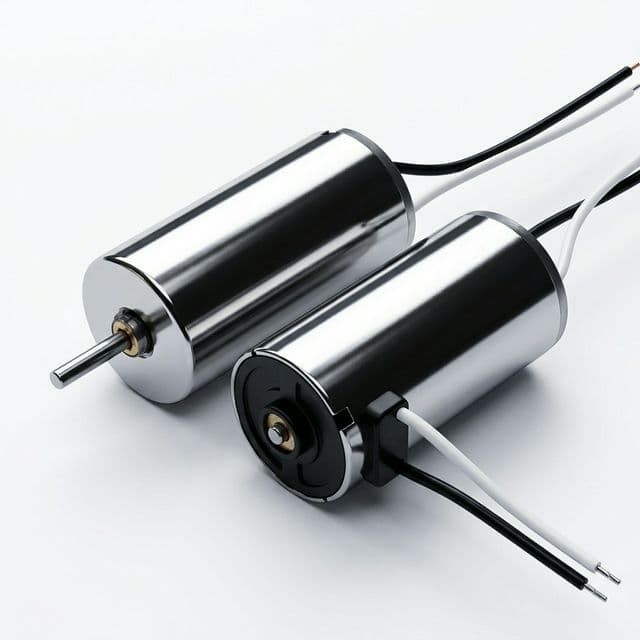
7mm diameter x 16mm length
Vendor naming convention in NFP D0716 listing.
Stall current 4.0A-5.11A
NFP D0716 table accessed 2026-04-07. Values are vendor-winding specific.
DRV8833 OCP 2.0A-3.3A, tDEG 4us
TI DRV8833 Rev. E electrical characteristics. Peak labels alone are not enough.
ECHA Candidate List: 253 entries
ECHA table accessed 2026-04-07; latest inclusion date shown as 2026-02-04.
Typical 1,000-5,000h (class-level)
FAULHABER technical info: extremes can range from hundreds to >25,000h, depending on duty and environment.
- Need a fast pre-RFQ check for 0716 in 1S battery products.
- Need to decide between 0615 / 0716 / 0720 without splitting into separate pages.
- Need startup current estimate before locking driver and battery path.
- Need risk-aware recommendation with clear next action for sourcing.
- Safety-critical products requiring certified reliability qualification.
- Programs needing guaranteed multi-thousand-hour life without vendor bench data.
- Requests dominated by >2.5mNm continuous torque with high duty cycle.
- Mass-production release without waveform, thermal, and endurance validation.
Related decision pages
Use these internal pages to continue sizing decisions that share voltage, startup-current, or alias-intent boundaries.
Use this when your rail is near 1.5V-3.7V and UVLO risk dominates selection.
Use this when your project spans 1.5V-6V envelopes or needs higher-voltage boundary checks.
Use this when 7x17 listing uncertainty and current-definition checks become the primary decision bottleneck.
Use the canonical route directly to avoid unnecessary redirect hops and duplicate-intent ambiguity.
Methods and evidence
Transparent formulas, dated sources, and explicit known/unknown boundaries.
| Method block | Formula / rule | Decision value |
|---|---|---|
| Mechanical power estimate | P = 2 * pi * n / 60 * T | Converts speed and torque demand into shaft load. |
| Rated current estimate | I = P / (V * eta) + I_idle | Adds efficiency and idle overhead to avoid optimistic sizing. |
| Startup surge estimate | I_start ~= 3.0 * I_rated | Used as a pre-RFQ current budget check for tiny-driver and battery rails. |
| Driver headroom check | I_start <= I_OCP_min_margin and I_rated <= I_cont_driver_thermal | Separates transient cutoff and thermal steady-state checks; if either rating is ambiguous, keep output conditional. |
| Driver retry-risk check | t_overcurrent > t_DEG => OCP retry behavior expected | Uses datasheet deglitch and retry timing as an explicit decision boundary for startup/stall events. |
| Battery droop screening | V_drop ~= I_start * R_internal | This page uses 80-180mOhm as a model assumption for high-rate 1S packs; always verify on your actual pack. |
| Brush life boundary (class-level) | Life decreases as speed/load/temperature rise; keep PWM >= 20kHz | FAULHABER class guidance is used for boundary messaging, not a PN-level lifetime guarantee. |
| Confidence score | Base 90 - condition penalties | Penalizes low-voltage, high-speed, high-torque, high-duty, and harsh-environment requests. |
| Source | Date | Coverage | Known / Unknown |
|---|---|---|---|
| OpenSpec change: add-kw-0716-hollow-cup-motor-page | 2026-04-06 | Keyword snapshot (volume and CPC) + canonical decision to serve 0716 intent on /learn/0716-hollow-cup-motor. | Known |
| US SERP sample for `0716 hollow cup motor` (Firecrawl + Tavily) | Accessed 2026-04-07 | Top results are dominated by marketplace/product pages with spec snippets (Amazon/eBay/Walmart/Temu/AliExpress), confirming mixed do+know intent. | Known (dated sample) |
| NFP D0716 product page (microdcmotors.com) | Accessed 2026-04-07 | Dimensions 7x16mm with winding table showing 4.0A-5.11A stall current and 600h listed lifespan points (vendor scope). | Known with vendor scope |
| NFP D0615 product page (microdcmotors.com) | Accessed 2026-04-07 | Reference smaller frame sample points include 2.03A-3.25A stall current (vendor scope). | Known with vendor scope |
| NFP D0720 product page (microdcmotors.com) | Accessed 2026-04-07 | Reference larger frame sample points include 5.54A-6.73A stall current (vendor scope). | Known with vendor scope |
| TI DRV8833 datasheet (Rev. E) | Accessed 2026-04-07 | VM 2.7V-10.8V, 1.5A RMS / 2A peak per H-bridge, and OCP/UVLO characteristics including deglitch and retry timing. | Known |
| TI DRV8212 datasheet (Rev. B) | Accessed 2026-04-07 | Low-voltage path (VM down to 1.65V on DRL package), 4A OCP class, and UVLO/OCP timing details for transient checks. | Known |
| TI application report: Understanding Motor Driver Current Ratings (Rev. A) | 2024-07-05 (accessed 2026-04-07) | Explains no industry-standard current-rating naming; RMS/average/peak must be interpreted with thermal context. | Known |
| FAULHABER DC motor technical guide and motor-calculation whitepaper | Accessed 2026-04-07 | Coreless brushed class boundaries: linear n-M / I-M relations, first-pass boundary (n >= no/2, M <= MH/2), and class-level life/PWM recommendations. | Known |
| ECHA Candidate List table | Accessed 2026-04-07 | Candidate List page shows 253 entries and latest listed additions dated 2026-02-04, with immediate legal-obligation notice. | Known |
| ECHA REACH Article 33 page: communication in the supply chain | Accessed 2026-04-07 | For >0.1% w/w SVHC in articles, suppliers must communicate safe-use info immediately; consumer requests must be answered within 45 days. | Known |
| ECHA REACH Article 7(2) page: notification of substances in articles | Accessed 2026-04-07 | Notification is required when SVHC >0.1% w/w and total quantity exceeds one tonne/year; deadline is within six months after inclusion. | Known |
| ECHA SCIP overview | Accessed 2026-04-07 | SCIP submission requirement applies from 2021-01-05 for articles on the EU market containing Candidate List SVHC above 0.1% w/w. | Known |
| EUR-Lex Directive 2011/65/EU (RoHS) | Accessed 2026-04-07 | Current consolidated version marker (01/01/2025) and Annex II concentration limits for restricted substances in homogeneous materials. | Known |
| PHMSA lithium battery test summary notice (DOT) | Updated 2024-07 (accessed 2026-04-07) | States UN 38.3 test-summary requirement effective 2022-01-01 and revised effective 2024-05-10. | Known |
| On-page sizing model (this tool) | 2026-04-07 | Pre-RFQ screening for fit/current/boundary output; not a substitute for supplier qualification reports. | Known |
| PN-level life and brush-wear reports by supplier/winding | Pending | Cross-vendor endurance curves under matched load profiles are not publicly complete. | Pending confirmation / no reliable public dataset |
Stage1b evidence delta
Only net-new, source-verifiable information is included here. Each row states scope and decision consequence.
| Topic | New fact | Applicable condition | Decision effect | Certainty |
|---|---|---|---|---|
| 0716 frame interpretation | Vendor listing explicitly maps 0716 to 7mm diameter and 16mm body length. | Naming convention is widely used but not a guaranteed universal standard across every supplier. | Use 0716 as a mechanical-envelope starting point, then confirm drawing tolerances per PN. | Known with boundary |
| Latest winding-current evidence (2026-04-07 access) | Same supplier listing shows 0716 stall current spread at 4.0A-5.11A with listed 600h lifespan points. | Values are vendor-specific sample data and can vary by winding and process lot. | Do not assume one 0716 winding represents all 0716 SKUs; lock winding code before driver sign-off. | Known with vendor scope |
| Frame size gradient (same-source comparison) | Current table shows 0615 (2.03A-3.25A) < 0716 (4.0A-5.11A) < 0720 (5.54A-6.73A) stall ranges. | Ranges come from one supplier site and should be treated as directional, not universal. | If demand trends toward upper 0716 range, driver and battery architecture must be reviewed before RFQ. | Known |
| DRV8833 transient boundary (Rev. E) | DRV8833 lists OCP trip 2.0A-3.3A with 4us deglitch and 1.35ms OCP period, plus UVLO around 2.5V falling / 2.7V recovery. | Actual behavior depends on board thermals and transient duration; peak-current labels are not stand-alone acceptance criteria. | Treat repeated startup/stall events as boundary-state unless waveform and thermal validation confirms margin. | Known with boundary |
| DRV8212 low-voltage and OCP boundary (Rev. B) | DRV8212 (DRL) supports VM down to 1.65V and specifies ~4A OCP with ~4.2us deglitch and ~1.7ms retry. | Low-voltage compatibility does not remove thermal and transient validation requirements on target PCB. | Use DRV8212-class options only when low-voltage startup is essential and current-path tests are planned. | Known with boundary |
| Driver current-rating semantics | TI Rev. A (2024) current-rating note states there is no industry-standard naming for motor-driver current ratings. | Peak, RMS, and average ratings are not interchangeable and depend on thermal conditions. | Treat unlabeled current claims as incomplete and require thermal-context checks before approval. | Known |
| Selection boundary heuristic | FAULHABER first-pass boundary uses n >= no/2 and M <= MH/2. | This is a screening heuristic and not a final life/reliability guarantee. | Requests outside this region should trigger architecture review or frame upgrade. | Known with boundary |
| Brushed lifetime range and PWM floor (class-level) | FAULHABER technical guide states typical brushed-coreless lifetime is 1,000-5,000 hours, with extremes from hundreds to over 25,000 hours; minimum 20kHz PWM is recommended. | This is class-level guidance and cannot replace PN-level endurance reports for a specific 0716 winding. | Keep life claims conditional; require duty-specific bench data before promising production lifetime. | Known with boundary |
| SVHC list update pressure | ECHA Candidate List page shows 253 entries and latest inclusion dated 2026-02-04. | List updates can create immediate legal obligations for articles containing newly listed SVHC. | Do not accept stale declarations; refresh supplier SVHC confirmation before EU release milestones. | Known |
| REACH Article 33 communication duty | For articles containing Candidate List SVHC above 0.1% w/w, suppliers must communicate safe-use information immediately and answer consumer requests within 45 days. | Obligation applies at article level and requires an operational response workflow, not only a static declaration file. | Build Article 33 response ownership into RFQ and after-sales processes before EU launch. | Known with boundary |
| REACH Article 7(2) notification gate | ECHA states Article 7(2) notification applies when Candidate List SVHC exceeds 0.1% w/w and total quantity exceeds one tonne/year, with a six-month deadline after inclusion. | Exemptions may apply only under specific exposure-control or prior-registration cases. | For scale-up programs, add tonnage and inclusion-date tracking to prevent late notification risk. | Known with boundary |
| SCIP obligation baseline | ECHA SCIP page states suppliers on the EU market must submit information for articles containing Candidate List SVHC above 0.1% w/w from 2021-01-05. | Notification applies to in-scope article supply chains and should be validated per product configuration. | Treat SCIP as a pre-shipment gate for EU article supply, not an afterthought. | Known |
| RoHS legal text freshness | EUR-Lex page marks Directive 2011/65/EU current consolidated version as 2025-01-01 and Annex II limits remain decision-critical for homogeneous materials. | Exemptions and category scope still require product-specific legal interpretation. | Use Annex II threshold checks as minimum gate and request exemption mapping when supplier claims rely on derogations. | Known with boundary |
| Battery logistics gate | PHMSA states UN38.3 test-summary requirement became effective 2022-01-01 and was revised effective 2024-05-10. | Requirement applies to lithium battery shipments in scope; motor-only shipments are outside this specific gate. | For battery-included samples, collect UN38.3 test summary before outbound logistics booking. | Known |
| Open question | Why evidence is insufficient | Decision impact |
|---|---|---|
| High-duty life curves for 0716 at 3.7V with matched load profiles. | Public vendor data is fragmented by winding and does not use a unified test method. | Lifetime recommendations remain conditional until supplier test packages are reviewed. |
| Lot-level winding R/L spread and startup pulse durability for 0716 across suppliers. | Most public listings provide headline speed/current only, without electrical tolerance bands. | Driver sizing and thermal headroom remain conditional until supplier lot data is reviewed. |
| Cross-vendor acoustic map under propeller-coupled loads. | Noise data is usually measured on non-comparable fixtures and duty patterns. | Noise tradeoff is directional only in early selection. |
| Supplier-level SVHC declarations synced to latest Candidate List additions (for example 2026-02-04 entries). | Public pages show list updates but do not expose each supplier BOM declaration recency. | EU compliance confidence remains conditional until supplier declarations are refreshed and archived. |
| Project-specific UN38.3 summaries for battery-included sample kits. | Public regulatory notices define the requirement but do not provide your selected battery SKU evidence. | Battery-included logistics remains conditional until each shipment configuration has valid test-summary records. |
Alternative comparison
Use reproducible dimensions (voltage, torque, response, cost, fit) instead of generic claims.
| Option | Voltage band | Torque band | Dynamic response | Cost class | Best-fit scenario | Boundary / counterexample |
|---|---|---|---|---|---|---|
| 0615 coreless brushed | 2.8V-4.2V | ~0.68-1.13mNm (6.9-11.5g.cm stall sample) | Very fast | Low | Ultra-light loads where minimum current is priority | Limited torque reserve under friction spikes and jam-prone startups. |
| 0716 coreless brushed | 2.8V-4.2V | ~1.18-1.59mNm (12-16.2g.cm stall sample) | Very fast | Low to medium | Balanced frame for micro propulsion, pumps, and compact actuation | Stall current can reach 4A-5A class on some windings, stressing compact drivers. |
| 0720 coreless brushed | 2.8V-4.2V | ~1.62-1.78mNm (16.5-18.2g.cm stall sample) | Fast | Medium | Higher torque envelope when 0716 is repeatedly boundary-state | Higher startup current and mass can impact battery life and mechanical integration. |
| 0716 + reduction stage | 3.0V-4.2V | Application dependent | Medium | Medium to high | When output torque must rise but package diameter cannot grow | Gear wear/backlash risk increases with shock loads and frequent reversals. |
Driver matching and counterexamples
Driver choice is not only about VM floor. Current-rating definitions and thermal context must be verified before release.
| Driver option | Official limit snapshot | What it means for 0716 | Minimum action |
|---|---|---|---|
| TI DRV8833 (Rev. E) | VM 2.7V-10.8V, 1.5A RMS / 2A peak, OCP 2.0A-3.3A, tDEG 4us, tOCP 1.35ms, UVLO ~2.5V falling / 2.7V rising | 0716 winding listings with 4A-5.11A stall current can repeatedly trigger OCP/thermal cycling in hard-start or jam conditions. | Validate startup pulse width versus OCP timing and thermal behavior, or escalate driver/frame architecture. |
| TI DRV8212 (Rev. B) | VM down to 1.65V on DRL (up to 11V), OCP ~4A, tOCP ~4.2us, retry ~1.7ms, UVLO ~1.30V falling / 1.65V rising | Improves low-voltage startup margin, but transient and board-thermal checks remain mandatory for repeated high-current events. | Use as low-voltage fallback only with measured waveform, retry behavior, and thermal pass criteria. |
| Generic "2A motor driver" listing | Often unspecified whether value is peak, RMS, or average | Counterexample: nameplate current can look safe while thermal shutdown appears under repetitive startup. | Reject ambiguous current labels and request explicit rating definitions before design freeze. |
Compliance and logistics gates
Selection is incomplete if compliance and shipment evidence is missing. This block captures release-critical gates.
| Gate | Trigger condition | Required evidence | If missing |
|---|---|---|---|
| RoHS 2011/65/EU Annex II | Restricted substances exceed homogeneous-material thresholds (for example Pb/Hg/Cr6+/PBB/PBDE 0.1%, Cd 0.01%). | Latest declaration, exemption mapping, and material traceability aligned with current consolidated legal text (EUR-Lex marker: 2025-01-01). | Without documentation, EU market release risk remains high even if performance tests pass. |
| REACH Article 33 communication | Article contains Candidate List SVHC above 0.1% w/w. | Immediate B2B communication workflow and consumer-response mechanism (max 45 days) with traceable records. | Missing workflow creates direct compliance and customer-trust risk after product launch. |
| REACH Article 7(2) notification | SVHC >0.1% w/w and total quantity in relevant articles exceeds one tonne/year. | Tonnage tracking, applicability assessment, and notification evidence submitted within six months after inclusion. | Late or missing notification can block EU onboarding and trigger remediation cycles. |
| SCIP database submission | Articles supplied to the EU market contain Candidate List SVHC above 0.1% w/w (requirement baseline from 2021-01-05). | SCIP notification number and article mapping linked to supplied SKU configuration. | Without SCIP traceability, EU article supply readiness remains incomplete. |
| UN38.3 Test Summary (battery-included shipments) | Lithium battery in shipment scope; test-summary requirement effective 2022-01-01 and revised 2024-05-10. | UN38.3 test summary available before logistics booking. | Missing summary can delay or reject battery-included sample shipments. |
| Gate | Date / effective condition | Minimum action |
|---|---|---|
| ECHA Candidate List update cadence | Latest inclusion shown: 2026-02-04 | Refresh supplier SVHC declarations immediately after each Candidate List update; stale files are not accepted. |
| REACH Article 33 | Immediate once SVHC >0.1% w/w threshold is met | Send safe-use information to professional recipients and answer consumer requests within 45 days. |
| REACH Article 7(2) | Within 6 months after Candidate List inclusion | If >0.1% w/w and >1 tonne/year conditions are met, submit notification and archive confirmation. |
| SCIP (Waste Framework Directive) | From 2021-01-05 | For EU market supply of relevant articles, submit SCIP notifications and map IDs to shipped SKUs. |
| UN38.3 test summary | From 2022-01-01, revised 2024-05-10 | Battery-included samples must carry valid test summary evidence before logistics booking. |
Risk and mitigation
Covers misuse risk, cost risk, and scenario mismatch risk with direct mitigation actions.
| Risk | Impact | Probability | Mitigation path |
|---|---|---|---|
| Startup surge exceeds driver OCP/thermal envelope | High | Medium to high | Budget startup current with OCP and thermal margin, then validate with oscilloscope + thermal capture. |
| Driver rating interpreted from peak number only | High | High | Separate peak vs continuous ratings and require thermal-context evidence from datasheet/app note. |
| 0716 selected for a 0720-class torque request | High | Medium | Use comparison table and boundary output to escalate frame size early. |
| Low-cell-voltage operation near driver UVLO | High | Medium | Verify voltage floor, droop, and restart behavior under worst-case battery state. |
| Brushed lifetime overpromised from generic claims | High | Medium | Use class-level life guidance only for boundary checks and require PN-level endurance data before commitment. |
| Vendor headline specs reused as universal truth | Medium | High | Mark vendor scope clearly and demand sample validation for the chosen winding. |
| Stale SVHC declarations after Candidate List updates | High | Medium | Refresh supplier SVHC declarations at each Candidate List update checkpoint and archive date-stamped evidence. |
| Article 33 communication process not operationalized | High | Medium | Assign owner and SLA for immediate B2B communication and 45-day consumer-response handling. |
| Article 7(2) tonnage trigger not tracked during scale-up | High | Medium | Track annual article tonnage and Candidate List inclusion date; file notification within six months when criteria are met. |
| SCIP notification missing for EU article supply | High | Medium | Treat SCIP submission as pre-shipment gate for articles containing SVHC >0.1% w/w. |
| UN38.3 test summary missing for battery-included samples | High | Medium | For battery-included kits, collect test summary evidence before transport booking to avoid hold/reject. |
| Alias query split into competing pages | Medium | Medium | Keep one canonical URL and answer alias intent with anchors + FAQ. |
Scenario examples
Each scenario includes assumptions, modeled output, and the minimum next action.
| Scenario | Assumption | Estimated result | Action |
|---|---|---|---|
| Micro-prop drive on 1S pack | 3.8V, 48k rpm target, 0.7mNm, 25% duty | Recommended (within typical 0716 envelope). | Proceed to sample shortlist and confirm startup current under real prop inertia. |
| Wearable micro-pump stage | 3.3V, 24k rpm target, 1.4mNm, 55% duty | Conditional fit. | Validate thermal drift and consider 0720 fallback if boundary states repeat. |
| Jam-prone latch mechanism | 3.0V, 18k rpm target, 2.8mNm, 70% duty | Not recommended as direct 0716 drive. | Move to larger frame or geared architecture before RFQ. |
| Cold battery startup | 2.8V rail and >1.2A transient startup draw | Conditional with high electrical risk. | Capture droop/UVLO waveform and validate restart margin before committing. |
| Compact haptic feedback module | 3.7V, 35k rpm target, 0.35mNm, 15% duty | Recommended with low thermal risk. | Use low-noise winding sample and run acoustic sanity check on final fixture. |
Alias coverage anchors
Internal anchors keep `0716 hollow cup motor`, `716 coreless motor`, and `7x16 coreless motor` intent on this canonical page without split routes.
Decision FAQ
Questions are grouped by intent, not glossary-only definitions.
B2B application fit, OEM options, and inquiry handoff
Move from estimator output to executable sourcing with factory customization scope and compliance-timeline gates.
- Programs evaluating 0716 frame fit in 1S battery products before supplier shortlist.
- Teams consolidating `0716 hollow cup motor`, `0716 dc coreless motor`, and `716 coreless motor` intent on one canonical route.
- Projects requiring explicit driver/current boundary checks before RFQ submission.
- Winding and commutation optimization for target speed/torque and battery rail behavior.
- Shaft-end, lead-wire, connector, and mounting customization for your mechanical stack.
- Alternative frame or geared architecture proposal when 0716 envelope is overloaded.
- Treat Article 33/SCIP/UN38.3 files as RFQ-gate documents, not post-order paperwork.
- Confirm OCP/UVLO behavior and startup waveform on your exact battery + load path.
- Keep decisions conditional until PN-level endurance and thermal evidence is archived.