1000 RPM Small DC Motor Fit Tool and Decision Report
Use one canonical URL to finish two tasks in sequence: get an immediate motor-fit estimate, then verify decision quality with evidence, boundaries, alternatives, and risk controls.
Published: 2026-04-20 | Last updated: 2026-04-20 | Review cadence: quarterly
Boundary: 1.5V to 12V. Below 2.7V usually needs low-voltage driver verification.
Boundary: 200 to 5,000 rpm. 800 to 1,200 rpm is the primary screening band.
Boundary: 1 to 150 mNm.
Boundary: 5% to 100%.
If the result is inconclusive, use the design-review CTA instead of forcing a procurement choice.
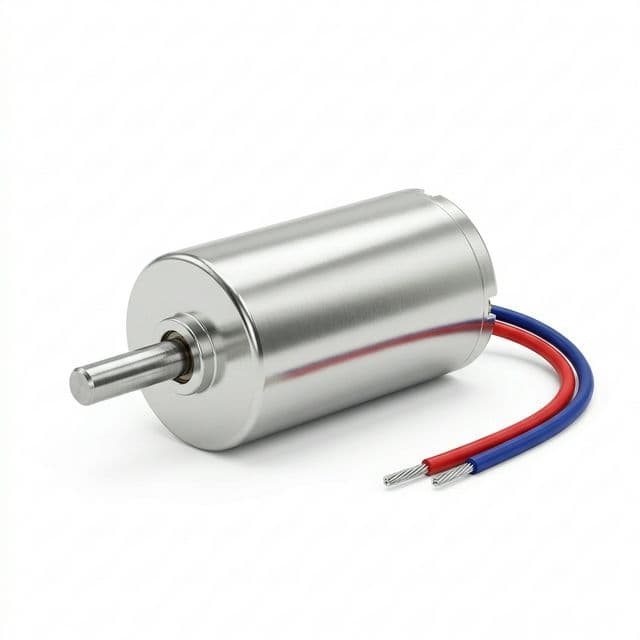
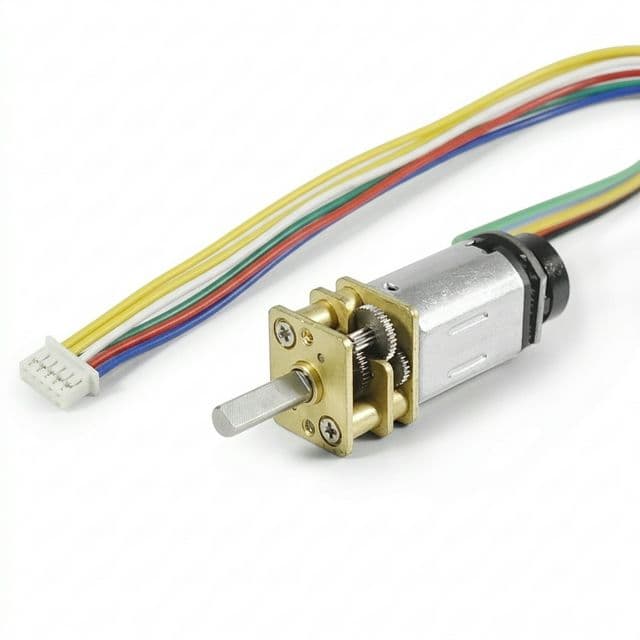
Stage1b gap audit and closure status
Audit-first enhancement: each high-impact content gap is tracked with explicit remediation status.
| Gap found | Decision impact | Stage1b action | Status |
|---|---|---|---|
| Earlier source mapping incorrectly tied product 2372 to a 30:1 1000 rpm claim. | High factual risk: ratio interpretation can invert architecture decisions and RFQ direction. | Corrected to product 1093 for 30:1/1000 rpm and kept product 2372 only as 1000:1 counterexample. | Closed in stage1b enhancement (2026-04-20) |
| Keyword promised 1000 rpm output but no section explained direct-drive versus gear-reduced outputs. | High risk of selecting frame size from no-load motor rpm and missing gearbox requirement. | Added explicit gearbox-path logic, speed/torque windows, and source-backed comparison rows. | Closed in stage1b enhancement (2026-04-20) |
| Tool did not separate low-voltage driver floors from generic voltage acceptance. | High risk of passing a 1.5V-2.0V setup that cannot keep the bridge enabled. | Added DRV8212/DRV8833 boundaries and conditional/not-recommended triggers in tool results. | Closed in stage1b enhancement (2026-04-20) |
| Report lacked evidence-backed thresholds for startup current versus battery-class limits. | Medium-to-high risk of brownout loops and false pass decisions for portable designs. | Added startup current estimates, droop range references, and scenario-level mitigation actions. | Closed in stage1b enhancement (2026-04-20) |
| Deep section did not disclose evidence-insufficient items for lifetime and backlash. | Medium risk of overconfident procurement promises. | Added explicit pending-evidence ledger with required RFQ attachments. | Closed with explicit pending block (2026-04-20) |
Report summary: conclusions and key numbers
Core conclusions are paired with quantifiable context before deep-dive sections.
/learn/1000-rpm-small-dc-motor
Single URL for tool execution + report evidence.
do 0.50 / know 0.50
Hybrid mode from intent-router with zero score gap.
30:1 HP 6V -> 1000 rpm no-load
Pololu product 1093 (29.86:1), accessed 2026-04-20.
1.65V to 10.8V (driver-dependent)
DRV8212: 1.65V-11V; DRV8833: 2.7V-10.8V with UVLO guardrails.
18,100-20,300 rpm (3V class examples)
Mabuchi FA-130RA and FAULHABER 0615 S show direct-drive speeds far above 1000 rpm.
CR2032: 3V, 225mAh, 0.2mA standard
Panasonic CR2032 baseline confirms direct motor startup needs buffering/boost strategy.
- Need to screen whether 1000 rpm should be direct-drive or gear-reduced on a small DC platform.
- Need a quick current + confidence estimate before requesting sample builds.
- Need source-backed thresholds (speed, torque, duty, VM floor) before RFQ.
- Need one page that gives immediate output and then explains boundary risks.
- Final production release decisions without PN-level endurance and thermal data.
- Applications requiring certified SIL/medical reliability packages.
- Programs needing guaranteed backlash/noise values without gearbox drawings.
- Procurement decisions that skip driver-waveform and startup verification.
Methods and evidence
Transparent formulas, dated sources, and explicit known/unknown boundaries.
| Method block | Formula / rule | Decision value |
|---|---|---|
| Output mechanical power estimate | P = 2 * pi * n / 60 * T | Converts target output speed and torque into the minimum shaft load envelope. |
| Run current estimate | I = P / (V * eta) + I_idle | Adds efficiency and idle-current bias to avoid optimistic under-sizing. |
| Startup surge estimate | I_start ~= 2.0 to 2.6 * I_run | Models startup surge envelope for driver VM and supply-path margin checks. |
| Speed-ratio sanity check | Ratio ~= n_direct / n_target | Helps flag when 1000 rpm likely requires gear reduction rather than direct-drive. |
| Droop reference | V_drop ~= I_start * R_internal | Uses Panasonic CR2032 (3V, 225mAh, 0.2mA standard discharge) as a mismatch baseline for motor startup surge. |
| Confidence score | Base 92 - boundary penalties | Penalizes low-voltage, high-duty, and high-torque/high-speed combinations. |
| Source | Date | Coverage | Known / Unknown |
|---|---|---|---|
| data/keywords/small-dc-motor_broad-match_us_2026-03-29.primary-implementation-queue.csv | 2026-03-29 | Keyword queue entry for `1000 rpm small dc motor` with canonical route mapping. | Known |
| OpenSpec change: add-kw-1000-rpm-small-dc-motor-page | 2026-04-20 | Hybrid one-URL tool+report scope and route constraints. | Known |
| Pololu product 1093 (30:1 Micro Metal Gearmotor HP 6V) | Accessed 2026-04-20 | Primary geared reference: 29.86:1, 1000 rpm no-load at 6V, 0.10A no-load, 1.6A stall current. | Known |
| Pololu product 2372 (1000:1 Micro Metal Gearmotor MP 6V) | Accessed 2026-04-20 | High-ratio counterexample: 986.41:1 and 22 rpm no-load at 6V; used to show ratio-driven speed collapse. | Known |
| Pololu Micro Metal Gearmotor User Guide Rev 6.1 | Accessed 2026-04-20 | Current/speed tradeoff notes and brushed-operation guidance near partial stall-current loading. | Known |
| MABUCHI MOTOR product page FA-130RA-18100 | Accessed 2026-04-20 | Official direct-drive counterexample: nominal 1.5V-3.0V and no-load speed 18,100 r/min. | Known |
| Mabuchi FA-130RA datasheet | Accessed 2026-04-20 | Variant-level direct-drive data points (for example 9,100 to 12,300 rpm no-load and 0.90A to 2.20A stall current). | Known with model scope |
| FAULHABER 0615 S series datasheet | Accessed 2026-04-20 | Direct-drive micro DC variants with 19,200 to 20,300 min-1 no-load speeds in the 1.5V to 4.5V examples. | Known |
| TI DRV8833 datasheet (Rev. E) | Accessed 2026-04-20 | VM range 2.7V-10.8V with UVLO notes (2.6V falling typical, ~2.7V resume). | Known |
| TI DRV8212 datasheet (Rev. B) | Accessed 2026-04-20 | Low-voltage driver option with 1.65V-11V range and UVLO thresholds for rising/falling supply events. | Known |
| Panasonic CR2032 datasheet | Accessed 2026-04-20 | CR2032 baseline for architecture screening (3V, 225mAh, standard discharge current 0.2mA). | Known |
| Panasonic Coin CR Series PSDS | Accessed 2026-04-20 | Transport/compliance anchor: CR2032 lithium content 0.07g and UN38.3 test-summary requirement reminders. | Known |
| CPSC Reese's Law / 16 CFR 1263 guidance | Accessed 2026-04-20 | Button/coin battery compliance scope and date markers for products with accessible cells. | Known |
| CPSC Reese's Law implementation dates memo (2024-02-12) | Accessed 2026-04-20 | Implementation timeline details (for example Oct 23, 2023 and Mar 19, 2024 milestones) for product and labeling obligations. | Known |
| UNECE UN Manual of Tests and Criteria Rev.8 and Amendment 1 | Accessed 2026-04-20 | Official transport-standard channel with 2023 Rev.8 and 2025 amendment notes for subsection 38.3 lithium cells/batteries. | Known |
| EUR-Lex Directive 2011/65/EU (RoHS) | Accessed 2026-04-20 | Annex II concentration limits for restricted substances in homogeneous materials. | Known |
| On-page sizing model (this tool) | 2026-04-20 | Pre-RFQ current/power/fit scoring with boundary-state disclosure; not a release-grade validation. | Known |
| Vendor-specific endurance, backlash, and noise reports | Pending | Required for final procurement sign-off under high duty and tight acoustic constraints. | Pending confirmation / no reliable public dataset |
Stage1b research delta
Only net-new, source-verifiable information is included here. Each row states scope and decision consequence.
| Topic | New fact | Applicable condition | Decision effect | Certainty |
|---|---|---|---|---|
| 1000 rpm output interpretation | Pololu product 1093 (29.86:1 HP 6V) explicitly lists 1000 rpm no-load at 6V with 0.10A no-load and 1.6A stall current. | Applies when keyword intent implies compact motor + usable torque at moderate speed. | Treat 1000 rpm as an output-after-ratio target, not an automatic direct-drive motor speed. | Known with vendor scope |
| Ratio counterexample to prevent overgeneralization | Pololu product 2372 (986.41:1) lists only 22 rpm no-load at 6V on the same motor family class. | Applies when teams assume one catalog family implies one speed class. | Always bind ratio and output-speed targets together in RFQ; avoid ratio-blind part filtering. | Known with vendor scope |
| Direct-drive counterexample | Mabuchi FA-130RA-18100 lists 18,100 r/min no-load (3V class) and FAULHABER 0615 S examples list ~19,200 to 20,300 min-1. | Applies when selecting small-coreless direct-drive motors without gearbox. | Add gear-ratio path or strict PWM/load control if output must remain near 1000 rpm. | Known with boundary |
| Driver voltage floor | DRV8833 operates from 2.7V to 10.8V and lists VM UVLO around 2.6V falling with resume around 2.7V. | Applies when architecture uses DRV8833-class drivers for brushed control. | Single-cell 1.5V rails are boundary states unless boosted and validated under transient droop. | Known |
| Lower-voltage driver option | DRV8212 supports 1.65V-11V and lists UVLO thresholds around 1.65V rising and 1.30V falling. | Still requires rail headroom above brownout and startup transient droop. | 1.5V to 2.0V designs remain conditional and require waveform validation. | Known with boundary |
| Coin-cell mismatch risk | Panasonic CR2032 baseline is 3V, 225mAh, with 0.2mA standard discharge reference. | Applies to portable designs attempting direct coin-cell startup for brushed motors. | Require buffer/boost or chemistry redesign before claiming robust startup. | Known with architecture caveat |
| Operation guardrail | Pololu guidance recommends brushed operation at 25% or less of stall current; for product 1093 that screening level is ~0.40A. | Vendor-specific guidance, not universal to all small DC motor families. | Use this as pre-RFQ risk weighting; enforce PN-level thermal/life checks before lock-in. | Known with vendor scope |
| CPSC timeline boundary | CPSC guidance and memo place key 16 CFR part 1263 milestones at Oct 23, 2023 and Mar 19, 2024, with children's product testing from Dec 20, 2023. | Applies to products that contain or can use button/coin batteries in the US market. | Treat battery-compartment safety and labeling readiness as a release gate, not a post-RFQ task. | Known with jurisdiction scope |
| Shipping gate clarification | UNECE lists UN Manual Rev.8 (2023) and Amendment 1 (2025) updates to subsection 38.3 lithium-cell requirements. | Applies to projects that require lithium battery shipment and customs/air-freight readiness. | Collect UN38.3 test summaries before launch planning, not after packaging finalization. | Known with transport scope |
| Compliance boundary | RoHS Annex II lists homogeneous-material concentration limits (e.g., Pb 0.1%, Cd 0.01%). | Applies to EEE placed on covered markets and categories with relevant obligations. | Treat supplier material declarations as gating documents before production RFQ release. | Known |
| Evidence point | Architecture role | Published data | Decision use |
|---|---|---|---|
| Pololu 1093 (30:1 HP 6V) | Geared brushed output reference | 29.86:1; 1000 rpm no-load; 0.10A no-load; 1.6A stall current @ 6V | Use as a real 1000-rpm geared anchor; 25% stall-current screening point is ~0.40A. |
| Pololu 2372 (1000:1 MP 6V) | High-ratio geared counterexample | 986.41:1; 22 rpm no-load; 70mA no-load; 0.67A stall current @ 6V | Prevents ratio-blind selection. Same family can shift output speed by two orders of magnitude. |
| Mabuchi FA-130RA-18100 | Direct-drive brushed counterexample | Nominal 1.5V-3.0V, no-load speed 18,100 r/min | Shows direct small motors naturally run far above 1000 rpm; direct use needs strict speed control. |
| FAULHABER 0615 S datasheet examples | Direct-drive coreless counterexample | No-load speed examples: 19,200 min-1 (1.5V), 20,300 min-1 (3V), 20,100 min-1 (4.5V) | Confirms 1000 rpm requests usually map to geared outputs, not raw motor shaft speed. |
| Gate | Threshold | Required action if not met |
|---|---|---|
| Driver VM floor gate | DRV8833 operating VM 2.7V-10.8V, with UVLO behavior near 2.6V falling and ~2.7V resume. | If startup waveform dips below VM floor, switch to boosted rail or alternate driver before RFQ freeze. |
| Low-voltage fallback gate | DRV8212 operating range 1.65V-11V; UVLO around 1.65V rising / 1.30V falling. | Treat 1.5V-2.0V projects as conditional and require oscilloscope validation across temperature and aging. |
| Brushed-current durability gate | Pololu guidance: continuous brushed operation at 25% or less of stall current; 1093 benchmark is ~0.40A. | If modeled run current exceeds the gate, upsize motor/ratio and request PN-level thermal/life evidence. |
| Coin-cell architecture gate | Panasonic CR2032 baseline: 3V, 225mAh, 0.2mA standard discharge. | If startup current is in amp-class pulses, require buffer/boost path and retry strategy before committing design. |
| US coin-cell compliance gate | 16 CFR part 1263 timeline includes Oct 23, 2023 and Mar 19, 2024 milestones; children's testing starts Dec 20, 2023. | For US launches, lock compartment safety + labeling evidence into NPI checklists before production handoff. |
| Transport evidence gate | UNECE UN Manual Rev.8 (2023) and Amendment 1 (2025) update subsection 38.3 expectations. | Collect UN38.3 test summaries and ship-mode constraints before packaging and logistics sign-off. |
| Open question | Why evidence is insufficient | Decision impact |
|---|---|---|
| High-duty (>80%) life curves for 1000 rpm output points under elevated ambient conditions. | Public datasets are fragmented and not normalized for load profile, ratio stage, and brush composition. | Cannot issue reliable endurance claims without supplier life-test attachments. |
| Cold-start success rate at 1.5V across battery aging states. | No consistent public matrix across ESR aging, temperature, and startup waveform strategy. | Startup reliability remains conditional until bench samples are tested on your power path. |
| Backlash and noise distribution across micro gearhead families near 1000 rpm. | Most vendor specs publish single-value points without unified fixture methodology. | Noise/backlash conclusions should stay directional until internal bench comparison is complete. |
| Cross-vendor efficiency map at matched 1000 rpm output and equal torque load. | No open dataset provides comparable efficiency curves under one test protocol. | Cost and thermal tradeoffs remain probabilistic at shortlist stage. |
Alternative comparison
Use reproducible dimensions (voltage, torque, response, cost, fit) instead of generic claims.
| Option | Voltage band | Torque band | Dynamic response | Cost class | Best-fit scenario | Boundary / counterexample |
|---|---|---|---|---|---|---|
| Coreless brushed direct drive | 2V-12V | 2-30 mNm | Very fast | Low to medium | Good when speed can vary and torque demand is light | Holding near 1000 rpm under variable load often needs closed-loop control or gear reduction. |
| Micro gearmotor (spur/metal, N20 class) | 3V-12V | 15-120 mNm | Medium | Medium | Best for stable ~1000 rpm output targets with moderate torque demand | Gear wear/backlash rises if frequent reversal and startup shock are uncontrolled. |
| Coreless + planetary gearhead | 3V-12V | 30-150 mNm | Medium | Medium to high | Higher torque density where package length increase is acceptable | Cost and integration complexity rise; thermal checks remain required at high duty. |
| Mini BLDC + controller | 5V-24V | 20-120 mNm | Fast | Medium to high | Good for longer life and lower brush wear in higher-duty programs | Controller complexity and BOM increase; low-voltage direct battery paths are usually not viable. |
Risk and mitigation
Covers misuse risk, cost risk, and scenario mismatch risk with direct mitigation actions.
| Risk | Impact | Probability | Mitigation path |
|---|---|---|---|
| VM droop below motor-driver floor (or UVLO threshold) | High | High in 1.5V to 2.0V designs | Verify driver VM minimum and transient droop on oscilloscope before architecture freeze. |
| Assuming 1000 rpm is direct-drive across all small motors | High | Medium | Run gear-ratio sanity checks and compare direct-drive vs geared outputs before RFQ. |
| Undersized startup current budget | Medium | High | Reserve >=2.0x to 2.6x run current on driver and power path. |
| Sustained operation near/above vendor brushed-current guidance | Medium | Medium | Use stall-current utilization as a pre-RFQ screen and demand PN-level thermal/life evidence. |
| High-duty operation without endurance evidence | Medium | Medium | Request duty-life data and add thermal instrumentation in pilot tests. |
| Coin-cell architecture mismatch for startup current | High | High in compact consumer devices | Use buffer or boost architecture and verify startup at low-temperature/aged-cell conditions. |
| Shipping/compliance gates discovered too late | High | Medium | Lock RoHS, 16 CFR 1263 timing gates, and UN38.3 summaries before launch-plan freeze. |
| Noise/backlash assumptions copied from unmatched test rigs | Medium | Medium | Treat public numbers as directional and run fixture-matched A/B tests. |
Scenario examples
Each scenario includes assumptions, modeled output, and the minimum next action.
| Scenario | Assumption | Estimated result | Action |
|---|---|---|---|
| Wearable latch, strict 1000 rpm target | 3.7V rail, 1000 rpm target, 18 mNm, 35% duty | Recommended with geared micro DC shortlist. | Request two ratio variants (for example 20:1 and 30:1) and compare loaded-speed stability. |
| Single-cell rail + DRV8833-class driver | 1.5V rail with driver family requiring VM around >=2.7V and UVLO protection | Not recommended (bridge can stay disabled). | Switch to boosted rail or low-voltage driver path, then re-test startup transients. |
| Toy drive, low-voltage path | 2.0V rail, 1000 rpm target, 12 mNm, 20% duty with low-voltage driver class | Conditional fit with startup validation required. | Measure startup waveform and droop across temperature, then confirm controller margin. |
| Industrial mini actuator | 12V rail, 1000 rpm target, 80 mNm, 85% duty | Conditional to not-recommended as direct micro coreless path. | Move to geared architecture and require thermal + duty-life evidence before release. |
| Direct-drive over-speed request | 6V rail, 3000 rpm target, 10 mNm, 50% duty | Conditional direct-drive fit (1000 rpm requirement no longer primary). | Confirm whether product requirement is truly fixed at 1000 rpm or speed-band tolerant. |
Alias coverage anchors
Internal anchors keep `small dc motor 1000 rpm` traffic on this canonical page without split routes.
Decision FAQ
Questions are grouped by intent, not glossary-only definitions.
B2B application fit, OEM options, and inquiry handoff
Move from estimator output to executable sourcing with factory customization scope and compliance-ready RFQ preparation.
- Teams evaluating compact DC motors that must deliver around 1000 rpm at load.
- Programs comparing direct-drive coreless versus micro gearmotor architectures.
- Buyers who need boundary-driven RFQ prep instead of generic catalog browsing.
- Winding/Kv options plus ratio tuning to hold 1000 rpm at real load.
- Gearhead ratio, shaft geometry, and connector customization for integration constraints.
- Lead-wire, insulation, and assembly packaging options aligned to your production flow.
- Collect RoHS/REACH declarations with homogeneous-material granularity before order release.
- Validate startup surge, thermal rise, and duty-cycle life on PN-level samples with traceable driver VM margins.
- Treat this page as pre-RFQ screening only; final claims require qualification evidence.