
1.5 to 3V DC Small Electric Motor Sizing Tool and Decision Report
Use one canonical URL to finish two tasks in sequence: get a quick feasibility estimate for low-voltage small-motor requests, then verify decision quality with dated evidence, boundaries, alternatives, and risk controls for 5-piece pilot sourcing.
Alias coverage on this same URL includes `1.5 3 volts dc small motor 5` and `1.5 to 3v dc small electric motor stevens international`, while final decisions still require PN-level validation.
Published: 2026-04-06 | Last updated: 2026-04-11 | Review cadence: quarterly
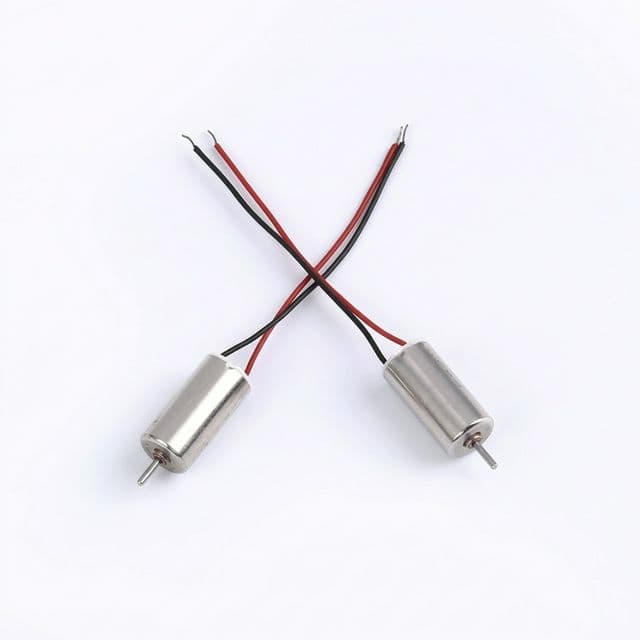
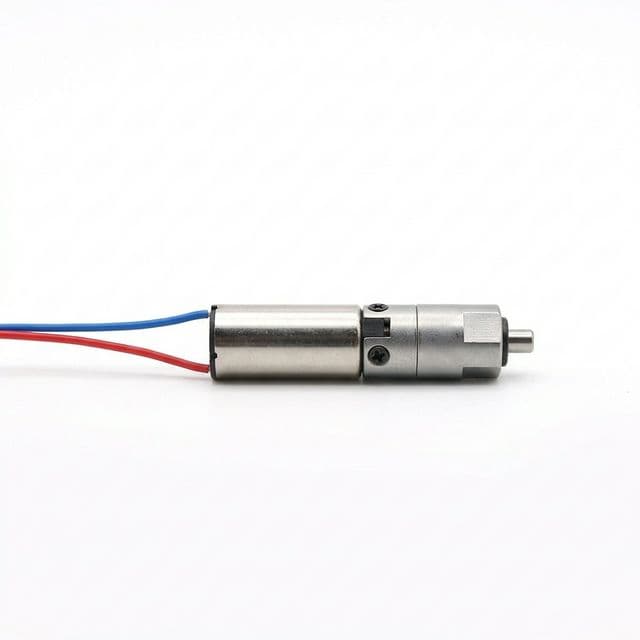
Stage1b gap audit and closure status
Audit-first enhancement: each high-impact content gap is tracked with explicit remediation status.
| Gap found | Decision impact | Stage1b action | Status |
|---|---|---|---|
| Alias intent `1.5 3 volts dc small motor 5` was not explicitly answered in core sections. | High risk of creating separate route assumptions and diluted canonical signals. | Added alias phrase to H1/FAQ/anchors and kept a single canonical route `/learn/1-5-to-3v-dc-small-electric-motor`. | Closed in stage1b |
| Tool speed boundary was inconsistent with low-speed decision branches. | High risk of unreachable boundary paths and misleading confidence output. | Reframed speed input as output-speed boundary (2-600rpm) and aligned model checks. | Closed in stage1b |
| Driver evidence stopped at VM minimum and missed UVLO/OCP thresholds. | High risk of startup failures and driver overcurrent assumptions during architecture freeze. | Added DRV8833/DRV8212/DRV8411 UVLO rising/falling and OCP values from TI datasheets. | Closed in stage1b |
| A previous Pololu citation mixed SKU context with stale numeric assumptions. | High risk of incorrect low-speed torque/current claims in pilot sourcing. | Replaced with Pololu-documented gearbox load-limit, instantaneous torque, stall-warning, and 25%-stall guidance. | Closed in stage1b |
| RoHS section omitted the four phthalates added by Directive (EU) 2015/863. | Medium-to-high risk of RFQ compliance gaps for post-2019 EU shipments. | Added DEHP/BBP/DBP/DIBP limits and effective dates (2019/2021) with EUR-Lex citation. | Closed in stage1b |
| Battery guidance focused on AA chemistry and lacked coin-cell/NiMH counterexamples. | High risk of accepting electrically impossible power paths during early RFQ filtering. | Added CR2032 and NiMH boundaries, scenario examples, and FAQ guardrails with Panasonic/Energizer evidence. | Closed in stage1b |
| Low-voltage driver map missed split-supply architecture options. | Medium-to-high risk of forcing false binary choices (boost only vs no-go). | Added DRV8837 split-supply path (VM 0-11V, VCC 1.8-7V) with UVLO/OCP bounds and tradeoff notes. | Closed in stage1b |
| Pilot sourcing flow omitted battery-included shipment compliance gate. | Medium risk of customs/logistics delay when sample plans include lithium cells. | Added PHMSA UN38.3 test-summary requirement as a procurement checkpoint. | Closed in stage1b |
| Legacy driver counterexamples were underexposed for 1.5V-class starts. | High risk of picking popular module ecosystems (TB6612/L293D) that cannot sustain low-rail startup behavior. | Added TB6612 and L293D boundary facts, explicit voltage-drop caveats, and scenario-level no-go guidance. | Closed in stage1b |
| Keyword phrase with `Stevens International` lacked channel-boundary explanation. | High risk of treating distributor SKU labels as equivalent to PN-level electrical datasheets. | Added Stevens distributor-scope evidence, retail-listing evidence-gap note, and pending-data requirements for PN-level validation. | Closed in stage1b |
| Battery compliance timeline stopped at RoHS and missed EU battery-regulation milestones. | Medium-to-high risk of shipment-date mismatch for EU battery-included pilot kits. | Added Regulation (EU) 2023/1542 phased dates and repeal timeline into source ledger, risk guidance, and FAQ decisions. | Closed in stage1b |
| UN38.3 mention lacked installed-button-cell exception boundary. | Medium risk of over- or under-documenting lithium shipments by packaging state. | Added 49 CFR 173.185 scope split (loose cell vs button cell installed in equipment) with explicit logistics action. | Closed in stage1b |
| OEM-grade 1.5V-3V electrical boundary lacked a named motor-datasheet anchor. | High risk of overestimating torque capacity and underestimating startup current from listing-only labels. | Added Mabuchi FA-130RA baseline points (1.5V and 3V) for no-load speed, max-eff torque/current, and stall-current boundaries. | Closed in stage1b |
| Low-voltage driver map missed a current-limited startup path. | Medium risk of selecting UVLO-compatible bridges without surge-current control strategy. | Added DRV8410 current-regulated path (1.65V-11V, UVLO 1.6/1.3V, 2.5A OCP, RSENSE=0.2V/ITRIP rule). | Closed in stage1b |
| Stevens evidence relied on channel-level narrative more than official field-level proof. | High risk of assuming channel SKU labels include OEM torque/current/life data. | Added Stevens official product-listing field scope and Top Sellers SVM130/SVM140/SVM260 examples to show label-only coverage. | Closed in stage1b |
| Lithium logistics section lacked executable UN-number and air-quantity decision gates. | Medium-to-high risk of sample-kit carrier rejection even when UN38.3 documents exist. | Added 49 CFR 173.185(c)(3)/(c)(4) boundaries for UN3090/3091/3480/3481 mapping and <=2 spare sets plus <=5kg air threshold. | Closed in stage1b |
| Public PN-level endurance datasets remain incomplete across vendors. | Medium risk of overconfident lifetime and noise claims in procurement. | Kept pending-data block explicit as "no reliable public dataset" and gated strong lifetime claims. | Open (evidence pending) |
Report summary: conclusions and key numbers
Core conclusions are paired with quantifiable context before deep-dive sections.
0-10 / month
US queue snapshot (data/keywords/small-dc-motor_broad-match_us_2026-03-29.primary-implementation-queue.csv, 2026-03-29).
2.6V / 1.8V / 1.65V / 1.6V
DRV8833 vs DRV8837 vs DRV8212 vs DRV8411 startup thresholds from TI datasheets.
TB6612 VM>=2.5V; L293D>=4.5V
Toshiba TB6612FNG and ST L293D datasheets show why common modules can fail in 1.5V-class starts.
-18C..55C vs -40C..60C
E91 alkaline vs L91 lithium AA datasheets (Energizer).
0.2mA cont. / ~6.8mA pulse
Panasonic and Energizer CR2032 datasheets (accessed 2026-04-10).
10 substances
RoHS 2011/65/EU plus Directive (EU) 2015/863 phthalate additions.
UN 38.3 TS required
PHMSA states lithium battery test-summary requirement effective 2022-01-01 (revised 2024-05-10).
<=2 spare sets + <=5kg net
49 CFR 173.185(c)(4): lithium cells/batteries packed with or contained in equipment are quantity-limited in air workflows.
UN3090/3091 and UN3480/3481
49 CFR 173.185(c)(3): lithium metal vs lithium ion, and loose-cell vs in/with-equipment declarations must be separated.
Applies 2024-02-18; repeal 2025-08-18
Regulation (EU) 2023/1542 application schedule and repeal timing for Directive 2006/66/EC.
Stall 2.10-2.20A @ 1.5V-3V
Mabuchi FA-130RA datasheet shows high stall-current vs low torque at max efficiency, which is a hard boundary for label-only sourcing.
Distributor: 1,000+ shops / 50,000+ SKUs
Stevens International is a distribution channel, so SKU labels must be mapped to OEM PN-level datasheets.
- Need a fast pre-RFQ shortlist for 1.5V-3.0V battery-powered small motors.
- Need to judge whether `1.5 3 volts dc small motor 5` intent should be solved by gear reduction, not direct drive.
- Need startup current and droop estimates before selecting driver, battery chemistry, and wiring.
- Need decision-ready risk boundaries before requesting samples.
- Safety-critical products needing certified thermal/lifetime tests.
- Programs requiring guaranteed multi-thousand-hour life without PN-level bench data.
- Applications requiring formal acoustic compliance reports from public datasets alone.
- Mass-production release without startup waveform and gearbox-load validation.
Need an engineering review before RFQ lock?
Send your constraints and get a supplier-facing boundary review plan.
Methods and evidence
Transparent formulas, dated sources, and explicit known/unknown boundaries.
| Method block | Formula / rule | Decision value |
|---|---|---|
| Mechanical power estimate | P = 2 * pi * n / 60 * T | Converts requested output-speed and torque into output mechanical load. |
| Motor equation boundary | U = I * R + kE * w | From FAULHABER: lower supply voltage reduces available speed/torque headroom. |
| Output speed approximation | gear_ratio_hint: <=5rpm=>1000:1, <=20=>380:1, <=80=>100:1 | Maps low-speed requests to reduction-class risk instead of direct-drive assumptions. |
| Driver startup boundary | VM_start > UVLO_rising; VM_run > UVLO_falling | Separates startup and hold-up states; nominal 1.5V alone is not sufficient evidence. |
| Current and droop estimate | I_start ~= 2.8 * I_rated; V_drop ~= I_start * R_internal | Uses E91/L91 internal-resistance bands for startup-risk screening. |
| Current-limited bridge setup | I_TRIP ~= 0.2V / R_SENSE (DRV8410 class) | Turns startup-current budget into an explicit shunt-resistor boundary instead of relying on open-loop surge behavior. |
| Legacy bridge headroom check | V_motor_effective ~= V_supply - V_drop_driver (L293D typ at 0.6A: 1.4V source + 1.2V sink) | Highlights why many legacy bridge modules become low-voltage counterexamples in 1.5V-3.0V designs. |
| Coin-cell feasibility gate | I_start <= I_pulse_limit (CR2032 ref: ~6.8mA pulse, 0.19-0.2mA continuous) | Blocks unrealistic direct-drive assumptions when the power source is a coin cell. |
| Confidence score | Base 90 - boundary penalties | Penalizes low voltage margin, ultra-low speed requests, and high duty/torque combinations. |
| Source | Date | Coverage | Known / Unknown |
|---|---|---|---|
| data/keywords/small-dc-motor_broad-match_us_2026-03-29.primary-implementation-queue.csv | 2026-03-29 | Canonical keyword `1.5V-3.0V dc small motor` queue snapshot (volume=10, CPC=0.25). | Known |
| data/keywords/small-dc-motor_broad-match_us_2026-03-29.csv | 2026-03-29 | Alternate broad-match snapshot marks canonical/alias cluster terms at volume=0. | Known (conflicting snapshot) |
| data/keywords/small-dc-motor_broad-match_us_2026-03-29.triage.csv | 2026-03-29 | Alias mapping confirms `1.5 3 volts dc small motor 5` -> canonical `/learn/1-5-to-3v-dc-small-electric-motor`. | Known |
| OpenSpec change: add-kw-1-5-to-3v-dc-small-electric-motor-page | 2026-04-11 | Stage1b enhancement promoted `/learn/1-5-to-3v-dc-small-electric-motor` as the canonical route and preserved alias coverage in one hybrid page. | Known with implementation scope |
| OpenSpec archive: 2026-04-08-add-kw-1-5-3-volts-dc-small-motor-5-page | 2026-04-06 | Prior implementation established hybrid content depth, which this change reuses while switching canonical routing to the target keyword. | Known |
| TI DRV8833 datasheet (Rev. E, July 2015) | Accessed 2026-04-08 | VM range 2.7V-10.8V; UVLO rising threshold 2.6V (typ, 90mV hysteresis); OCP threshold 2.0A-3.3A. | Known |
| TI DRV8212 datasheet (Rev. B, February 2021) | Accessed 2026-04-08 | VM range 1.65V-11V; UVLO rising 1.65V and falling 1.30V; OCP threshold 4A. | Known |
| TI DRV8411 datasheet (Rev. C, revised June 2024) | Accessed 2026-04-08 | VM range 1.65V-11V; UVLO rising 1.6V and falling 1.3V; OCP threshold 4A. | Known |
| TI DRV8410 datasheet (Rev. C, May 2024) | Accessed 2026-04-11 | VM operating range 1.65V-11V; UVLO 1.6V rising / 1.3V falling; OCP limit 2.5A; integrated current regulation uses ITRIP~=0.2V/RSENSE. | Known |
| TI DRV8837/DRV8838 datasheet (Rev. F, April 2021) | Accessed 2026-04-10 | Separate rails: VM 0V-11V and VCC 1.8V-7V; VCC UVLO 1.8V rising / 1.7V falling; OCP 1.9A-3.5A. | Known |
| Toshiba TB6612FNG datasheet (English, Oct 2014) | Accessed 2026-04-11 | Operating range: VM 2.5V-13.5V and VCC 2.7V-5.5V; UVLD design target 1.9V with 2.2V recovery; output-current rating reduces to 0.4A in 2.5V<=VM<4.5V (no PWM). | Known |
| ST L293D datasheet (July 2003) | Accessed 2026-04-11 | Supply range starts at 4.5V; at 0.6A, typical source/sink saturation is about 1.4V and 1.2V, which heavily reduces low-rail motor headroom. | Known |
| Energizer E91 AA datasheet | Accessed 2026-04-08 | Nominal 1.5V, nominal IR 150-300 mOhms, operating temperature -18C to 55C, and service tests commonly reported to 1.0V/0.8V endpoints. | Known |
| Energizer L91 AA lithium datasheet | Accessed 2026-04-08 | Nominal 1.5V, IR 120-240 mOhms, operating temperature -40C to 60C, and max discharge 2.5A continuous / 4.0A pulse. | Known |
| Panasonic CR2032 datasheet | Accessed 2026-04-11 | Nominal 3V, nominal capacity 225mAh, standard discharge current 0.2mA, and publication revision marker "As of February 2026". | Known |
| Energizer CR2032 datasheet | Accessed 2026-04-10 | Typical test drains list 0.19mA continuous (15k ohm) and ~6.8mA pulse profile (2 seconds x 12/day at 400 ohm). | Known with profile condition |
| Panasonic eneloop pro lineup specification | Accessed 2026-04-10 | AA/AAA NiMH lineup specifies 1.2V nominal and cites IEC 61951-2-based capacity reporting. | Known with product-family scope |
| Pololu product 3044 page | Accessed 2026-04-08 | For 380:1 and 1000:1 gearboxes, recommended continuously applied load is around 25kg*mm and instantaneous torque around 2.5kg*cm. | Known with vendor scope |
| Pololu product 3044 FAQs | Accessed 2026-04-08 | Stalls can cause thermal damage in seconds; keeping typical operation near 25% of stall current is advised. | Known with vendor scope |
| FAULHABER DC motor technical guide and motor-calculation whitepaper | Accessed 2026-04-08 | Provides U=I*R+kE*w relationship and first-pass selection boundary (n >= n0/2 and M <= MH/2). | Known |
| maxon DC motor training note | Accessed 2026-04-08 | Service life distribution can span <100h (extreme) to >20,000h (favorable), with many brushed applications around 1,000-3,000h. | Known with boundary |
| Mabuchi FA-130RA datasheet | Accessed 2026-04-11 | Operating voltage range 1.5V-3.0V; FA-130RA-2270 (1.5V) no-load ~9100rpm/0.20A and stall ~2.20A; FA-130RA-18100 (3V) no-load ~12300rpm/0.15A and stall ~2.10A. | Known |
| EUR-Lex Directive 2011/65/EU (RoHS) | Accessed 2026-04-08 | Annex II concentration limits for restricted substances in homogeneous materials. | Known |
| EUR-Lex Directive (EU) 2015/863 | Accessed 2026-04-08 | Adds DEHP, BBP, DBP, DIBP (0.1% each) to Annex II and applies from 22 July 2019 for most EEE categories (22 July 2021 for medical and monitoring categories). | Known |
| EU Regulation 2023/1542 (Official Journal PDF, Article 95-96) | Accessed 2026-04-11 | Applies from 2024-02-18 with staged clauses; Directive 2006/66/EC is repealed from 2025-08-18. | Known |
| PHMSA lithium battery test summaries guidance (updated July 2024) | Accessed 2026-04-10 | UN 38.3 test-summary requirement effective 2022-01-01 and revised effective 2024-05-10 for lithium battery supply-chain documentation. | Known with logistics scope |
| PHMSA Lithium Battery Test Summary document (Sept 2024) | Accessed 2026-04-11 | Clarifies that test summaries do not need to physically accompany each shipment but must be made available in the supply chain, with ten required data elements. | Known with logistics scope |
| 49 CFR 173.185 lithium cells and batteries (eCFR mirror) | Accessed 2026-04-11 | Defines UN3090/UN3091/UN3480/UN3481 labeling paths, installed button-cell exceptions, and air-transport quantity limits (<=2 spare sets and <=5kg net for in/with-equipment cases). | Known with US logistics scope |
| Stevens International homepage | Accessed 2026-04-11 | Company describes itself as a distributor serving 1,000+ hobby shops with 50,000+ products. | Known (channel boundary) |
| Stevens International product listing (STEVENS MOTORS category) | Accessed 2026-04-11 | Official listing table exposes Brand/Product#/Description/Suggested Retail Price/Status fields; electrical fields (stall current, torque curve, life) are not shown at listing level. | Known (channel listing boundary) |
| Stevens Top Sellers report (Jan 2025 snapshot) | Accessed 2026-04-11 | Lists STEVENS MOTORS entries such as SVM130/SVM140/SVM260 with 1.5V-3V label phrasing but without OEM PN electrical/life curves. | Known (snapshot scope) |
| SVM140 retail listing (Hobby Rising) | Accessed 2026-04-11 | Listing provides item number and 1.5V-3V marketing phrase but omits torque/current/no-load-speed/stall/life fields. | Known (secondary retail mirror) |
| On-page sizing model (this tool) | 2026-04-11 | Pre-RFQ current/power/fit scoring; not a substitute for PN-level endurance validation. | Known |
| Brand-specific endurance and brush-wear test reports | Pending | PN-level life curves for high-duty and high-temperature profiles. | Pending confirmation / no reliable public dataset |
| Driver | VM range | UVLO | OCP threshold | Decision implication |
|---|---|---|---|---|
| DRV8833 | 2.7V-10.8V | 2.6V rising (typ), ~90mV hysteresis | 2.0A-3.3A | Not suitable for direct 1.5V single-cell startup without rail boosting. |
| TB6612FNG | VM 2.5V-13.5V (VCC 2.7V-5.5V) | UVLD design target 1.9V / recovery 2.2V | 0.4A @2.5V<=VM<4.5V, 1.0A @VM>=4.5V (no PWM) | Common module choice, but still not a direct 1.5V single-rail startup fit. |
| L293D (legacy bipolar bridge) | 4.5V-36V | No low-voltage startup floor for 1.5V-class design; logic and motor rails both start high | Thermal shutdown only; typ drop at 0.6A is 1.4V(source)+1.2V(sink) | Strong counterexample for 1.5V-3V torque startup due to high minimum supply and bridge voltage loss. |
| DRV8837 (split-supply path) | VM 0V-11V (separate VCC 1.8V-7V) | VCC UVLO 1.8V rising / 1.7V falling | 1.9A-3.5A | Supports low VM experiments only with stable logic rail; does not validate single-rail 1.5V startup by itself. |
| DRV8212 | 1.65V-11V | 1.65V rising / 1.30V falling | 4A | Viable near 1.5V only when startup droop stays above UVLO rising threshold. |
| DRV8411 | 1.65V-11V | 1.6V rising / 1.3V falling | 4A | Alternative low-voltage path, but still requires startup waveform validation. |
| DRV8410 (current-regulated path) | 1.65V-11V | 1.6V rising / 1.3V falling | 2.5A + ITRIP~=0.2V/RSENSE | Adds programmable current limiting for startup control; still not a blanket proof for 1.5V cold-start robustness. |
| Chemistry | Nominal voltage | Temperature | IR reference | Discharge limit | Decision implication |
|---|---|---|---|---|---|
| E91 alkaline AA | 1.5V | -18C to 55C | 150-300 mOhms | N/A (max continuous current not explicitly listed in one-page datasheet) | Higher droop risk under surge/cold-start; verify battery-plus-wiring ESR on bench. |
| L91 lithium AA | 1.5V | -40C to 60C | 120-240 mOhms | 2.5A continuous / 4.0A pulse | Better low-temperature and surge headroom; still confirm real pack droop. |
| CR2032 lithium coin | 3.0V | -30C to 85C (Panasonic) / -30C to 60C (Energizer) | IR curve published, but no single guaranteed ESR value | 0.2mA continuous / ~6.8mA pulse test profile | Common motor startup surges exceed this envelope; treat direct-drive coin-cell paths as boundary-state only. |
| NiMH AA (eneloop family) | 1.2V | -20C to 50C (eneloop pro operating range) | N/A in public lineup table | Capacity published with IEC 61951-2-based method | Single-cell NiMH is typically below 1.5V design assumptions and may require boost/series architecture. |
Stage1b research delta
Only net-new, source-verifiable information is included here. Each row states scope and decision consequence.
| Topic | New fact | Applicable condition | Decision effect | Source | Certainty |
|---|---|---|---|---|---|
| Driver voltage floor | DRV8833 uses VM 2.7V-10.8V with UVLO rising threshold 2.6V (typ). | Applies when using standard integrated brushed H-bridges without boost conversion. | Single-cell 1.5V design is a direct counterexample for this driver class. | TI DRV8833 datasheet | Known |
| Startup vs hold-up threshold split | DRV8212 UVLO rising is 1.65V while falling is 1.30V (4A OCP class). | Startup must cross the rising threshold; staying on can tolerate a lower falling threshold. | Do not assume 1.5V nominal startup margin is enough without transient capture. | TI DRV8212 datasheet | Known with boundary |
| Alternative low-voltage bridge path | DRV8411 keeps 1.65V-11V VM range with 1.6V/1.3V UVLO and 4A OCP. | Still constrained by battery droop and layout-induced transients in real startup bursts. | Use as a low-voltage option benchmark, not as automatic proof of 1.5V robustness. | TI DRV8411 datasheet | Known with boundary |
| Current-limited low-voltage path | DRV8410 adds 1.65V-11V VM support with UVLO 1.6V/1.3V, 2.5A OCP, and ITRIP~=0.2V/RSENSE current regulation. | Requires a designed shunt and current target; low-voltage viability still depends on startup droop margin. | Treat this as the preferred path when startup-current control is required, instead of open-loop low-voltage starts. | TI DRV8410 datasheet | Known with implementation boundary |
| Split-supply H-bridge counterexample | DRV8837 allows VM down to 0V with separate VCC rail 1.8V-7V and VCC UVLO 1.8V rising / 1.7V falling. | Useful only when a stable logic rail exists; VM alone does not guarantee startup torque at low battery voltage. | Do not treat split-supply support as proof that single-rail 1.5V starts are robust. | TI DRV8837 datasheet | Known with architecture boundary |
| Legacy driver ecosystem mismatch | TB6612FNG requires VM >=2.5V and VCC >=2.7V, while L293D class starts from 4.5V supply. | Applies when teams reuse common classroom/hobby bridge modules in low-voltage prototypes. | Treat TB6612/L293D as counterexamples for single-cell 1.5V startup architectures unless rails are redesigned. | Toshiba TB6612FNG + ST L293D datasheets | Known |
| Legacy bipolar bridge voltage-drop loss | L293D typ source/sink saturation at 0.6A is about 1.4V + 1.2V. | At low supply rails, bridge drop becomes a dominant loss term during startup surges. | At 3V rails this implies very limited motor headroom; avoid L293D-class bridges for 1.5V-3V torque-start requests. | ST L293D datasheet | Known with derived inference |
| Battery rail droop risk | E91 nominal IR is 150-300 mOhms; L91 is 120-240 mOhms with wider low-temp range and 2.5A/4A discharge guidance. | Datasheet values are chemistry-specific; aging, temperature, and pack wiring still shift rail droop. | Cell chemistry must be part of architecture choice before locking driver topology. | Energizer E91/L91 datasheets | Known with modeling assumptions |
| Coin-cell power-path limit | Panasonic CR2032 lists 0.2mA continuous drain, while Energizer CR2032 pulse test profile is ~6.8mA. | These are low-current application profiles, not motor-start surge guarantees. | Treat direct motor drive from CR2032-class cells as not recommended unless buffered and bench-validated. | Panasonic + Energizer CR2032 datasheets | Known with profile boundary |
| NiMH substitution boundary | Panasonic eneloop NiMH AA/AAA lineup specifies 1.2V nominal cell voltage. | Single-cell NiMH rail sits below many 1.5V assumptions and below several UVLO rising thresholds. | If teams switch chemistry to NiMH, require boost/series redesign before reusing 1.5V-class conclusions. | Panasonic eneloop lineup | Known with product-family scope |
| low-speed hardware feasibility | Pololu flags strict load limits for 380:1 and 1000:1 classes plus higher wear risk at overload. | Vendor-family specific guidance; apply as a boundary indicator and confirm with chosen supplier. | low-speed usually implies very high gear ratio + torque verification, not direct-drive coreless. | Pololu product 3044 | Known with vendor scope |
| Gearbox load limit boundary | Pololu states ~25kg*mm continuously applied load and ~2.5kg*cm recommended upper instantaneous torque for 380:1/1000:1 classes. | Specific to the referenced gearbox family; other vendors can differ. | Low-rpm/high-torque requests must include gearbox load checks, not motor-only checks. | Pololu product 3044 | Known with vendor scope |
| Current utilization guardrail | Pololu FAQ recommends typical brushed operation near 25% of stall current and warns stalls can thermally damage in seconds. | Vendor recommendation; use as a screening guardrail before PN-level test data. | When estimates exceed this band, downgrade confidence and require bench test before RFQ. | Pololu product 3044 FAQs | Known with boundary |
| First-pass selection and life boundary | FAULHABER uses n >= n0/2 and M <= MH/2 first-pass checks; maxon public training data shows service-life spread from <100h to >20,000h depending on conditions. | Heuristics and broad ranges are not guarantees for a specific part number or commutation setup. | Treat low-speed-life claims as conditional unless vendor provides matched endurance curves. | FAULHABER + maxon references | Known with boundary |
| OEM 1.5V-3V motor boundary exemplar | Mabuchi FA-130RA family publishes 1.5V-3.0V range with high no-load speed (~9100-12300rpm) but stall currents around 2.10A-2.20A and low max-efficiency torque (~0.59-0.74mNm). | These values are family-specific reference points, not universal limits for every distributor SKU. | Do not infer low-speed/high-torque capability from "1.5-3V" labels alone; require gearbox and startup-current validation. | Mabuchi FA-130RA datasheet | Known with manufacturer scope |
| Compliance boundary | RoHS Annex II covers 10 substances after Directive (EU) 2015/863, including DEHP/BBP/DBP/DIBP at 0.1% each. | Effective from 22 July 2019 for most EEE categories and 22 July 2021 for medical/monitoring categories. | Supplier material declarations must be part of RFQ gating, not post-order cleanup. | EUR-Lex 2011/65 + 2015/863 | Known |
| EU battery regulation timeline | Regulation (EU) 2023/1542 applies from 18 February 2024 and repeals Directive 2006/66/EC from 18 August 2025. | Relevant when pilot or commercial kits include batteries for EU market circulation. | RFQ/compliance checklists must include shipment-date mapping against the 2024/2025 phased clauses. | EU Regulation 2023/1542 Article 95-96 | Known |
| Stevens channel boundary | Stevens International describes itself as a distributor serving 1,000+ hobby shops and 50,000+ products. | Keyword includes a channel brand, but channel listings can aggregate multiple OEM part numbers. | Treat distributor-brand intent as sourcing context; final motor selection must still bind to OEM PN-level data. | Stevens International homepage | Known |
| Retail SKU evidence gap | SVM140 listing pages expose voltage phrase and item identifiers but omit torque/current/no-load-speed/stall/life curves. | Applies when teams start from catalog listings without manufacturer test packs. | Mark endurance/thermal claims as pending and require PN-level datasets before RFQ freeze. | Stevens listing + Top Sellers + retail mirrors | Known with evidence-gap boundary |
| Official Stevens listing-field boundary | Stevens product-listing tables expose Brand/Product#/Description/Suggested Retail Price/Status but not electrical performance columns. | This applies at listing level before opening any OEM datasheet attachment or manufacturer PN record. | Treat listing pages as sourcing pointers only; block release decisions until PN-level motor data is attached. | Stevens product listing page | Known with channel boundary |
| Contradictory keyword snapshots | Local datasets show both volume=10 (queue snapshot) and volume=0 (broad-match snapshot) for canonical/alias intent. | Different exports and pipelines on similar dates can diverge on sparse long-tail terms. | Treat demand as low-confidence and prioritize conversion-readiness over volume assumptions. | Local keyword exports | Known |
| Battery-included sample logistics | PHMSA states lithium batteries require UN 38.3 test-summary documentation, effective 2022-01-01 and revised 2024-05-10. | Applies when pilot kits or sample bundles include lithium cells in the transport chain. | Add test-summary collection as a hard gate before logistics handoff to avoid shipment delays. | PHMSA test-summary guidance | Known with logistics scope |
| Test-summary delivery misconception | PHMSA guidance clarifies UN38.3 test summaries do not need to accompany each shipment physically, but must be made available through the supply chain. | Applies to applicable lithium cells/batteries after 2022-01-01; document availability remains mandatory. | Build a document-availability checkpoint into RFQ handoff instead of treating paperwork as box-included only. | PHMSA Lithium Battery Test Summary document | Known with process boundary |
| Installed button-cell exception boundary | 49 CFR 173.185 includes scope language that exempts button cells installed in equipment from parts of the lithium test-summary/mark path. | Scope differs by shipment form: loose cells, packed with equipment, or installed in equipment. | Split compliance workflow by packaging state to avoid over- or under-documentation. | 49 CFR 173.185 | Known with legal-scope boundary |
| UN number and air-quantity split | 49 CFR 173.185(c)(3) separates UN3090/UN3480 (cells or batteries only) from UN3091/UN3481 (packed with or contained in equipment), and c(4) adds <=2 spare sets and <=5kg net limits in air scenarios. | Applies when pilot kits are shipped with lithium cells by air in the small-cell excepted pathway. | Branch logistics checklists by shipment configuration before labeling and carrier booking. | 49 CFR 173.185(c)(3)/(c)(4) | Known with legal-scope boundary |
| Open question | Why evidence is insufficient | Decision impact |
|---|---|---|
| Vendor-normalized endurance curves for 1.5V, low-speed, and 20% to 80% duty profiles. | No reliable cross-vendor public dataset with matched load profile and brush composition. | Cannot issue strong life claims; procurement should require PN-level endurance report. |
| Cold-start success rate at 1.5V with aged alkaline vs lithium cells. | Public datasets are fragmented and not normalized by pack ESR and startup waveform. | Startup reliability remains conditional until bench samples are tested. |
| Cross-vendor backlash and positioning-error data for ultra-high-ratio micro gearboxes. | Most public specs omit backlash under matched load and direction-reversal frequency. | low-speed precision claims remain directional unless supplier test fixtures are aligned. |
| Repeated pulse-current tolerance of CR2032-class cells under motor-like surge duty. | Public datasheets provide typical low-current profiles but not normalized motor-start repetition limits across brands. | Coin-cell architecture decisions remain conditional until bench pulse testing is completed. |
| Stevens-labeled SVM130/SVM140 PN-level electrical dataset (no-load speed, stall current, torque curve, endurance). | Public distributor/retail pages expose marketing voltage labels but not OEM-grade electrical and life-test fields. | Cross-batch interchangeability and release-level reliability claims remain unverified until OEM PN documentation is obtained. |
| SVM130/SVM140 channel SKU to OEM PN cross-reference table with revision history. | Public Stevens pages list channel SKUs and marketing labels but do not publish a traceable OEM PN mapping chain. | Without mapping, lifecycle control and second-source decisions remain high-risk in repeat orders. |
| Carrier-specific lithium acceptance checklist for sample kits (integrator/airline policy layer). | 49 CFR defines legal baseline, but carrier implementation can still vary by route, service type, and documentation portal. | Shipment plans remain conditional until lane-specific carrier acceptance is confirmed. |
Alternative comparison
Use reproducible dimensions (voltage, torque, response, cost, fit) instead of generic claims.
| Option | Voltage band | Torque band | Dynamic response | Cost class | Best-fit scenario | Boundary / counterexample |
|---|---|---|---|---|---|---|
| Brushed micro motor (direct drive) | 1.5V-3.0V | 0.5-8 mNm | Very fast | Low | Good for compact high-speed spins where low torque is acceptable | Counterexample: cannot stably target low-speed output without additional reduction stage. |
| Brushed micro motor + high-ratio gearhead (380:1 to 1000:1 class) | 1.5V-6V | 8-120 mNm | Medium | Medium | Primary path for low-speed-class requests in compact packaging | Gearbox load limits and backlash become dominant risks at low speed/high torque. |
| Boosted rail + standard H-bridge | 1.5V in, >=3V motor rail | 5-80 mNm | Medium | Medium | Useful when you must stay on commodity 2.7V+ driver ecosystem | Adds conversion loss, transient complexity, and BOM/cost overhead. |
| Low-voltage integrated H-bridge path (1.65V class) | 1.65V-11V | 2-40 mNm | Slow | Low to medium | Works near single-cell designs with strict startup-droop control | 1.5V + droop can still fall below VM floor in cold/aged-cell conditions. |
| Low-voltage bridge with programmable current limit (DRV8410 class) | 1.65V-11V | 2-50 mNm | Medium | Medium | Useful when startup surges must be bounded explicitly for battery and gearbox protection. | Needs RSENSE tuning and efficiency tradeoff; still requires startup waveform validation under cold and aged-cell droop. |
| Split-supply H-bridge (DRV8837 class) | VM 0V-11V + VCC 1.8V-7V | 2-40 mNm | Medium | Low to medium | Useful when controller logic rail is stable but motor rail is variable/low. | Does not remove startup-current and droop constraints; still needs waveform validation. |
| Legacy bipolar H-bridge (L293D class) | 4.5V-36V | N/A in 1.5V-3V battery rails | Slow in low-voltage contexts | Low BOM / high electrical-loss risk | Acceptable for >5V educational rigs where efficiency is non-critical. | Counterexample for this page: 4.5V minimum supply plus high saturation drop is incompatible with 1.5V-3V torque starts. |
| CR2032 direct-drive concept | 3V nominal coin-cell | N/A for typical motor-start envelopes | Fast integration attempt | Low BOM / high technical risk | Only for ultra-low-current intermittence, not torque-producing motor startup. | Counterexample: CR2032 references are 0.2mA continuous and ~6.8mA pulse test profile, far below common motor startup demand. |
| Distributor/retail SKU-only sourcing path (SVM140-like) | Label-level 1.5V-3V | N/A in public listing | Fast purchasing / low engineering certainty | Low upfront / high rework risk | Only for low-stakes prototypes where parametric drift is acceptable. | No public PN-level torque/current/life curves; cannot support release-grade reliability claims. |
Risk and mitigation
Covers misuse risk, cost risk, and scenario mismatch risk with direct mitigation actions.
| Risk | Impact | Probability | Mitigation path |
|---|---|---|---|
| Alias intent treated as separate SKU/page instead of canonical merge | High | Medium | Keep one canonical route and expose `1.5 3 volts dc small motor 5` anchors in-page. |
| Assuming direct-drive motor can hold low-speed under load | High | High | Force gearbox-path comparison and require output-speed-under-load evidence. |
| VM droop below motor-driver floor (or UVLO threshold) | High | High in 1.5V single-cell designs | Verify UVLO rising/falling thresholds and startup droop on oscilloscope before architecture freeze. |
| Coin-cell power source assumed valid for direct motor startup | High | High when compact battery assumptions are not reviewed | Compare estimated startup current with CR2032 drain envelopes and redesign with buffer/alternative chemistry when mismatched. |
| Single-cell NiMH swap made without re-checking voltage floor | High | Medium | Re-qualify UVLO/startup margins whenever chemistry changes to 1.2V nominal cells. |
| Undersized startup current budget | High | Medium | Reserve >=2.8x rated current on driver + power path for low-speed starts. |
| UVLO-qualified driver selected without startup current-limiting strategy | High | Medium | For surge-sensitive designs, use current-regulated bridge path (for example DRV8410-class with RSENSE tuning) and verify startup waveforms. |
| Exceeding high-ratio gearbox load-limit guidance | Medium | Medium | Check torque transients against supplier load-limit notes before sample signoff. |
| Sustained operation near/above vendor brushed-current guidance | Medium | Medium | Use stall-current utilization as a pre-RFQ screen and demand PN-level thermal/life evidence. |
| Thermal drift at high duty cycle without matched endurance curves | High | Medium | Run duty derating and include enclosure thermal path review. |
| RoHS compliance assumed without homogeneous-material declarations | High | Medium | Collect supplier declaration and exemption mapping before production release. |
| Using stale SKU-level assumptions for high-ratio gearboxes | High | Medium | Treat vendor ratio/load notes as family-specific and request current PN-level tables before pilot PO. |
| Battery-included pilot samples shipped without UN38.3 test summaries | Medium | Medium | Collect lithium battery test-summary documents during RFQ handoff when sample kits include cells. |
| Distributor SKU label treated as equivalent to OEM datasheet | High | Medium | Require OEM PN binding plus no-load/stall/life data before approving pilot PO. |
| Legacy bridge modules (TB6612/L293D) reused without low-rail requalification | High | Medium | Re-check VM/VCC floors and startup voltage-drop headroom before reusing legacy driver BOMs. |
| Lithium logistics checklist not split by packaging state | Medium | Medium | Separate loose-cell, packed-with-equipment, and installed-button-cell paths under 49 CFR 173.185. |
| Wrong UN number or air-quantity assumptions in battery-included sample kits | Medium | Medium | Map UN3090/3091/3480/3481 by shipment state and enforce <=2 spare sets plus <=5kg net for in/with-equipment air pathways before booking. |
| EU battery-regulation timeline ignored for battery-included kits | Medium | Medium | Map shipment dates to Regulation (EU) 2023/1542 phased obligations before logistics handoff. |
Scenario examples
Each scenario includes assumptions, modeled output, and the minimum next action.
| Scenario | Assumption | Estimated result | Action |
|---|---|---|---|
| Single-cell rail + DRV8833-class H-bridge | 1.5V rail with driver family requiring VM around >=2.7V and UVLO protection | Not recommended (bridge can stay disabled). | Switch to boosted rail or low-voltage driver path, then re-test startup transients. |
| Single-cell rail + low-voltage driver path | 1.5V nominal rail with driver UVLO around 1.65V rising and 1.30V falling under startup pulses | Conditional fit with strict droop validation. | Validate cold-start and aged-cell droop before confirming procurement shortlist. |
| 1.5V lithium cell + 1000:1 gearmotor path | Target low-speed, 12mNm, duty 30%, startup current controlled under driver/power limits | Conditional fit with gearbox and startup waveform verification. | Request gearbox backlash + startup waveforms from supplier test bench. |
| Direct-drive coreless request at low-speed | 1.5V, no gearbox, torque demand >=10mNm | Not recommended (speed-torque target mismatch). | Switch to high-ratio gearmotor or rethink mechanical transmission. |
| Boosted rail architecture (DRV8833-class) | 1.5V battery + boost to >=3.0V VM with DRV8833 UVLO/OCP margins | Conditional fit with efficiency and transient penalties. | Validate converter startup overhead and thermal budget before RFQ. |
| Split-supply DRV8837 architecture | VCC held at 3.3V while motor VM dips near 1.5V during startup transients | Conditional fit if startup current and VM droop are validated on bench. | Capture VM, VCC, and OUT waveforms under cold/aged battery conditions before sample commit. |
| Current-limited DRV8410 startup path | 1.8V to 3.0V rail with RSENSE-selected ITRIP to cap startup surges for a geared low-speed load | Conditional fit with better surge control, but still dependent on droop and thermal tuning. | Tune RSENSE from target ITRIP (0.2V/RSENSE), then validate cold-start waveform and steady-state heating. |
| Legacy L293D module + 2xAA startup attempt | 3.0V battery rail with L293D-class bridge expecting >=4.5V supply and significant saturation drop | Not recommended (supply-floor mismatch and low effective motor voltage). | Replace with low-voltage bridge or boosted-rail architecture before sample purchase. |
| CR2032 direct-drive attempt | Single CR2032 rail used as the only motor source for repeated starts | Not recommended (current envelope mismatch). | Use larger chemistry, supercap-assisted path, or redesign load profile before procurement. |
| Stevens-labeled SKU without OEM datasheet mapping | Procurement starts from channel listing that exposes only voltage phrase and item number | Conditional at best (insufficient evidence for life/current guarantees). | Request OEM PN + parametric table (no-load, stall, torque curve, life) before RFQ lock. |
| Battery-included sample kit planned for air shipment | Shipment includes lithium cells packed with equipment, plus spare sets in the same consignment | Conditional fit only when UN-number and quantity path is validated before booking. | Apply 49 CFR 173.185(c)(3)/(c)(4) checks (UN3091/UN3481 class, <=2 spare sets, <=5kg net) and attach test-summary availability record. |
Alias coverage anchors
Internal anchors keep `1.5 3 volts dc small motor 5`, `1.5 to 3v dc small electric motor`, and `1.5 to 3v dc small electric motor stevens international` traffic on this canonical page without split routes.
Decision FAQ
Questions are grouped by intent, not glossary-only definitions.
B2B application fit, OEM options, and inquiry handoff
Move from estimator output to executable sourcing with factory-side customization scope and compliance-ready RFQ inputs.
- Battery-powered projects in 1.5V-3.0V rails that need a fast pre-RFQ feasibility screen.
- Teams consolidating `1.5V-3.0V dc small motor`, `1.5 3 volts dc small motor 5`, and `1.5 to 3v dc small electric motor` intent on one canonical route.
- Programs where startup current and voltage sag must be quantified before supplier shortlist.
- Winding and commutation tuning for low-voltage startup torque margins.
- Gear ratio and backlash tuning for low-speed output targets under real load.
- Shaft, lead-wire, connector, and mounting customization for your assembly envelope.
- Request dated RoHS/REACH declarations before RFQ freeze, including 2015/863 phthalates scope.
- For EU battery-included pilots, map RFQ and shipment timing to Regulation (EU) 2023/1542 phased application dates.
- Validate UVLO/OCP margin and startup waveform on your final battery and load.
- If startup surges are a bottleneck, define current-limit strategy explicitly (for example DRV8410-class ITRIP via RSENSE) before supplier comparison.
- If pilot kits include lithium cells, branch logistics checks by packaging state (loose cells vs button cells installed in equipment) before requesting UN38.3 test summaries.
- Map shipment UN numbers by state (UN3090/3091/3480/3481) and verify air-path quantity limits (<=2 spare sets and <=5kg net for in/with-equipment pathways).
- Treat this page as pre-RFQ screening only; release still requires PN-level bench evidence.
Related fit checks for stevens-channel screening