
12V 1000 RPM DC Motor with 6mm Shaft: Fit Tool
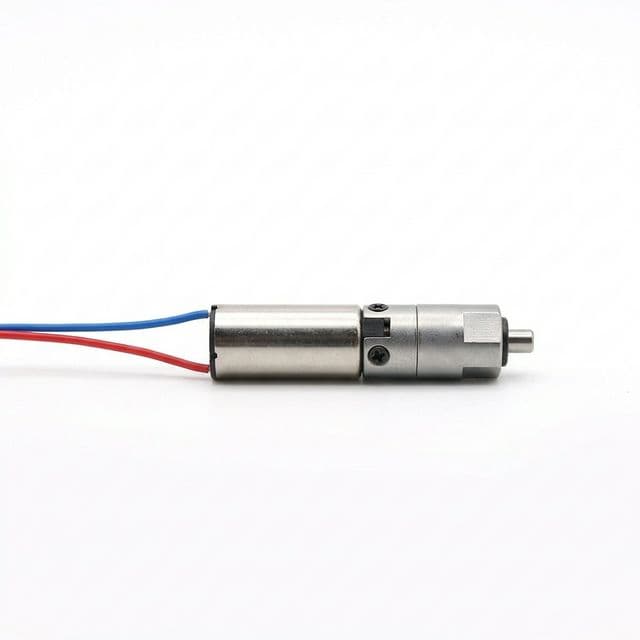
For a 12V 1000 rpm DC motor with a 6mm shaft, first identify whether 6mm describes the output shaft or motor-body diameter. One published reference is a 37mm 12V gearmotor with a 6mm D-shaped output shaft; 1000 rpm is its no-load speed. Confirm the part number, ratio, load curve, and shaft drawing before sourcing.
Published: 2026-05-04 | Last reviewed: 2026-10-13
Report summary: conclusions and key numbers
Core conclusions are paired with quantifiable context before deep-dive sections.
No-load speed
A published 37D gearmotor example lists 1000 rpm at 12V without load.
6mm D-shaped shaft example
Confirm profile, length, and tolerance against the selected part drawing.
Shaft and body are different
A 6mm motor-body requirement needs a separate voltage and torque review.
Request part-specific evidence
Check loaded speed, startup current, duty rating, temperature, and shaft drawing.
- Need an early screen for a 12V motor with a 6mm output-shaft interface.
- Need to distinguish a 6mm shaft from a 6mm motor-body diameter.
- Need to check torque-speed-current fit before requesting gear ratio samples.
- Need supplier questions for load speed, current, duty, and shaft fit before RFQ.
- Final production sign-off without PN-level endurance, backlash, and thermal reports.
- Safety-critical projects requiring certified reliability evidence packs.
- Programs that require guaranteed lifetime claims without test-condition-matched data.
- Projects that skip startup current waveform logging and select by catalog headline only.
Methods and evidence
Transparent formulas, dated sources, and explicit known/unknown boundaries.
| Method block | Formula / rule | Decision value |
|---|---|---|
| Mechanical power estimate | P = 2 * pi * n / 60 * T | Converts target output speed and torque to first-pass shaft power. |
| Indicative running-current estimate | I_run ~= P / (V * eta) | Uses a selectable generic efficiency scenario; replace it with PN-level data and a measured load profile. |
| Startup-current gate | Unknown until motor PN, driver limit, and waveform are known | Compare supplier stall/current-limit data with the selected driver, then verify startup and reversal waveforms. |
| Driver conduction loss | P_driver ~= I_rms^2 * RDS(on) | Converts current profile into thermal risk rather than peak-only claims. |
| Ratio sanity check | n_out ~= n_motor / ratio | Prevents frame-size-only selection by tying speed to explicit ratio. |
| Shaft fit delta | delta = d_target - d_actual | Flags interface mismatch when output shaft differs from required 6mm target. |
| Dimension-intent gate | 6mm output shaft != 6mm motor body | Routes true 6mm body-diameter requests away from the 12V 37D-style shaft-output benchmark. |
| Shaft class interpretation | abs(delta) <= 0.1mm => direct-fit candidate | Beyond tolerance band, coupler or machining path is required before release. |
| Loaded-speed correction | n_load = n0 - (delta n / delta M) * M_load | Prevents using a 1000 rpm no-load catalog point as a loaded-speed guarantee. |
| Duty-cycle screening | High-risk when duty >= 70% | High duty increases thermal and wear risk; move result to conditional state by default. |
| 12V driver window gate | V_min <= V_system <= V_max | Checks whether selected bridge window actually covers system rail and transients. |
| Driver UVLO recovery gate | VM must stay above UVLO falling and recover above UVLO rising threshold | Prevents repeated reset loops under startup or braking transients when supply dips below UVLO. |
| Local bulk-capacitance gate | Validate ripple under I_start and braking current dump; no default capacitor value is universal | Datasheets state bulk capacitance is system dependent; verify with waveform captures on your harness and load. |
| Duty-type boundary | Intermittent limits are family specific (example vendor notes show 5% and 20% cases) | Do not reuse one duty cutoff across all gearheads; map duty assumptions to the exact motor-gearhead family. |
| Motor operating-range check | Use the selected motor’s continuous-operation range | There is no universal speed-life band; check the part-specific operating-area plot at the target torque and duty. |
| Rule-based screening status | Boundary rules; not a probability or supplier rating | Provides a pre-RFQ route only; it does not establish product fit without PN-level evidence. |
| Source | Date | Coverage | Known / Unknown |
|---|---|---|---|
| Pololu 37D metal gearmotors category page | Accessed 2026-10-10 | Lists 12V family members and declares 6mm D-shaped output shaft format. | Known with vendor scope |
| Pololu 37D 10:1 product page (item #4748) | Accessed 2026-10-10 | Publishes a 37mm gearmotor body, 12V no-load speed of 1000rpm, 0.2A no-load current, 6mm D-shaped output shaft, 16mm shaft length, and vendor load cautions. | Known with vendor scope |
| FAULHABER 0615N4.5S DC micromotor product page | Accessed 2026-10-10 | Publishes a true 6mm-diameter DC micromotor class: 1.5V-4.5V nominal range, 0.172mNm rated torque, 0.245mNm stall torque, and 20300min^-1 no-load speed. | Known with product-family scope |
| Pololu 37D product page labeled 6.3:1 (item #4747) | Accessed 2026-10-10 | The title labels this variant 6.3:1; its detailed specification states 6.25:1. It lists a 6mm D-shaped shaft, 12V no-load 1600rpm/0.2A, and a 5.5A stall-current extrapolation. | Known with vendor scope |
| Pololu 37D 150:1 product page (item #2828) | Accessed 2026-10-10 | Shows 12V no-load 67rpm/0.2A and stall 49kg-cm at 5.5A, illustrating ratio-driven output spread in the same family. | Known with vendor scope |
| Pololu 37D datasheet | Accessed 2026-10-10 | Provides gear ratios and 12V speed/current points for representative variants. | Known with vendor scope |
| TI DRV8876 datasheet | Accessed 2026-10-10 | Confirms VM 4.5V-37V, UVLO typ 4.45V rising / 4.35V falling, IOCP 3.5A-5.5A, and >47uF system-dependent bulk-cap guidance. | Known |
| TI DRV8833 datasheet | Accessed 2026-10-10 | Confirms VM 2.7V-10.8V, VM<2.5V shutdown with VM>2.7V recovery, and at least 10uF bulk capacitance recommendation. | Known |
| TI DRV8212 datasheet | Accessed 2026-10-10 | Confirms VM 1.65V-11V class, UVLO typ 1.65V rising / 1.30V falling, and low-RDS(on) class behavior with thermal caveats. | Known with boundary |
| maxon support: Motor data and simulation | Accessed 2026-10-10 | Explains speed/torque gradient, speed loss with increasing torque, about 10% catalog-constant tolerance, and temperature-dependent motor constants. | Known with scope |
| maxon RE16 product page (NRND) | Accessed 2026-10-10 | Reference for direct-drive operating range; maxon marks this part not recommended for new designs, so it is not a current sourcing recommendation. | Known with lifecycle boundary |
| FAULHABER precision gearheads technical information | Accessed 2026-10-10 | Includes duty-boundary notes (intermittent limit examples at 5% and 20% by context), plus explicit lifetime and thermal/lubrication uncertainty warnings. | Known with boundary |
| EUR-Lex Directive 2011/65/EU (RoHS) | Accessed 2026-10-10 | Material restriction baseline used in procurement checklist. | Known |
| EUR-Lex Directive (EU) 2015/863 | Accessed 2026-10-10 | Amends RoHS Annex II with four phthalates (DEHP, BBP, DBP, DIBP) and applicability timeline from 2019-07-22 in most categories. | Known |
| ECHA SCIP suppliers of articles guidance | Accessed 2026-10-10 | States SCIP duty from 2021-01-05 when Candidate List SVHC concentration in articles exceeds 0.1% w/w for EU market placement. | Known with legal-scope boundary |
| Cross-vendor normalized 6mm shaft endurance dataset | Pending | No reliable public dataset with matched test profiles across vendors. | Pending confirmation / no reliable public dataset |
Source-backed decisions and limits
These comparisons connect published specifications to selection steps and identify what still needs part-specific evidence.
| Topic | New fact | Applicable condition | Decision effect | Certainty |
|---|---|---|---|---|
| 12V no-load speed reference | A public 12V 37D 10:1 reference lists 1000 rpm with a 6mm D-shaped output shaft. | Vendor-family scope only; speed is no-load and not a universal guarantee for every 12V 6mm motor. | Treat 1000 rpm as a shortlist reference and require loaded-speed confirmation for the selected part before RFQ. | Known with vendor scope |
| Dimension meaning boundary | The Pololu 1000 rpm anchor is a 37mm-diameter gearmotor with a 6mm output shaft, while FAULHABER 0615 is a true 6mm-diameter micromotor with sub-mNm torque. | Applies whenever a query says "6mm motor" without saying shaft, body diameter, or gearbox output interface. | Ask the dimension-intent question before RFQ; do not compare 6mm body micromotors against 6mm-shaft gearmotors as substitutes. | Known with product-family scope |
| Loaded-speed downgrade | maxon documents speed loss with increasing torque through speed/torque gradient, with constants affected by tolerance and temperature. | Applies to any 1000 rpm catalog or vendor-family point unless it is explicitly specified at the target load, voltage, and temperature. | Treat 1000 rpm as a no-load shortlist anchor; require loaded-speed curve or bench trace before promising operating rpm. | Known with scope |
| 6mm shaft claim boundary | 37D references explicitly publish a 6mm D-shaped output shaft profile. | Vendor-family scope only; do not treat as universal for all 12V motors. | Require PN-level shaft drawing before freezing coupler and bearing stack. | Known with vendor scope |
| Ratio-driven speed spread | One 12V family can span high-speed and low-speed outputs by ratio selection. | Applies when frame-size labels are reused without ratio tables. | Make ratio explicit in RFQ fields and scenario checks. | Known with vendor scope |
| Ratio endpoint benchmark | A 37D variant titled 6.3:1 lists an exact 6.25:1 ratio and 1600rpm at 12V; the 150:1 version lists 67rpm. | Applies when teams assume voltage alone determines output-speed class. | Use ratio endpoint checks early to avoid wrong-family sampling and schedule slip. | Known with vendor scope |
| 12V driver window split | DRV8876 class supports rails above 10.8V while DRV8833 class does not. | Applies to teams reusing low-voltage driver designs on 12V platforms. | Route rail-window mismatches to conditional or engineering review. | Known |
| UVLO reset behavior | DRV8833 disables below VM<2.5V and resumes above VM>2.7V, while DRV8876 UVLO thresholds are typ 4.45V rising and 4.35V falling. | Applies when startup surges, braking events, or rail dips are possible. | Add power-path waveform capture gate instead of trusting static bench current only. | Known |
| Capacitance and decoupling boundary | DRV8876 guidance calls for system-dependent bulk capacitance (>47uF example), and DRV8833 calls for at least 10uF local VM bulk capacitance. | Applies to long harnesses, shared rails, and fast direction-reversal loads. | Treat capacitor sizing as a measured integration task, not a copied schematic constant. | Known with boundary |
| Low-voltage fallback option | DRV8212 supports a motor supply from 1.65V to 11V; continuous-current capability remains thermal-design dependent. | Applies when battery sag or multi-rail architecture pushes below legacy thresholds. | Keep this option conditional until thermal model + bench traces are completed. | Known with boundary |
| Motor operating-range selection | Operating limits depend on the selected motor, load point, and thermal conditions; no single speed-life band applies across families. | Check the exact part’s continuous-operation range and speed-torque curve. | Compare the target point with the vendor operating-area plot before choosing direct drive or a ratio. | Known with scope |
| Current interpretation | Vendor guidance commonly treats continuous operation near low fractions of stall-current. | Heuristic differs by motor family and test method. | Use as risk weighting; final limits must come from supplier thermal data. | Known with vendor scope |
| Duty-cycle risk | High duty requests without endurance curves significantly increase thermal uncertainty. | Most severe in compact gearmotor classes with limited thermal mass. | Mark duty >= 70% as conditional or not recommended unless evidence is provided. | Known with boundary |
| Intermittent-duty contradiction | Published FAULHABER guidance includes context-specific intermittent examples (for example 5% and 20%), confirming duty limits are family dependent. | Applies when one global duty threshold is reused across gearhead families. | Require PN-level duty definition and test profile before lifetime claims. | Known with boundary |
| Compliance baseline | RoHS declarations remain mandatory baseline for covered markets. | Additional REACH or market-specific obligations may apply by role and destination. | Keep compliance gate in RFQ checklist even for early screening outputs. | Known |
| Compliance timeline trigger | RoHS Annex II phthalate extension (Directive 2015/863) and SCIP duty from 2021-01-05 both affect EU-bound article programs. | Applies when the motor assembly is placed on the EU market as an article or component in an article. | Add legal-scope check and document timeline in RFQ gates before PO. | Known with legal-scope boundary |
| Evidence gap | No stable public cross-vendor dataset links 6mm shaft class to lifecycle drift metrics. | Applies to final backlash/life guarantees. | State uncertainty explicitly and request endurance packets before PO. | Pending confirmation / no reliable public dataset |
| Evidence point | Architecture role | Published data | Decision use |
|---|---|---|---|
| Pololu 37D item #4748 page | 12V 1000 rpm reference point | 37mm-diameter 12V 10:1 gearmotor listing: 1000rpm no-load, 0.2A no-load, 6mm D-shaped output shaft, 5.5A stall-current listing. | Use it as one vendor-specific reference; verify the target load point, current limit, and exact shaft drawing for the selected part. |
| FAULHABER 0615N4.5S page | 6mm body-diameter counterexample | 6mm motor diameter, 1.5V-4.5V nominal range, 0.172mNm rated torque, 0.245mNm stall torque, and 20300min^-1 no-load speed. | Shows why "6mm shaft" and "6mm motor body" must be separated before sizing or sourcing. |
| maxon motor data and simulation support note | Loaded-speed correction | Speed/torque gradient indicates speed lost with increasing torque; motor constants have tolerance and temperature dependence. | For 12V 1000 rpm requests, require load-point data rather than accepting no-load rpm as operating speed. |
| Pololu 37D item #4747 and #2828 pages | Ratio endpoint benchmark | The variant titled 6.3:1 lists an exact 6.25:1 ratio and 1600rpm; the 150:1 variant lists 67rpm (12V). Both list 0.2A no-load and 5.5A stall current. | Treat ratio as first-order selector; frame naming alone cannot define output-speed behavior. |
| Pololu 37D item #4747 cautions | Load boundary and wear risk | Vendor explicitly warns to stay <=25% of stall current for practical operation and notes non-linear wear rise with load. | Use current-margin gate before approving duty-heavy usage in RFQ. |
| TI DRV8876 + DRV8833 | Window + UVLO + decoupling comparator | DRV8876: 4.5V-37V with UVLO typ 4.45V/4.35V and >47uF bulk-cap example; DRV8833: 2.7V-10.8V with VM<2.5V shutdown and >=10uF local bulk recommendation. | Flags both voltage-window mismatch and reset-risk under transient dips. |
| FAULHABER precision gearheads technical info | Duty boundary and uncertainty framing | Intermittent-duty examples differ by context (5% and 20%), and document states lifetime is application-dependent and hard to generalize. | Avoids copying a single duty cutoff across vendors and forces PN-level evidence for endurance claims. |
| Gate | Threshold | Required action if not met |
|---|---|---|
| Dimension-intent gate | Before sizing, classify "6mm" as output shaft/interface, motor body diameter, shaft length, or package constraint. | If it means motor body diameter, leave this 12V 6mm-shaft path and request a micro-motor PN search with sub-mNm torque units. |
| Shaft interface gate | Requested shaft diameter must stay within validated tolerance around 6mm target. | If mismatch exists, require coupler redesign or PN change before procurement. |
| Driver voltage gate | Selected bridge operating window must cover min/nom/max rail and startup transients. | If out of window, reselect driver class before locking motor choice. |
| Current and thermal gate | Estimated run current + startup current must stay inside bridge and thermal envelopes. | If exceeded, derate duty or move to heavier architecture and rerun screening. |
| UVLO transient gate | Measured VM waveform must stay above UVLO-falling thresholds under startup, reversal, and braking events. | If violated, add rail buffering/relayout or change driver class before motor freeze. |
| Bulk-capacitance validation gate | Local VM bulk capacitance must be validated under real harness/load transients (datasheet defaults are not universal). | If rail ripple triggers resets or OCP retries, rerun with revised capacitor network and retest. |
| Ratio disclosure gate | Output speed claims must include exact gear ratio and tolerance context. | If ratio is unknown, keep decision conditional and request complete ratio tables. |
| 12V speed reference gate | A 1000 rpm reference must identify its voltage, ratio, and no-load or loaded condition. | If the target load point is not published, request the selected part’s speed-torque curve before RFQ. |
| Loaded-speed evidence gate | A 1000 rpm claim must state whether it is no-load, rated-load, or measured under the project load profile. | If only no-load data exists, keep sourcing conditional and request speed-torque curve, duty profile, and bench trace. |
| Duty-cycle evidence gate | Duty >= 70% needs endurance evidence under similar load and ambient conditions. | Without evidence, do not release PO; route to design review fallback. |
| Compliance document gate | RoHS/REACH declarations and material statement must exist for shortlisted PN. | If missing, keep output conditional and block sourcing handoff. |
| SCIP / Article-33 gate (EU programs) | When Candidate List SVHC exceeds 0.1% w/w in an article, SCIP and communication obligations must be mapped before release. | If legal scope is unclear, route to compliance review and keep sourcing status conditional. |
| Open question | Why evidence is insufficient | Decision impact |
|---|---|---|
| Vendor-neutral loaded-speed conversion for every 12V 1000 rpm / 6mm-shaft listing. | No-load rpm, gear ratio, efficiency, lubricant state, and test temperature are not normalized across public catalogs. | Loaded rpm must remain conditional until the specific PN speed-torque curve or bench measurement is available. |
| Cross-vendor endurance curves for 6mm shaft class at matched duty/load. | Public reports use inconsistent test rigs and failure criteria. | Lifecycle confidence remains conditional until supplier-specific evidence is provided. |
| Backlash drift trend by cycle count for compact gearmotor platforms. | Most public documents publish initial backlash only. | Precision-positioning recommendations need vendor endurance tracking before final sign-off. |
| Comparable noise profile at high PWM and reversal-heavy use. | Cross-vendor acoustic test standards are rarely disclosed in marketing docs. | Noise-sensitive projects require lab measurements before architecture freeze. |
| Universal tolerance standard mapping for “6mm shaft” catalog wording. | Catalog conventions differ by supplier and coupler ecosystem. | Coupler and bearing stack decisions must be tied to PN drawing dimensions. |
Alternative comparison
Use reproducible dimensions (voltage, torque, response, cost, fit) instead of generic claims.
| Option | Voltage band | Torque band | Dynamic response | Cost class | Best-fit scenario | Boundary / counterexample |
|---|---|---|---|---|---|---|
| 6mm body-diameter DC micromotor | 1.5V-4.5V example class | Sub-mNm without additional reduction | Very high | Medium to high | Best when the package diameter itself must be 6mm and the load is tiny. | Not a substitute for a 12V 6mm-output-shaft gearmotor at hundreds of mNm. |
| 12V brushed gearmotor with native 6mm output shaft | 9V-14V typical system rail | Medium to high (ratio-dependent) | Moderate | Low to medium | Best for direct 6mm interface needs with mainstream BOM constraints. | Performance depends strongly on ratio; high duty still needs thermal validation. |
| 12V brushed DC motor + external coupler to 6mm shaft | 6V-18V family dependent | Low to medium without additional reduction | High | Low | Useful when compact direct-drive speed is priority and torque demand is limited. | Coupler alignment and bearing load can dominate reliability; low-rpm torque may be insufficient. |
| 12V gearmotor + custom output stage (hub/keyway adapter) | 9V-14V typical | Medium to high | Moderate to low | Medium | Best when integration requires non-standard shaft geometry or fixture constraints. | Extra parts add tolerance stack-up and assembly complexity. |
| BLDC + reduction + 6mm output interface | 12V-24V systems | Medium to high with control headroom | High (control dependent) | Medium to high | Good for tighter efficiency/noise targets with advanced controls. | Higher BOM and firmware complexity than brushed baseline. |
Risk and mitigation
Covers misuse risk, cost risk, and scenario mismatch risk with direct mitigation actions.
| Risk | Impact | Probability | Mitigation path |
|---|---|---|---|
| Confusing 6mm output shaft with 6mm motor body diameter. | High | Medium-high | Use the dimension-intent selector first; body-diameter requests need a different micro-motor search path. |
| Treating 1000 rpm no-load speed as guaranteed loaded speed. | High | High | Require speed-torque curve or bench trace at target torque, voltage, temperature, and duty cycle. |
| Selecting by frame label without explicit ratio. | High | High | Require ratio and tolerance table before accepting output-speed claims. |
| Ignoring shaft-diameter tolerance in coupler stack. | High | Medium-high | Validate shaft drawing, tolerances, and mating hardware before sample freeze. |
| Choosing driver by peak-current headline only. | High | Medium | Apply run-current, startup-current, and driver thermal checks together. |
| Ignoring UVLO/reset behavior and local bulk-capacitance validation. | High | Medium-high | Capture VM waveform during startup/reversal/braking and validate capacitor network before release. |
| Running high duty without endurance evidence. | High | Medium | Gate high-duty requests with thermal endurance data and fallback architecture path. |
| Overpromising low-rpm/high-torque direct-drive performance. | Medium-high | Medium | Use ratio-first alternatives and require load-point validation. |
| Using screening output as release-grade qualification. | Medium-high | Medium | Keep tool output as pre-RFQ filter and require supplier qualification package before PO. |
| Missing compliance declarations at sourcing handoff. | Medium | Medium | Add RoHS/REACH checklist to every shortlisted option before procurement approval. |
| Skipping EU legal-scope screening for SCIP/Article-33 obligations. | Medium-high | Medium | Run early compliance triage for SVHC 0.1% w/w trigger and hold PO until obligations are mapped. |
Scenario examples
Each scenario includes assumptions, modeled output, and the minimum next action.
| Scenario | Assumption | Estimated result | Action |
|---|---|---|---|
| 12V motor with a 1000 rpm target and 6mm shaft | 12V rail, 1000 rpm target, 420 mNm, 35% duty, native 6mm shaft | The tool cannot confirm a motor match: the cited 1000 rpm value is a no-load reference, and startup current is not estimated. | Request the candidate ratio, speed-torque curve, shaft drawing, and thermal evidence before sample approval. |
| Ambiguous query where 6mm means motor body diameter | User needs a 6mm outside-diameter micromotor rather than a 6mm output shaft | Not recommended for the default 12V 420mNm gearmotor-screening path. | Switch dimension intent to motor body, then request micro-motor voltage, sub-mNm torque, duty, and package drawing requirements. |
| 12V automation module, 6mm output shaft required | 12V rail, 300 rpm target, 650 mNm, 40% duty, indoor | Within the input screening rules; no part-specific fit or thermal margin is established. | Request two ratio candidates and compare output-speed tolerance under load. |
| Compact build with fast output requirement | 12V rail, 1200 rpm target, 320 mNm, 30% duty, indoor | Conditional due to speed/torque coupling and driver surge margin. | Evaluate direct-drive + coupler fallback and capture startup current waveform. |
| High-load duty-heavy request | 12V rail, 280 rpm target, 1800 mNm, 85% duty, high-temp | Not recommended for compact brushed baseline without major derating. | Escalate to heavy-frame architecture and require endurance evidence before RFQ. |
| Shaft mismatch discovered late | Selected motor outputs 5mm shaft while assembly needs strict 6mm interface | Conditional with high integration risk. | Run coupler/tolerance review immediately or switch to native 6mm output option. |
| Legacy DRV8833 board reused on nominal 12V rail | 12V rail with startup dips and reversal spikes, DRV8833 VM range 2.7V-10.8V | Not recommended due voltage-window mismatch and UVLO reset risk during transients. | Move to 12V-capable bridge class and revalidate VM waveform plus bulk-cap network. |
12V 1000 rpm DC motor with a 6mm shaft: selection path
Use these checks to resolve interface fit, speed under load, driver limits, and the supplier evidence needed before RFQ.
Decision FAQ
Questions are grouped by intent, not glossary-only definitions.
B2B application fit, OEM options, and inquiry handoff
Move from estimator output to executable sourcing with factory customization scope and compliance-ready RFQ preparation.
- Teams selecting 12V gearmotor architecture where mechanical interface requires 6mm shaft.
- Programs comparing direct-drive + coupler versus integrated geared solutions under the same torque-speed target.
- Buyers who need tool output plus source-backed decision notes before RFQ.
- Ratio, winding/Kv, and no-load speed tuning around your 12V system rails.
- Output-shaft geometry customization: D-shaft length, keyway/coupler interface, and concentricity controls.
- Harness, connector, insulation, and packaging options aligned to assembly and test flow.
- Collect RoHS/REACH declarations and material traceability before order release.
- If any Candidate List SVHC exceeds 0.1% w/w for EU market supply, prepare SCIP notification package before shipment.
- Validate startup surge, steady-state thermal rise, and duty-cycle endurance on sample PNs.
- Treat this page as pre-RFQ screening; final claims require supplier qualification evidence.
Related fit checks