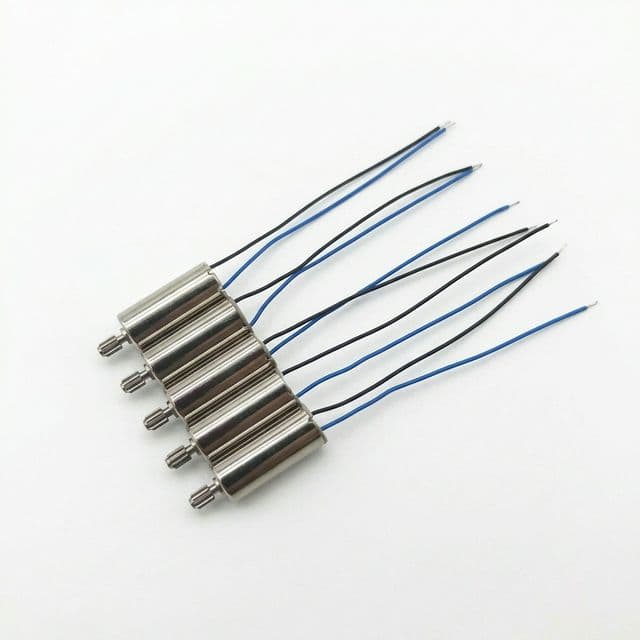
Coreless DC Motor EMI Suppression: Factory-Integrated vs. External Mitigation Costs (2026)
Use this 2026 coreless DC motor EMI sourcing guide to compare factory varistors, LC filters, and external PCB mitigation costs for IoT and medical RFQs.
One-Line Decision: When sourcing brushed coreless DC motors for wireless IoT or medical devices, paying a slight premium for factory-integrated EMI suppression (varistors or CLL circuits) is almost always cheaper than failing CE/FCC compliance and rushing an external PCB filter redesign.
This guide provides a decision-grade framework for procurement managers and motion-control engineers evaluating coreless motor suppliers in the context of tightening 2026 Electromagnetic Compatibility (EMC) standards.
Scope and limits: This article applies strictly to brushed coreless DC motors (using precious metal or graphite brushes). Brushless DC (BLDC) motors do not have mechanical commutators and generate fundamentally different noise profiles (mostly from the PWM drive), which require different mitigation strategies.
The 2026 EMC Sourcing Context
The shift toward densely packed, battery-operated devices means that precision micro-motors are now placed within millimeters of sensitive wireless radios (Bluetooth, Wi-Fi, LoRa, or 5G cellular modules) and analog medical sensors.
In the past, engineers could often ignore motor electrical noise. Today, strict compliance frameworks—specifically the Radio Equipment Directive (RED) in Europe, FCC Part 15 in the US, and IEC 60601-1-2:2014+A1:2020 (Edition 4.1) for medical electrical equipment—make radiated and conducted emissions a sourcing risk rather than a late-stage lab detail. These are system-level compliance frameworks, not standalone motor certificates, so the correct decision is to buy enough motor-level suppression margin before the final device is tested.
A standard "bare" brushed coreless motor is an aggressive EMI generator. As the motor spins, the brushes continuously make and break contact with the commutator segments. This rapid switching interrupts the inductive current of the motor windings, creating high-voltage spikes (often hundreds of volts) and high-frequency arcing. This broadband electrical noise acts as a localized jamming signal, knocking out nearby microcontrollers, disrupting wireless pairings, and ensuring a swift failure during third-party EMC lab testing.
Why Procurement Tries to Avoid Pre-Suppressed Motors
When evaluating initial RFQ responses, a procurement manager will notice a distinct price difference between a standard motor and an "EMC-suppressed" motor.
A bare motor might cost $4.50 in volume. The same motor with an internal ring varistor or a custom end-cap housing a Capacitor-Inductor (LC) network might cost $5.20.
For a buyer tasked with shaving pennies off the Bill of Materials (BOM), that $0.70 difference per unit looks like a prime target for cost reduction. The common, yet flawed, logic is: "We will buy the bare motor, and our electrical engineering team can just add a $0.05 ceramic capacitor to the main PCB."
This assumption ignores the physical laws of electromagnetic radiation.
The Problem with External PCB Filters
When you attempt to filter motor noise externally on the main PCB, you are leaving the physical wire (or flexible printed circuit) between the motor terminals and the PCB unprotected.
That connecting wire acts as an extremely efficient transmitting antenna.
By the time the high-frequency spikes reach the $0.05 capacitor on your PCB, the energy has already been broadcast into the surrounding casing, interfering with your IoT radio antenna or failing the radiated emissions test at the EMC lab.
To properly suppress EMI using external PCB components, you often must:
- Shorten the motor wires drastically (complicating assembly).
- Add costly ferrite beads over the wires.
- Install grounded metal shielding enclosures over the motor itself.
- Go through multiple rounds of failed EMC lab testing ($2,000+ per day).
Visualizing Radiated Emissions: Unsuppressed vs. Factory Suppressed
The following graph is an illustrative radiated-emissions profile (30 MHz to 1000 MHz), not a substitute for a chamber report from your final device. It shows the sourcing principle: factory-integrated suppression reduces commutation spikes before the motor leads become antennas, while PCB-only filtering acts after much of the energy has already coupled into the enclosure.
Comparative Scenario: Factory Integration vs. External PCB Mitigation
To make a defensible sourcing decision, teams must model the total lifecycle cost. Let’s evaluate a 50,000-unit production run of a Bluetooth-enabled smart lock using a 16mm precious-metal brushed coreless motor.
Cost model assumptions: The figures below are budgetary 2026 RFQ planning ranges for high-volume Asian sourcing, not guaranteed price quotes. They assume a 3V-12V brushed coreless motor, motor leads longer than 20mm, one formal EMC lab campaign, and an enclosure where the motor sits near a radio or sensor board. Validate exact component pricing, suppression topology, and EMC margin against your selected part number, harness routing, enclosure material, and target market.
| Sourcing Strategy | Component Cost (Unit) | Assembly Complexity | EMC Lab Testing Cost | Risk of Re-spin | Total Implied Cost (Per Unit) |
|---|---|---|---|---|---|
| Strategy A: Bare Motor + PCB Capacitor | $4.50 (Motor) + $0.05 (Cap) | Low. Standard wire soldering. | High. Wires act as antennas; likely to fail radiated tests. | Critical. Fails at lab, requires 3-week PCB redesign, delaying launch. | $6.80+ (Factoring lab failure penalties and engineering delays) |
| Strategy B: Bare Motor + Ferrite Beads & Shielding | $4.50 (Motor) + $0.60 (Ferrites/Tape) | High. Requires manual application of copper tape and clipping ferrites. | Medium. Usually passes, but margin is tight depending on wire routing. | Low. | $5.90 (High manual labor costs on assembly line) |
| Strategy C: Bare Motor + Twisted Pair Wire | $4.50 (Motor) + $0.15 (Wire) | Medium. Requires twisted pair harness spec. | Medium-High. Better than parallel wires, but often insufficient for strict limits. | Medium. | $6.10+ (Marginal improvement, high risk for medical/IoT) |
| Strategy D: Motor with Shielded Cable & Ground Clip | $4.50 (Motor) + $0.85 (Shielded Wire/Clip) | High. Requires careful grounding of shield to chassis. | Low-Medium. Good attenuation if grounded properly. | Low. | $6.20 (High material and assembly cost) |
| Strategy E: Motor with Internal Ring Varistor | $5.10 (Suppressed Motor) | Lowest. Pre-suppressed at commutator. Wires are "quiet". | Lowest. Passes CISPR on first pass with high margin. | Zero. | $5.10 (Highest initial BOM, lowest TCO) |
| Strategy F: Motor with Custom End-Cap LC Filter | $5.40 (Filtered Motor) | Lowest. Plug-and-play harness. | Lowest. Best for medical grade IEC 60601. | Zero. | $5.40 (Mandatory for strict medical/aerospace) |
Conclusion: Attempting to save $0.60 on the motor BOM by using Strategy A results in catastrophic project delays. Strategy E (Internal Ring Varistor) is the sweet spot for consumer IoT, while Strategy F is necessary for critical medical devices.
Types of Factory-Integrated EMI Suppression
When requesting a suppressed motor from your supplier, you are generally choosing between two technologies installed directly on the motor's internal brush card/commutator assembly.
1. Ring Varistors (VDRs)
A ring varistor is a voltage-dependent resistor shaped like a washer, soldered directly to the commutator segments inside the motor housing.
- How it works: Under normal operating voltage (e.g., 12V), the varistor has high resistance and draws no current. When a high-voltage spike (e.g., 200V) is generated during brush commutation, the varistor's resistance drops instantly, shorting the spike back into the coil before it can jump across the air gap as an arc.
- Best for: Low-cost, effective suppression for 3V - 24V motors in consumer and IoT devices.
2. CLL Networks / Internal LC Filters
CLL stands for Capacitor-Inductor-Capacitor, or more broadly, built-in R-C (Resistor-Capacitor) networks. These are miniature SMD components mounted on a tiny PCB that replaces the standard plastic end-cap of the motor.
- How it works: A combination of capacitors across the motor terminals and the motor housing (acting as ground), sometimes paired with tiny inductors (chokes) in series with the brushes.
- Best for: Strict medical applications (IEC 60601-1-2), aerospace, and high-current graphite-brushed motors where a varistor alone is insufficient.
The Buyer's EMI Sourcing Checklist
Before freezing your supplier shortlist or finalizing your RFQ, verify that your engineering and procurement teams have aligned on the following points:
- Establish the compliance baseline: Identify exactly which standards the end product must pass (e.g., CISPR 11 for Medical, CISPR 32 for Multimedia, FCC Part 15).
- Ban the "PCB-only" assumption: Have engineering explicitly confirm they are not relying on main-board capacitors to suppress motor noise, especially if motor wires exceed 20mm in length.
- Request baseline EMC data from the supplier: The motor manufacturer should be able to provide a baseline radiated emissions plot for the bare motor vs. their varistor-equipped model.
- Verify physical clearance: Internal varistors add zero length to the motor. However, an integrated LC filter end-cap might add 1.5mm to 3.0mm to the overall motor length. Ensure the CAD model reflects the suppressed version.
- Audit the brush material: Ensure the supplier is quoting precious metal brushes for low-current continuous duty, or graphite for high-current start/stop. (Graphite generates significantly more EMI and requires heavier suppression).
Frequently Asked Questions (FAQ)
Q: How do we specify EMI suppression requirements in our RFQ?
A: Clearly state the target compliance standard (e.g., "Must support system-level FCC Part 15 Class B compliance") and explicitly ask suppliers if their quoted BOM includes internal varistors or CLL networks. Ask for standard radiated emissions test plots for their bare vs. suppressed models.
Q: Do brushless (BLDC) motors require EMI suppression?
A: BLDC motors do not have physical brushes, so they do not produce the high-frequency arcing noise that brushed motors do. However, the external electronic controller (PWM drive) generates conducted EMI. You will still need filtering, but it is applied at the controller stage, not inside the motor.
Q: Can a varistor burn out over time?
A: Ring varistors are highly reliable when matched correctly to the motor's operating voltage and inductance. However, if the motor is driven significantly above its rated voltage, the varistor can overheat and fail.
Q: Will adding a capacitor across the motor terminals reduce its speed or torque?
A: No. EMI suppression components (capacitors and varistors) target high-frequency transients. They do not impede the continuous DC current driving the motor, so torque and speed remain unaffected.
Q: Our current bare motor works fine in prototype, why change it for production?
A: Prototypes often sit on open lab benches without final casing, or use different battery chemistries and wire routings. A motor that "seems fine" will routinely fail formal EMC chamber testing. Do not rely on benchtop functionality as proof of EMC compliance.
Take the Next Step
Ignoring EMI at the motor level is a costly procurement trap. By specifying factory-integrated suppression, you offload the EMC risk to the motor manufacturer and protect your product launch timeline.
If you are struggling to pass CE or FCC certification due to radiated emissions, or if you want to optimize your BOM by removing bulky external ferrites, our team can help.
Download our RFQ Checklist to structure your next sourcing event, or Contact our Engineering Team to evaluate a pre-suppressed coreless DC motor tailored to your specific compliance framework.
Sources & References
- IEC 60601-1-2:2014+A1:2020 (Edition 4.1) - IEC Webstore - Medical electrical equipment collateral standard amendment covering electromagnetic disturbances, requirements, and tests.
- FCC Part 15 Subpart B - eCFR - Federal Communications Commission regulations governing unintentional radiators and acceptable interference levels for digital devices.
- European Commission: Radio Equipment Directive (RED) 2014/53/EU - EUR-Lex - Regulatory framework ensuring radio equipment placed on the EU market uses spectrum effectively and avoids harmful electromagnetic interference.
- KEMET F5A EMI/RFI Suppression Element Datasheet - KEMET - Component-level reference for EMI/RFI and transient-voltage suppression used in motor applications.
Author
Categories
More Posts
Coreless Motor Sourcing 2026: Navigating the Post-EUA Medical Compliance Shift and Section 301 Tariffs
Coreless motor sourcing briefing for the June 30, 2026 EUA scenario and Section 301 tariff actions. Use Q3 supplier audit steps and RFQ checkpoints now.

Beyond Unit Price: The 2026 Coreless DC Motor TCO Framework for Procurement
Use this coreless DC motor TCO framework to compare suppliers, quantify hidden assembly, battery, MOQ, and warranty costs, and prepare a stronger RFQ.
Precious Metal vs Graphite Brushes in Coreless Motors: OEM Sourcing Guide
A procurement-focused breakdown of coreless DC motor commutation options. Learn when to source precious metal vs graphite brushes to balance MTBF, duty cycle, and unit cost.