
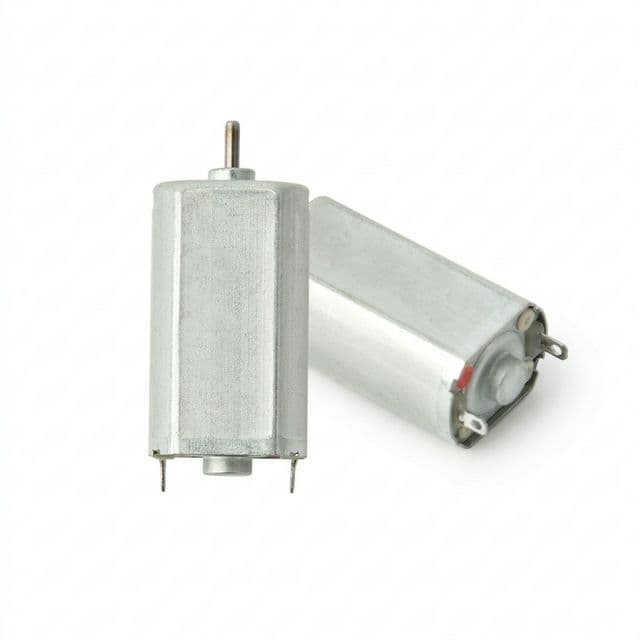
Coreless Motor Sourcing 2026: Navigating the Post-EUA Medical Compliance Shift and Section 301 Tariffs
Coreless motor sourcing briefing for the June 30, 2026 EUA scenario and Section 301 tariff actions. Use Q3 supplier audit steps and RFQ checkpoints now.
Decision-Level Conclusion (2026-W27): The reported June 30, 2026 HHS medical-device EUA termination timeline, combined with confirmed Section 301 tariff pressure on permanent magnets, is raising the compliance floor for coreless/ironless DC motors. OEMs should lock Q3/Q4 capacity now and disqualify suppliers lacking complete FDA/IEC 60601-1-2 traceability before the transition window closes.
This update focuses on the immediate impact of the mid-2026 regulatory shifts and translates these macroeconomic events into actionable engineering and procurement decisions for high-speed precision drives. Use it alongside the coreless DC motor RFQ checklist, the thermal derating and magnet sourcing guide, and the MOQ and lead-time negotiation playbook before releasing H2 2026 RFQs.
Scope and evidence status: This briefing applies to U.S. medical-device OEMs, EU/Asia-Pacific suppliers shipping into U.S. programs, and robotics/industrial buyers exposed to Section 301 landed-cost changes. Treat the June 30 and December 26 EUA dates as a scenario trigger requiring immediate supplier-document review until your regulatory team confirms the final HHS/FDA notice; the July tariff/hearing dates below are procurement-monitoring checkpoints unless a final Federal Register notice is cited.
What Changed and What to Monitor
| Date | Status | Primary source | Why buyers/specifiers should care now |
|---|---|---|---|
| 2026-06-30 | Reported HHS EUA termination notice for medical devices; transition date to December 26, 2026. | HHS / FDA / Federal Register monitoring | OEMs relying on EUA exemptions for motor-driven devices should prepare transition evidence for traditional premarket pathways. |
| 2026-07-07 | Monitoring checkpoint, not treated here as completed final action. | USTR / Federal Register docket monitoring | Proposed Section 301 actions could reach previously un-targeted tiers of the motor component supply chain, including magnets and windings. |
| 2026-07-24 | Monitoring checkpoint for temporary import-surcharge and customs guidance changes. | USTR / CBP updates | Buyers should keep landed-cost models editable rather than treating H1 tariff assumptions as fixed. |
| 2026-12-26 | Scenario deadline for affected devices, assuming the June 30 notice proceeds as stated. | HHS / FDA notice tracking | Devices without traditional FDA clearance (for example 510(k) or PMA pathway support) using non-compliant motors risk U.S. market interruption. |
Executive Summary: Post-EUA and Tariff Impact
| Decision axis | 30-day signal strength | Practical implication | Recommended action this week |
|---|---|---|---|
| Medical Compliance (Post-EUA) | Very High if confirmed | A shift from "temporary exemption" to "full traceability" (FDA/IEC 60601-1-2) would eliminate low-end suppliers unable to provide complete manufacturing and testing documentation. | Audit current motor suppliers for full quality management system (QMS) and test data traceability. |
| Component Sourcing Costs | High | USTR's published Section 301 modification puts permanent magnets under subheading 8505.11.00 at a 25% additional-duty target in 2026, which directly affects NdFeB-heavy precision drives. | Model landed costs assuming a 10-25% increase on raw components originating from targeted economies. |
| Supplier Lead Times | High | Tier-1 compliant suppliers will see order books fill rapidly as OEMs migrate away from non-compliant vendors ahead of the December deadline. | Secure binding MOQ and delivery schedules for Q3 and Q4 2026 immediately. |
Why This Matters for Medical and Robotics OEMs
The convergence of the EUA termination and Section 301 tariff updates creates a "perfect storm" for the precision motion supply chain:
- Compliance Squeeze: For the last several years, some medical OEMs utilized EUAs or emergency program assumptions to accept lighter component evidence. A return to strict FDA and IEC 60601-1-2 documentation expectations means every motor must have unbroken documentation.
- Cost Pressures: Just as OEMs need higher-grade, fully documented motors, the USTR is tightening Section 301 tariffs on raw materials and sub-components used in these high-end drives. USTR's September 18, 2024 notice sets a 2026 increase to 25% for permanent magnets under HTS 8505.11.00; buyers should validate the current HTS suffix, Chapter 99 line, and any additional China-origin surcharges with a customs broker before quoting.
- Origin Classification Boundary: If a coreless motor is imported as a finished assembly (for example under HTS 8501.10), customs treatment depends on origin and substantial-transformation facts, not only the component magnets. Treat third-country "screwdriver assemblies" as a ruling-risk item until counsel or CBP guidance confirms the classification.
- Capacity Constraints: Suppliers that meet the strict documentation standards while avoiding tariff-heavy origin countries are rare. Their capacity will be oversubscribed by Q4 2026.
Post-EUA Supply Chain Transition Timeline (2026-06 to 2026-12)
Sourcing Model Comparison: EUA vs. Post-EUA
| Metric | EUA Sourcing Model (Pre-June 2026) | Post-EUA + High Tariff Model (H2 2026) | Buyer Implication |
|---|---|---|---|
| MOQ Requirements | Flexible; spot buying common | High; scheduled blanket orders required | Fragmented purchasing will fail. Buyers must consolidate orders to meet higher MOQs. |
| Documentation Depth | Basic spec sheets often accepted | Deep traceability; material certs; lot tracking | Engineering must strictly reject un-documented supplier lots to prevent FDA blocks. |
| Origin Sensitivity | Low to Medium | Extremely High (Section 301 scrutiny) | "Tariff engineering" is necessary. Must know the origin of the magnet, not just the final motor assembly. |
| Lead Time Safety Stock | 2-4 weeks | 8-12+ weeks | Safety stock buffers must be tripled to account for customs delays and testing queues. |
Before issuing RFQs, convert this comparison into a document request package with the coreless supplier comparison scorecard and the coreless RFQ template.
Buyer Checklist (Who Should Act Now)
| Role | Immediate Action | Expected Artifact | Action Threshold / Trigger |
|---|---|---|---|
| Procurement Managers | Map the origin of all critical motor sub-components (magnets, wire) against the Section 301 list. | Supply Chain Origin Map | If >20% of motor BOM relies on HTS 8505.11.00.70 from targeted economies. |
| Motion-Control Engineers | Request complete IEC 60601-1-2 and ISO 13485 QMS documentation from current coreless suppliers. | Supplier Compliance Scorecard | If current motors were sourced under an EUA exemption post-2020. |
| Medical OEM PMs | Correlate the December 26 EUA transition end date with product launch and inventory burn-down. | Transition Timeline Align | If current inventory of non-compliant motors extends beyond Nov 2026. |
| Supply Chain VPs | Authorize advance POs to lock Q4 capacity at compliant suppliers before industry crunches. | Approved Blanket POs | If supplier audit score > 90% and tariff-free origin is confirmed. |
| Compliance Officers | Audit third-country "screwdriver assemblies" for substantial transformation rules. | CBP Ruling Request | If importing finished HTS 8501.10 motors assembled from Chinese NdFeB. |
Send your supplier document set for factory RFQ feedback if you need a second-pass review of QMS evidence, magnet origin, winding traceability, MOQ, and Q4 delivery commitments.
Risks, Limits, and Boundaries
| Risk / Constraint | Trigger Condition | Mitigation Strategy | Evidence Gap / Unknown |
|---|---|---|---|
| Lead Time Volatility | Mass-migration to fully compliant tier-1 coreless motor manufacturers in Q4. | Secure capacity before finalizing commercial price negotiations. | Exact Q4 capacity deficit across tier-1 suppliers is unknown; industry estimates range from 15-30% shortfall. |
| Tariff Stacking & Origin Fraud | China-origin permanent magnets or motors with China-origin magnet content face changed Section 301 economics. | Develop a dual-source strategy using qualified manufacturing hubs outside targeted economies where the origin facts are supportable. | Pending CBP rulings on what constitutes "substantial transformation" for finished motors in third countries like Vietnam. |
| FDA Market Rejection | Supplier cannot produce lot-level traceability after a confirmed EUA transition deadline. | Halt new designs using suppliers unwilling to commit to ISO 13485 and IEC 60601-1-2 alignment. | Whether the FDA will grant ad-hoc extensions for critical devices facing motor shortages. |
| Applicability Boundary | These specific EUA shifts primarily affect medical devices. | Industrial/robotic OEMs are exempt from the EUA shift but remain fully exposed to Section 301. |
Sourcing Decision Tree
FAQ
Does the HHS EUA termination affect all coreless motors?
No. It only affects coreless motors used in medical devices that were relying on emergency use authorizations (like certain COVID-19 related respiratory or diagnostic equipment) to bypass standard FDA 510(k) or PMA pathways.
If our motors are used in industrial automation, do we ignore this?
You ignore the EUA termination, but you must not ignore the Section 301 tariff updates. The tariff investigations into forced labor and structural excess capacity affect components regardless of their end-use application.
Why is the Dec 26, 2026 deadline critical if the announcement was in June?
It is critical as a planning scenario because a 180-day transition would compress supplier documentation, test evidence, and regulatory-pathway checks into H2 2026. Waiting until Q4 to audit suppliers could put the program behind capacity backlogs at compliant manufacturers.
Can we just absorb the Section 301 tariffs to avoid switching suppliers?
While possible, tariffs on raw materials and sub-components (like magnets) can cascade through the supply chain, inflating the final motor cost significantly. Furthermore, tariffs targeting forced labor often come with outright import bans (e.g., UFLPA compliance), which cannot simply be absorbed by paying a fee.
Related Buyer Workflows
- Thermal derating and magnet sourcing guide
- RFQ checklist for coreless DC motor OEM projects
- MOQ and lead-time negotiation playbook
- OEM development timeline from sample to mass production
- Request sourcing review
Sources
| Title | Institution | Date | URL / Evidence Link |
|---|---|---|---|
| HHS / FDA EUA medical-device notice monitoring | U.S. Department of Health and Human Services (HHS) / FDA | 2026-06-30 monitoring basis | Federal Register FDA agency notices |
| Notice of Modification: China's Acts, Policies and Practices Related to Technology Transfer, Intellectual Property and Innovation | Office of the U.S. Trade Representative (USTR) | 2024-09-18 | Federal Register notice 2024-21217 |
| CBP Rulings Search: substantial transformation and electric-motor origin | U.S. Customs and Border Protection (CBP) | Current ruling database | CBP rulings search |
| IEC 60601-1-2:2014+AMD1:2020 Medical Electrical Equipment EMC | International Electrotechnical Commission | 2020 | IEC publication 65916 |
Author
Categories
More Posts
Sourcing Autoclavable Coreless DC Motors for Surgical Hand Tools: Cycle Life, Sealing, and Compliance (2026 Guide)
Coreless DC motor sourcing guide for autoclavable surgical hand tools. Validate cycle life, sealing, compliance evidence, and RFQ risks before supplier review.

Coreless DC Motor Market Update (2026-W20): Tariff Review Windows, Drive-Safety Compliance, and Sourcing Decisions
A decision-grade update for motion-control and procurement teams on new U.S. Section 301 review windows, IEC 61800-5-1 implementation signals, and supplier-side changes affecting high-speed coreless DC motor programs.
OEM Coreless Motor Development Timeline From Sample to Mass Production
A realistic B2B project timeline for custom coreless DC motor programs, including RFQ, sample iteration, validation, and ramp-up milestones.