10mm Shaftless Vibration Motor (Coin/Pager) Selection Tool and Decision Report
Finish two tasks on one URL: run a first-screen fit calculation for 10mm coin motors (including `10mm pager vibration motor` and `10mm shaftless vibration motor` intent), then validate the decision with quantified evidence, applicability boundaries, alternatives, and risk controls.
Published: 2026-04-25 | Last updated: 2026-04-28 | Review cadence: quarterly
Tool-first quick start
Run the estimator first, then use evidence and FAQ sections only for boundary decisions.
Tool support assets and next actions
Visual references and RFQ handoff are kept after the estimator so the primary task stays focused.
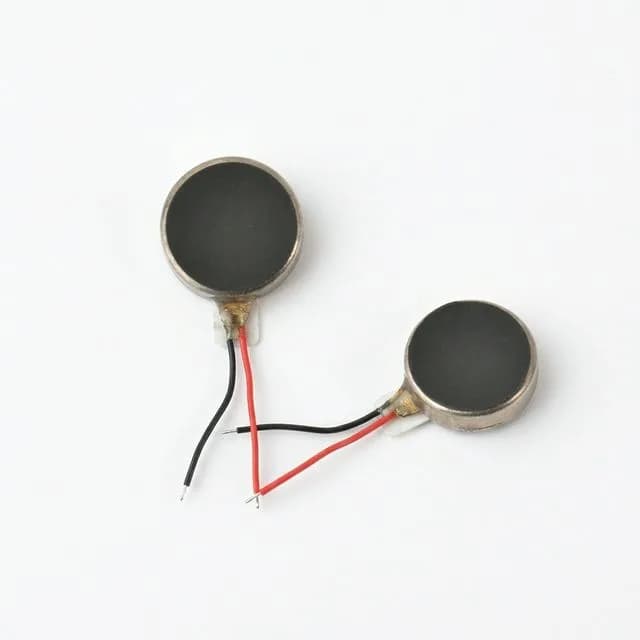
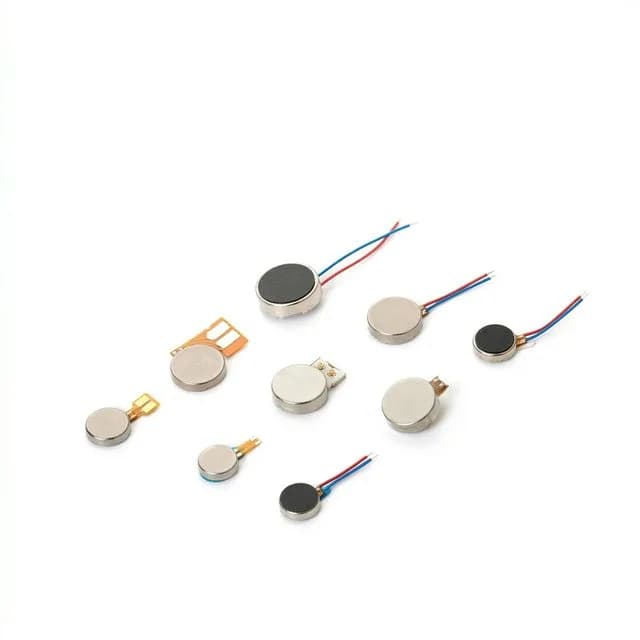
Stage1b gap audit and closure status
Audit-first enhancement: each high-impact content gap is tracked with explicit remediation status.
| Gap found | Decision impact | Stage1b action | Status |
|---|---|---|---|
| Tool-first experience for this exact keyword route did not exist. | High risk that users searching `10mm coin vibration motor` had to infer from broader pages. | Created dedicated route with first-screen input, result interpretation, and direct action CTA. | Closed in stage1-primary (2026-04-25) |
| Key PN boundaries were dispersed and easy to miss. | High risk of overdrive and startup failures from generic `3V` interpretation. | Promoted PN voltage/current/timing boundaries into summary cards, tool boundaries, and trigger matrix. | Closed in stage1b (2026-04-25) |
| Evidence and uncertainty were mixed in previous narratives. | High risk of treating assumptions as validated cross-vendor truth. | Separated source ledger, research delta facts, and pending-data block with explicit certainty labels. | Closed in stage1b (2026-04-25) |
| Risk module underrepresented logistics/compliance failure paths. | High risk of late-stage block by battery or consumer-product requirements. | Added CPSC + UL + PHMSA-linked risk rows, actions, and FAQ gates. | Closed in stage1b (2026-04-25) |
| Scenario layer lacked enclosure-coupled and battery-path examples. | Medium-to-high risk of selecting actuator by free-air assumptions only. | Added six scenario rows covering coin-cell, high duty, high temperature, and US consumer deployment. | Closed in stage1b (2026-04-25) |
| Adjacent-intent linking for this new route was missing. | Medium risk of poor discovery and weak contextual trust transfer from related pages. | Added related-intent anchors in-page and links from adjacent learn pages. | Closed in stage1c (2026-04-25) |
| Standards references and regulatory timeline lacked clause-level precision. | High risk of using superseded links or applying the wrong compliance date at RFQ handoff. | Corrected IEC 60086-4 source URL to the 2025 edition page and added eCFR date-specific rule boundaries (1263.3 vs 1263.4). | Closed in stage1b enhancement round (2026-04-25) |
| `10mm pager vibration motor` alias was not explicitly named on-page. | High risk that alias-intent visitors could miss that this page is their canonical decision destination. | Added pager alias wording in hero, summary, related-intent anchors, and FAQ with a term-boundary source. | Closed in stage1b enhancement round (2026-04-27) |
| `10mm shaftless vibration motor` alias and term boundary were missing from canonical sections. | High risk of routing ambiguity and incorrect assumption that `shaftless` guarantees waterproofing or cross-PN interchangeability. | Added shaftless alias coverage in hero/metadata/FAQ/anchors and injected source-backed boundaries for mounting, waterproofing, and architecture choice. | Closed in stage1b enhancement round (2026-04-28) |
| Cross-vendor 10mm envelope variance lacked concrete counterexample data. | High risk of treating one 10mm PN as a universal voltage/current boundary. | Added 2.0V-class vs 3.0V-class references and counterexample rows tied to supplier pages/datasheets. | Closed in stage1b enhancement round (2026-04-27) |
| U.S. compliance section lacked executable test thresholds. | High risk of passing date checks while failing compartment-access mechanical tests. | Added UL 4200A threshold facts (50N, 0.4 N-m, 10/3 drops) from Federal Register rule text into comparison, trigger, and compliance modules. | Closed in stage1b enhancement round (2026-04-27) |
Report summary: conclusions and key numbers
Core conclusions are paired with quantifiable context before deep-dive sections.
/learn/10mm-coin-vibration-motor
Single URL for tool-first execution plus evidence-backed decision content.
`10mm pager vibration motor` + `10mm shaftless vibration motor`
Both aliases are mapped to the same canonical coin-motor decision URL.
No external output shaft
Coin motors remain inertial actuators (internal rotor + eccentric mass), not direct shaft-output motors.
US volume: 20 / CPC: $0.00
OpenSpec proposal for `10mm coin vibration motor` (2026-04-06).
do 0.50 / know 0.50
Intent router marked this route as hybrid (tool + report).
2.3V start max, 3.6V max op
Precision Microdrives 310-103.004 datasheet, latest in-page refresh 2026-04-27.
90mA run max, 150mA start max
Same PN under listed inertial-load condition (rechecked 2026-04-25).
Lag 40ms, rise 87ms, stop 115ms
Use as test-fixture reference, not universal production guarantee.
2Vrms @ 174Hz (166-182Hz), 0.16Vrms start
C10-100: faster onset but slower stop under cited setup.
2.0V class to 3.0V class exists
Legacy C1030Q002F and VC1020B111F show non-interchangeable voltage windows.
ERM -20 to +70C; LRA -25 to +70C
Published operating ranges; fixture validation still required at enclosure level.
DRV2605L: 2.0V to 5.2V
ERM/LRA feature stack for effect-oriented haptic control.
DRV8837 VM 0-11V
Drive feasibility only; no integrated haptic effect stack.
0.2mA rating baseline vs 3mA pulse examples
Capacity-test and pulse-reference currents remain far below many ERM startup bursts.
16 CFR 1263.3/1263.4 + UL 4200A-2023
eCFR dates differ by clause: product rule vs package-label rule.
50N access, 0.4 N-m screw floor, 10/3 drops
Federal Register final rule details test-method thresholds by product class.
UN38.3 summary required
PHMSA 2024 update points to required summary content before shipment release.
IEC 60086-4:2025 (Ed. 6.0)
Publication 71814, dated 2025-01-29, supersedes IEC 60086-4:2019/ISH1:2020.
- Need a fast go/no-go check for a 10mm coin vibration motor under 2.0V-5.0V tool envelope.
- Need explicit alias coverage for teams searching `10mm pager vibration motor`.
- Need explicit alias coverage for teams searching `10mm shaftless vibration motor`.
- Need to translate haptic target (G, duty, timing) into current and risk boundaries before RFQ.
- Need one page that handles both immediate selection and deeper decision justification.
- Need explicit next actions when output is conditional or boundary-failing.
- Safety-critical designs requiring certified lifetime or medical qualification evidence.
- Programs demanding production sign-off without PN-level thermal and waveform validation.
- Projects that need a direct rotary output shaft for gears/cams (shaftless coin motors are inertial actuators).
- Projects insisting on coin-cell direct drive with no power-path redesign options.
- Final architecture freeze without enclosure-coupled adhesive and acoustic validation.
Methods and evidence
Transparent formulas, dated sources, and explicit known/unknown boundaries.
| Method block | Formula / rule | Decision value |
|---|---|---|
| Frequency conversion | f(Hz) = rpm / 60 | Converts motor-speed input to vibration frequency for haptic target mapping. |
| Estimated RMS vibration | G_est ~= (rpm / 12200) * (V / 3.0) * env_factor | Uses a 10mm ERM reference point; output is screening-grade, not qualification-grade. |
| Operating current estimate | I_run ~= base + speed/load/duty penalties | Models current envelope needed for pre-RFQ power-path screening. |
| Startup current estimate | I_start ~= 1.9 * I_run (conservative screen) | Uses margin above one cited 10mm ERM ratio (~150mA/90mA ~= 1.67) to reduce false-safe screening outcomes. |
| Confidence score | Base 92 - boundary penalties | Penalizes high duty, high amplitude, and rail mismatch conditions. |
| Source | Date | Coverage | Known / Unknown |
|---|---|---|---|
| OpenSpec change: add-kw-10mm-coin-vibration-motor-page | 2026-04-06 | Canonical route definition and search-demand baseline for this page. | Known |
| OpenSpec change: add-kw-10mm-coin-vibration-motor-3v-datasheet-page | 2026-04-06 | 3V datasheet-adjacent intent context used for boundary framing on this route. | Known |
| OpenSpec change: add-kw-10-mm-disc-vibration-motor-page (related intent) | 2026-04-20 | Adjacent 10mm disc intent used for internal linking and anti-dup differentiation checks. | Known |
| On-page estimator model | 2026-04-27 | Deterministic pre-RFQ model for current, confidence, and boundary-state classification. | Known |
| Precision Microdrives 310-103.004 datasheet (R001-V003) | 2021-03 (rechecked 2026-04-25) | 3.0V rated, 3.6V max operating, 2.3V max start, 90mA max rated current, 150mA max start current, 61Ohm typ resistance, 349uH typ inductance, and lag/rise/stop timings. | Known |
| Precision Microdrives C10-100 LRA datasheet (R006-PROD) | 2024-06 (rechecked 2026-04-25) | 10mm LRA reference includes 2Vrms rated drive, 166-182Hz resonance band (174Hz typ), 0.16Vrms startup, 67mA typ/90mA max current, lag/rise/stop timings, and operating/storage temperatures. | Known |
| Precision Microdrives ERM overview (pager-motor terminology) | Page accessed 2026-04-27 | States ERM motors are often called pager motors and identifies coin motors as one ERM form factor with lower output than cylindrical ERMs. | Known with terminology scope |
| Precision Microdrives coin vibration motor guide | Page accessed 2026-04-28 | Defines coin motors as shaftless/pancake style, documents no external moving parts, typical 3V nominal with around 2.3V start behavior, and lists adhesive mounting reference values. | Known with product-family scope |
| Precision Microdrives AB-028 motor-type comparison | Page accessed 2026-04-28 | Clarifies that form factor and internal architecture differ: coin format can map to ERM and LRA families, so package shape alone is not an architecture decision. | Known with terminology scope |
| Precision Microdrives AB-010 flexible-material mounting note | Page accessed 2026-04-28 | States shaftless coin/LRA style no-external-moving-parts context, flags adhesive limitations on fabrics, and reports historical waterproofing challenges for coin motors. | Known with mounting and ingress scope |
| Precision Microdrives 310-101 10mm shaftless datasheet (DigiKey host) | Datasheet host accessed 2026-04-28 | Shows 10mm shaftless ERM reference values: 3.0V rated, 2.5V-3.8V operating, 2.3V max start, 75mA max current, and 12,000 rpm minimum speed. | Known with PN scope |
| Jinlong C1030Q002F 10mm coin motor datasheet (DigiKey host) | Datasheet 2013-06-18; accessed 2026-04-27 | Legacy 10mm class reference: 2.0V rated, 1.7V-2.3V operating, <=70mA max current, <=150mA max startup current, plus reliability test matrix conditions. | Known with legacy-PN scope |
| Vybronics VC1020B111F 10mm coin motor page | Page snapshot accessed 2026-04-27 | 10mm ERM listing with 3.0V rated, 2.7V-3.3V operating, 13,500 rpm nominal, 85mA max current, and point-in-time stock/lead-time visibility. | Known with point-in-time commercial scope |
| DigiKey JYC1030 active listing | Product page accessed 2026-04-28 | Current distributor listing for a 10mm 3V ERM with shaft-diameter field shown as none, reinforcing shaftless form-factor naming in active supply channels. | Known with point-in-time commercial scope |
| DigiKey Jinlong LRA product highlight | Page accessed 2026-04-28 | Notes LRA coin form factors can deliver faster rise/fall behavior while requiring AC drive at resonance, useful as a counterexample to shaftless-equals-ERM assumptions. | Known with vendor-claim scope |
| TI DRV2605L datasheet (Rev. D) | SLOS854D, revised 2018-03 (accessed 2026-04-25) | 2.0V-5.2V supply, integrated effect library, ERM closed-loop drive, and LRA frequency support (125-300Hz). | Known |
| TI DRV8837 datasheet (Rev. F) | SLVSBA4F, revised 2021-04 (accessed 2026-04-25) | Brushed H-bridge path with VM 0V-11V, VCC 1.8V-7V, and up to 1.8A maximum drive-current headline; supports PWM/phase control but does not provide haptic effect libraries. | Known |
| Panasonic CR2032 datasheet | CR2032_Datasheet_EN (As of February, 2026; accessed 2026-04-25) | CR2032 nominal 3.0V with 225mAh at 0.2mA and published -30C to +85C operating range. | Known |
| Panasonic BR2032 datasheet | BR2032_Datasheet_EN (As of February, 2026; accessed 2026-04-25) | BR2032 nominal 3.0V with 200mAh at 0.03mA and published -40C to +85C operating range, showing chemistry-specific low-drain positioning. | Known |
| Energizer CR2032 datasheet | 2032NA0825 (accessed 2026-04-25) | Lists industry-standard pulse-style profile examples (for example 3mA for 5s and 0.01mA for 55s at 21C), useful as low-current pulse references against motor startup bursts. | Known |
| CPSC guidance: Reese's Law for button cell or coin batteries | Guidance updated 2025-03-10 (accessed 2026-04-25) | U.S. consumer products with accessible button/coin batteries are expected to meet warning and child-resistance requirements under 16 CFR 1263 and labeling requirements under 16 CFR 1263.4. | Known with market scope (US consumer products) |
| eCFR 16 CFR 1263.1 (scope and clause-level effective dates) | Current eCFR view accessed 2026-04-25 | Confirms clause-specific dates: 1263.3 effective on 2023-10-23 and 1263.4 battery-package labeling effective on 2024-09-21. | Known with regulatory scope |
| eCFR 16 CFR 1263.3 (product requirement clause) | Current eCFR view accessed 2026-04-25 | Consumer products containing button/coin cells must comply with ANSI/UL 4200A-2023 as incorporated by reference. | Known with regulatory scope |
| eCFR 16 CFR 1263.4 (battery package labeling clause) | Current eCFR view accessed 2026-04-25 | Defines warning-label visibility and formatting requirements for button/coin-battery packaging. | Known with regulatory scope |
| CPSC Reese's Law implementation dates PDF | Document dated 2024-02-12 (accessed 2026-04-25) | Timeline reference for publication and enforcement-discretion milestones used in go-live gate planning. | Known with timeline scope |
| PHMSA: UN38.3 test summary requirement update | Updated July 2024; revised effective 2024-05-10 (accessed 2026-04-25) | Clarifies that DOT harmonization requires UN38.3 test summaries and details who can issue them. | Known with logistics scope |
| PHMSA Lithium Battery Test Summaries 2024 PDF | Document file dated 2024-09 (accessed 2026-04-25) | Lists required UN38.3 test-summary content fields used for shipment-document completeness checks. | Known with logistics scope |
| IEC 60086-4:2025 publication metadata | Publication date 2025-01-29 (accessed 2026-04-25) | Edition 6.0 publication page confirms IEC 60086-4:2025 and states it supersedes IEC 60086-4:2019/ISH1:2020. | Known with standards scope |
| Federal Register final rule 88 FR 65296 (CPSC button/coin battery) | Published 2023-09-21; accessed 2026-04-27 | Final-rule text includes UL 4200A-2023 mechanical thresholds such as 50 N accessibility check, 0.4 N-m fastener torque floor (<=2.8mm screws), and class-specific drop-test counts (10 handheld / 3 portable). | Known with U.S. regulatory scope |
| Supplier PN-level endurance reports (publicly sparse) | Pending | High-duty life curves and enclosure-coupled amplitude retention over time. | Pending confirmation / no reliable public dataset |
Stage1b research delta
Only net-new, source-verifiable information is included here. Each row states scope and decision consequence.
| Topic | New fact | Applicable condition | Decision effect | Certainty |
|---|---|---|---|---|
| Pager-term boundary for this alias cluster | Precision Microdrives explicitly labels ERM motors as pager motors and treats coin motors as one ERM form factor. | Terminology defines intent mapping only; it does not guarantee equal electrical limits across suppliers. | Treat `10mm pager vibration motor` as alias-intent on this canonical page, then validate by exact PN electrical rows before RFQ. | Known with terminology scope |
| Shaftless-term boundary for alias routing | In manufacturer terminology, coin motors are often described as shaftless/pancake types with no external moving parts, but the actuator still contains an internal rotor/eccentric mass system. | `Shaftless` describes package/output interface and does not by itself define ERM vs LRA architecture or ingress performance. | Map `10mm shaftless vibration motor` intent to this coin-motor canonical page, then resolve architecture and environmental fit using PN-level evidence. | Known with terminology scope |
| 10mm shaftless PN envelope counterexample | A 10mm shaftless PN (310-101) publishes 2.5V-3.8V operating and 75mA max current, while another 10mm ERM reference (310-103) publishes 3.0V rated with 90mA max rated current and 3.6V max operating. | Both are 10mm shaftless-class references but with different electrical windows and fixture assumptions. | Do not approve substitutions by diameter or shaftless label alone; rerun rail/startup/current checks per candidate PN. | Known with PN scope |
| Shaftless mounting and ingress boundary | Manufacturer guidance describes pre-applied adhesive for easy mounting on solid surfaces and separately notes coin-motor waterproofing challenges plus adhesive limits on fabrics. | Applicability depends on surface class, enclosure process, and validation method; public data does not provide a universal waterproof guarantee. | Treat textile-only adhesive mounting or waterproof claims as boundary states requiring dedicated mechanical and ingress validation before RFQ freeze. | Known with mounting/integration scope |
| Form-factor vs architecture counterexample | Coin-format LRAs are available and vendor guidance highlights resonance-driven AC operation and faster response potential than ERM under some conditions. | Response gains depend on resonance control strategy and are not guaranteed across all drive implementations. | Do not use `shaftless` as a proxy for ERM architecture; co-select actuator and driver path (ERM vs LRA) in the same gate review. | Known with architecture scope |
| Cross-vendor 10mm voltage/current spread | A legacy 10mm PN (C1030Q002F) publishes 2.0V rated and 1.7V-2.3V operating, while VC1020B111F publishes 3.0V rated and 2.7V-3.3V operating with a different current envelope. | Published on different supplier pages/datasheets and test setups; not a fixture-normalized apples-to-apples force comparison. | Do not swap 10mm pager/coin PNs by diameter alone; treat voltage-window mismatch as a blocker until rail and startup retest pass. | Known with cross-vendor scope |
| U.S. UL 4200A execution thresholds | Federal Register rule text cites UL 4200A-2023 thresholds including 50 N accessibility check, 0.4 N-m minimum fastener torque for screws <=2.8mm, and drop-testing by class (10 handheld vs 3 portable). | Applies to covered U.S. consumer products under the CPSC button/coin battery rule framework. | Compliance checklists must include method-level thresholds, not only clause dates, before design freeze. | Known with U.S. regulatory scope |
| `3V datasheet` label boundary | For the cited 10mm ERM PN, `3V` is a rated point, while the same datasheet also publishes 2.3V max start and 3.6V max operating limits. | Applies to that PN and listed inertial-load setup; cross-vendor 10mm parts can differ. | Do not treat `3V` wording as blanket overvoltage approval; requests above 3.6V move to boundary review/fallback. | Known with PN scope |
| 10mm ERM electrical + timing envelope | The cited ERM datasheet lists lag/rise/stop around 40ms / 87ms / 115ms (typical), plus 61Ohm typical resistance and 349uH typical inductance. | Frequency depends on actual drive voltage and load coupling. | Use as screening envelope only; if release feel depends on stop behavior, include waveform-level brake validation before RFQ freeze. | Known with test-condition scope |
| 10mm LRA measurable counterexample | C10-100 datasheet lists 2Vrms rated drive with a 166-182Hz resonance band (174Hz typ), 0.16Vrms startup, lag/rise around 11ms / 37ms, and stop around 177ms without active-brake behavior. | LRA behavior depends on resonance tracking and frequency control near the PN resonance. | When chasing crisp onset and release, do not assume LRA is automatically better on every axis; run ERM/LRA A/B with actual drive mode. | Known with PN scope |
| Thermal operating boundary | The cited 10mm ERM PN publishes -20C to +70C operating and -30C to +80C storage, while the cited 10mm LRA PN publishes -25C to +70C operating and -40C to +85C storage. | These are datasheet PN limits under supplier conditions and do not replace enclosure-level thermal testing. | Treat >70C actuator-zone targets as boundary states requiring architecture or duty-cycle redesign before sourcing. | Known with PN scope |
| Driver architecture boundary | DRV2605L supports ERM/LRA haptic control with 125-300Hz LRA frequency support, while DRV8837 is a generic H-bridge (VM 0-11V, VCC 1.8-7V) with up to 1.8A maximum drive-current headline. | A wide VM range does not imply haptic waveform quality or resonance control equivalence. | Keep DRV2605L-class path for nuanced haptics; reserve DRV8837-class path for simpler brushed-drive envelopes. | Known with architectural scope |
| Coin-cell chemistry boundary | Current Panasonic CR2032 and BR2032 datasheets (as of February 2026) keep low-drain capacity rating conditions (0.2mA and 0.03mA), while Energizer pulse-style examples still sit in a low-current class (for example 3mA for 5s with 0.01mA rest). | Capacity and baseline drain numbers are not direct pulse-current guarantees. | Coin-cell-only direct-drive is treated as conditional/not-fit unless power path is redesigned. | Known with chemistry and test-condition scope |
| U.S. clause-level regulatory timeline | eCFR 16 CFR 1263.1 states 1263.3 is effective on 2023-10-23 and 1263.4 package labeling is effective on 2024-09-21; CPSC guidance also documents enforcement-discretion transition milestones. | Applies to covered U.S. consumer products containing or packaged with button/coin cells. | Do not use one generic “Reese’s Law date”; gate product and package streams separately at RFQ handoff. | Known with jurisdiction and logistics scope |
| UN38.3 document completeness | PHMSA 2024 lithium-battery test-summary guide lists required fields including manufacturer/test-lab identity, unique test report ID, date, cell/battery description, pass/fail test list, manual edition reference, and responsible signatory. | Applies to transport-document packages where UN38.3 test-summary availability is required. | Use a field-level checklist before pilot shipping; block release when summary packets are incomplete. | Known with logistics scope |
| Standards baseline update | IEC publication 71814 confirms IEC 60086-4:2025 (Edition 6.0, publication date 2025-01-29) and states that it supersedes IEC 60086-4:2019/ISH1:2020. | Standard applicability depends on your product market and conformity pathway. | Treat IEC edition references as time-sensitive and confirm target-market version before compliance freeze. | Known with standards scope |
| Point-in-time sourcing visibility for 10mm ERM | VC1020B111F page snapshot (2026-04-27) showed 0 stock with 2,000+ quote breakpoints and non-medical-use disclaimer language. | Commercial availability and terms are dynamic and can change; this is a same-day sourcing snapshot, not a stable lifetime forecast. | Run supply-risk check in parallel with technical fit and do not defer stock/lead-time validation to post-RFQ. | Known with point-in-time commercial scope |
| Open question | Why evidence is insufficient | Decision impact |
|---|---|---|
| Long-cycle amplitude retention for 10mm discs bonded to real production housings. | Public datasets rarely include enclosure-coupled adhesive aging under matched duty cycles. | Cannot issue hard lifetime claims for amplitude drift without PN-level validation. |
| Cross-vendor acoustic spectra measured on identical fixture and mounting geometry. | Most public measurements are generated on different test rigs and filtering methods. | Noise comparisons remain directional; procurement decisions require your own bench data. |
| Battery aging impact on startup reliability for compact high-current bursts. | Open datasets do not normalize chemistry/temperature/state-of-health consistently. | Brownout and start-failure risk remains conditional until pack-level waveform capture. |
| Cross-vendor 10mm ERM-vs-LRA lifetime comparison on one unified fixture. | Public PN datasheets use different fixtures, waveforms, and duty assumptions, which blocks fair direct life ranking. | Architecture choice should use in-house A/B validation instead of a single normalized life claim. |
| Unified public datasheet registry for 10mm coin vibration motor variants. | No authoritative open repository normalizes PN-level 10mm coin motor electrical and durability fields across suppliers. | Procurement teams still need supplier-by-supplier datasheet intake and normalization before final comparison. |
| Independent fixture-normalized force/current benchmark across 2V-class and 3V-class 10mm pager motors. | Public sources expose electrical windows but rarely publish identical-fixture force/current curves across vendors. | Cannot claim one cross-vendor `best` 10mm pager motor without in-house A/B data. |
| Clause-level global compliance matrix for one SKU sold across US and EU channels. | Public guidance summarizes timelines, but clause-by-clause mapping still depends on product category, market entry path, and legal interpretation. | Global launch sequencing can slip if regulatory ownership and timing are not resolved before RFQ freeze. |
| Independent IP-style ingress benchmark for 10mm shaftless motors after real assembly processes. | Public guidance discusses waterproofing challenges, but no cross-vendor open dataset normalizes sealing methods, pass criteria, and long-cycle validation for shaftless coin motors. | Cannot make universal waterproof claims for `10mm shaftless vibration motor` without project-specific ingress testing evidence. |
Alternative comparison
Use reproducible dimensions (voltage, amplitude, response, cost, fit) instead of generic claims.
| Option | Voltage band | Torque band | Dynamic response | Cost class | Best-fit scenario | Boundary / counterexample |
|---|---|---|---|---|---|---|
| 10mm shaftless coin ERM (brushed) | 3.0V rated, 3.6V max op, 2.3V max start | 1.3G typ / 0.75G min (datasheet test load) | Lag 40ms, rise 87ms, stop 115ms (typical) | Low | General alerts and haptic cues in compact products. | No external output shaft and inertial-only output; 90mA rated max and 150mA start max constrain battery path, and published limits remain PN-specific. |
| 10mm ERM (2V-class legacy pager PN) | 2.0V rated, 1.7V-2.3V operating | N/A (datasheet does not publish normalized G) | Start <=80ms, stop <=90ms (max, 100g fixture) | Low | Low-voltage pager-style alerts on rails designed for 2V-class motors. | Legacy data and non-unified fixtures; cannot be treated as direct substitute for modern 3V-class 10mm discs. |
| 10mm LRA coin actuator | 2.0Vrms rated, 2.05Vrms max, 0.16Vrms startup | 1.5G typ / 1.0G min (datasheet test load) | Lag 11ms, rise 37ms, stop 177ms (typical) | Medium | Premium haptic profiles needing tighter effect consistency. | Requires resonance-aware drive; onset can be fast but release can be slower without an actively tuned control strategy. |
| 12mm ERM disc | N/A (PN dependent; request supplier datasheet) | N/A (public fixture-normalized data unavailable) | Varies by PN and mounting stack | Low to medium | Higher-mass products where 10mm force margin is insufficient. | Larger diameter may break packaging constraints or raise audible output; no single public normalized baseline. |
| Dual 10mm ERM layout | N/A (architecture-specific rail design) | N/A (depends on phasing and fixture) | Pattern flexibility with control complexity | Medium | Products needing multiple haptic zones or stronger burst effects. | Current peaks, thermal load, and synchronization complexity increase substantially. |
| Trigger condition | Why it matters | Source anchor | Minimum action |
|---|---|---|---|
| Interpreting `3V datasheet` label as safe for direct 4.2V battery drive | The cited ERM PN is rated 3.0V and publishes 3.6V max operating voltage. | PMD 310-103.004 datasheet | Treat as overvoltage boundary: add regulation/driver derating or select a different qualified PN. |
| Input voltage > 3.6V for baseline 10mm ERM path | Cited ERM PN max operating voltage is 3.6V. | PMD 310-103.004 datasheet | Switch to high-voltage-qualified actuator/driver path or reduce rail before sample selection. |
| Input voltage < 2.3V for baseline 10mm ERM path | Cited ERM PN max start voltage is 2.3V with inertial load. | PMD 310-103.004 datasheet | Treat as startup-risk boundary; redesign power path or choose actuator with lower start threshold. |
| Requirement includes direct rotary coupling (gear/cam/encoder) from actuator shaft | Shaftless coin motors are inertial actuators with no external output shaft interface. | PMD coin motor guide + DigiKey shaft-diameter field | Treat as architecture mismatch: move to shafted motor family and re-evaluate package constraints. |
| Predicted startup current exceeds battery burst capability | Coin-cell datasheets use low-current capacity/pulse references that are still well below many motor startup bursts. | Panasonic + Energizer CR2032 datasheets | Add reservoir/boost or move to battery architecture that can support startup transients. |
| Actuator-zone ambient or case temperature target exceeds +70C | Both cited 10mm ERM and 10mm LRA references publish +70C as operating upper limit. | PMD 310-103 + C10-100 datasheets | Treat as thermal boundary: redesign duty profile, move actuator location, or switch to qualified high-temperature parts. |
| LRA drive plan lacks resonance tracking for 166-182Hz band | Cited 10mm LRA output is tied to resonance band control and can degrade outside tuned frequency control. | PMD C10-100 datasheet + TI DRV2605L datasheet | Use resonance-aware driver strategy and verify feel on final assembly before architecture lock. |
| Need both fast onset and fast stop in the same haptic profile | Cited LRA lag/rise is faster, but cited LRA stop time is longer than cited ERM stop time under listed conditions. | PMD C10-100 vs 310-103 datasheets | Run ERM/LRA A/B prototype with actual drive mode and braking strategy; do not choose by one timing metric. |
| US consumer product uses replaceable coin battery access path | eCFR 1263.3 and 1263.4 have different effective-date tracks and both can gate release for covered products. | eCFR 16 CFR 1263.1/1263.3/1263.4 | Split compliance checklist by clause (product vs package labeling) before RFQ freeze to prevent launch-stage redesign. |
| Battery-powered SKU enters pilot shipping without test-summary package | PHMSA guidance and the 2024 test-summary document define required packet fields and issuer responsibilities. | PHMSA UN38.3 test-summary update | Collect and review field-complete test-summary files before pilot logistics planning; block shipment release when missing. |
| Swapping 10mm pager/coin PNs by diameter without rail recheck | Published 10mm references include both 2V-class and 3V-class voltage windows with different current envelopes. | C1030Q002F datasheet + VC1020B111F page | Treat substitution as boundary state: rerun voltage/startup/current checks before approving alternate sourcing. |
| Claiming waterproof readiness for stock shaftless coin motor without ingress validation | Supplier guidance highlights historical coin-motor waterproofing challenges and does not provide a universal ingress guarantee. | PMD AB-010 | Require process-specific ingress test plan and acceptance criteria before release; otherwise keep claim as unverified. |
| Using stock adhesive on textile/fabric mounting without retention redesign | Supplier guidance notes standard adhesive pads are for solid surfaces and are not suitable for fabrics. | PMD AB-010 | Add mechanical retention strategy and perform pull/aging tests on final substrate before RFQ freeze. |
| Assuming all shaftless coin actuators share the same drive method and timing behavior | Coin-format LRA options require resonance-driven AC control and can behave differently from ERM under real drive conditions. | PMD AB-028 + DigiKey Jinlong LRA highlight | Run ERM vs LRA architecture check with the selected driver, then lock waveform and validation criteria. |
| Treating U.S. coin-cell compliance as date-only paperwork without method thresholds | Federal Register rule text references UL 4200A thresholds (50 N access check, 0.4 N-m screw floor, and class-specific drop counts). | Federal Register 88 FR 65296 | Add mechanical test-threshold checkpoints to DVT compliance plans before RFQ freeze. |
Compliance and shipping handoff
Clause-level dates and UN38.3 document fields are separated into executable checkpoints.
| Date | Requirement | Scope | Minimum action |
|---|---|---|---|
| 2023-09-21 | Federal Register publication of CPSC final rule (88 FR 65296) | Rule text documents UL 4200A-2023 method-level thresholds used for child-access and compartment checks. | Carry test-method thresholds (50 N, 0.4 N-m, 10/3 drops) into validation plans, not only dates. |
| 2023-10-23 | 16 CFR 1263.3 effective date for covered consumer products | Product-side requirement for products containing button/coin batteries and ANSI/UL 4200A incorporation. | Lock product-compartment and warning implementation evidence before pilot build. |
| 2024-03-19 | CPSC enforcement-discretion transition noted in Reese's Law guidance | Guidance timeline milestone used by teams that relied on transition relief. | Treat post-transition builds as full-compliance builds unless legal counsel confirms exceptions. |
| 2024-09-21 | 16 CFR 1263.4 battery-package labeling date | Package-label stream for button/coin battery packaging follows a different date track than product requirement. | Run dedicated packaging artwork and label-visibility review before release. |
| 2024-05-10 | PHMSA revised guidance date for UN38.3 test-summary requirement | Transport-document expectation for lithium cells and batteries in logistics handoff. | Block shipment planning unless test-summary packets are complete and traceable. |
| 2025-01-29 | IEC 60086-4:2025 (Edition 6.0) publication date | Primary-lithium battery safety standard baseline update, superseding IEC 60086-4:2019/ISH1:2020. | Pin the edition in compliance checklists and avoid legacy URL reuse. |
| Required field | Why it matters |
|---|---|
| Manufacturer and product identity | Name of cell/battery/product manufacturer with contact details and model-level battery description. |
| Test laboratory identity | Testing laboratory name with address, phone/email/website for traceable verification. |
| Traceability IDs and dates | Unique test report ID plus report date to match logistics packets and declarations. |
| Test matrix and outcomes | UN38.3 test list with pass/fail results and assembled-battery references where applicable. |
| Applicable manual edition | Reference to the specific Manual of Tests and Criteria revision used by the test report. |
| Responsible signatory | Name and title of responsible person confirming validity of summary information. |
Risk and mitigation
Covers misuse risk, cost risk, and scenario mismatch risk with direct mitigation actions.
| Risk | Impact | Probability | Mitigation path |
|---|---|---|---|
| Alias phrase `10mm pager vibration motor` / `10mm shaftless vibration motor` is not explicitly mapped in-page | High | Medium | Keep pager + shaftless alias wording visible in heading, FAQ, and anchors tied to terminology evidence. |
| Treating `3V` naming as universal max-voltage approval | High | Medium | Use PN-level voltage rows (rated/start/max op) and enforce overvoltage gating in early architecture review. |
| Drive voltage below practical startup region for 10mm ERM | High | Medium to high | Treat <2.3V as boundary state; redesign rail or actuator class before sourcing. |
| Battery path cannot supply startup-current burst | High | High in coin-cell-only designs | Validate startup pulse on real pack; add reservoir/boost or change battery architecture. |
| Assuming generic H-bridge equals haptic driver capability | High | Medium | Separate motor-drive feasibility from haptic quality requirements; keep ERM/LRA control-fit review before driver freeze. |
| Assuming LRA always stops faster because onset is faster | Medium to high | Medium | Use complete timing rows (lag/rise/stop) and verify with selected drive mode before architecture lock. |
| Target G set above realistic 10mm disc envelope | High | Medium | Shift to larger ERM, dual-motor layout, or LRA architecture as required. |
| High duty cycle causes thermal drift and amplitude drop | High | Medium | Apply duty derating, ramp profile, and thermal validation before release. |
| Assuming battery temperature range equals actuator temperature range | High | Medium | Use separate thermal gates for battery and actuator; treat actuator-zone >70C as boundary pending qualified alternatives. |
| Mounting adhesive and enclosure coupling mismatch | Medium | Medium | Validate on final enclosure stack, not only free-air bench fixtures. |
| Treating shaftless coin motors as waterproof by default | High | Medium | Require ingress validation against your exact sealing process; keep waterproof claims unapproved until test evidence closes. |
| Using stock adhesive pads on fabric/textile surfaces without retention redesign | Medium to high | Medium | Use mechanical retention plus substrate-specific pull/aging testing instead of adhesive-only assumptions. |
| Selecting shaftless actuator when the product actually needs shaft-output motion | High | Medium | Gate requirements early: move to shafted architecture if gear/cam/encoder coupling is required. |
| US coin-cell compliance gate discovered too late | High | Medium | When shipping to U.S. consumer channels, split rule checks by 1263.3 product requirements and 1263.4 package-label requirements during architecture phase. |
| Missing UN38.3-aligned test-summary evidence for battery logistics | Medium to high | Medium | Collect battery transport documents and field-complete UN38.3 test summaries before pilot shipment planning. |
| Referencing superseded IEC edition in compliance packets | Medium | Medium | Pin standards to edition and publication metadata (for example IEC 60086-4:2025 Ed. 6.0) in the release checklist. |
| Driver family selected without ERM/LRA control-fit check | Medium | Medium | Confirm actuator type, control mode, and supply envelope together in architecture review. |
| Uncontrolled near-duplicate pages split evidence and keyword signals | Medium | Medium | Keep this route as the decision canonical and use anchors/related links for close variants. |
| Substituting 2V-class and 3V-class 10mm pager motors as if equivalent | High | Medium | Require PN-specific voltage/current gate review before approving alternates, even when diameter matches. |
| Passing U.S. date checks but failing UL 4200A mechanical thresholds | High | Medium | Track 50 N, 0.4 N-m, and class-based drop checks as explicit test cases in product verification. |
Scenario examples
Each scenario includes assumptions, modeled output, and the minimum next action.
| Scenario | Assumption | Estimated result | Action |
|---|---|---|---|
| Smartwatch alert module | 3.0V rail, 12,200 rpm target, 1.0G, 25% duty | Recommended with standard 10mm disc ERM class. | Request two PN samples and validate startup feel plus enclosure-coupled amplitude. |
| Coin-cell direct-drive prototype | CR2032-only rail, 12,000 rpm target, 1.1G, 30% duty | Conditional to not recommended depending pulse path. | Capture startup waveform and brownout behavior before selecting production BOM. |
| High-force handheld notification | 3.7V rail, 13,500 rpm target, 2.0G, 65% duty | Boundary review needed for 10mm disc class. | Evaluate 12mm ERM or LRA/dual-motor fallback architecture. |
| High-temperature enclosure | 3.0V rail, 12,000 rpm target, 1.2G, 50% duty, actuator-zone ambient near +70C | Conditional due to thermal and adhesive risk. | Apply duty derating, validate enclosure thermal gradient, and block deployment above +70C unless qualified parts are selected. |
| Outdoor wearable with summer peak > +70C at actuator location | Battery path remains within spec but local actuator zone exceeds published motor operating limit | Not recommended for baseline 10mm ERM/LRA references. | Rework mechanical/thermal path or switch to a qualified high-temperature actuator before RFQ. |
| Low-noise medical handheld | 3.3V rail, 10,500 rpm target, 0.8G, 35% duty, noise priority | Conditional with actuator-family comparison. | Run ERM vs LRA A/B test and choose based on measured acoustic profile. |
| US consumer wearable with replaceable coin cell | Coin-cell-powered alert product targeting U.S. consumer channels | Conditional pending compliance and transport evidence. | Run 16 CFR 1263.3 and 1263.4 checks separately, then collect UN38.3 test-summary packet fields before RFQ lock. |
| Cost-down swap from 3V-class to 2V-class 10mm pager PN | Original design rail remains at 3.0V while sourcing proposes a 2.0V-rated alternate part | Boundary review required before substitution approval. | Re-validate voltage window, startup current, and thermal drift before accepting alternate vendor PN. |
| Wearable textile mount with adhesive-only shaftless motor placement | Design uses stock coin-motor adhesive on fabric substrate with frequent flex/sweat exposure | Conditional to not recommended without retention redesign. | Add mechanical retention geometry and run substrate pull + aging tests before RFQ lock. |
| Product request includes direct shaft coupling for rotary mechanism | System requirements ask the motor to drive a gear/cam while sourcing proposes 10mm shaftless vibration motor | Not recommended due architecture mismatch. | Switch to shafted motor family and keep shaftless coin actuators only for inertial haptic/alert functions. |
| U.S. consumer SKU passes labeling review but skips compartment tests | Package warnings are ready, but method-level UL 4200A mechanical checks are not scheduled | Not recommended for launch readiness. | Add mechanical thresholds (50 N, screw torque, drop counts) to DVT and close evidence before release gate. |
Related intent anchors
Anchors connect close-intent queries (including pager + shaftless alias phrasing) to this single decision workflow without splitting tool/report context.
Decision FAQ
Questions are grouped by intent, not glossary-only definitions.
B2B application fit, OEM options, and inquiry handoff
Move from estimator output to executable sourcing with factory customization scope and compliance-ready RFQ preparation.
- Wearables and handheld alerts using 10mm coin ERM or 10mm LRA-class actuators (including shaftless-query sourcing flows).
- Teams deciding whether 10mm coin architecture can meet force/noise/duty goals.
- Programs that need tool output plus traceable evidence in one procurement handoff.
- Lead wire/FPC/connector/adhesive stack customization for assembly compatibility.
- ERM vs LRA actuator choice with matched driver and waveform strategy.
- Duty/noise/feel tuning through ramp, brake, and frequency-profile control.
- Collect PN datasheets, startup-current traces, and endurance notes before RFQ lock.
- Validate thermal rise and adhesive retention on final enclosure geometry.
- When applicable, split U.S. checks by 16 CFR 1263.3 and 1263.4 instead of one merged compliance date.
- Before pilot shipping, verify UN38.3 summary packets include required field-level content.