10mm Brushless Motor Sizing Tool and Decision Report
Use one canonical URL to finish two tasks in sequence: get an immediate motor-fit estimate, then verify decision quality with evidence, boundaries, alternatives, and risk controls.
Published: 2026-04-24 | Last updated: 2026-04-24 | Review cadence: quarterly
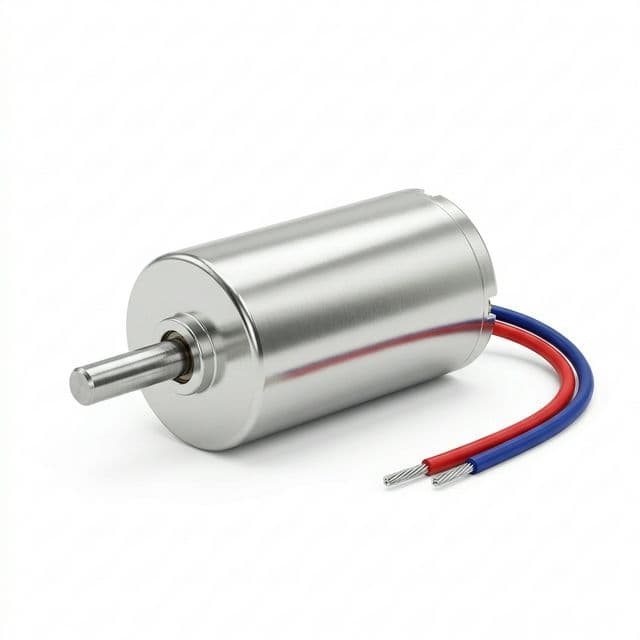
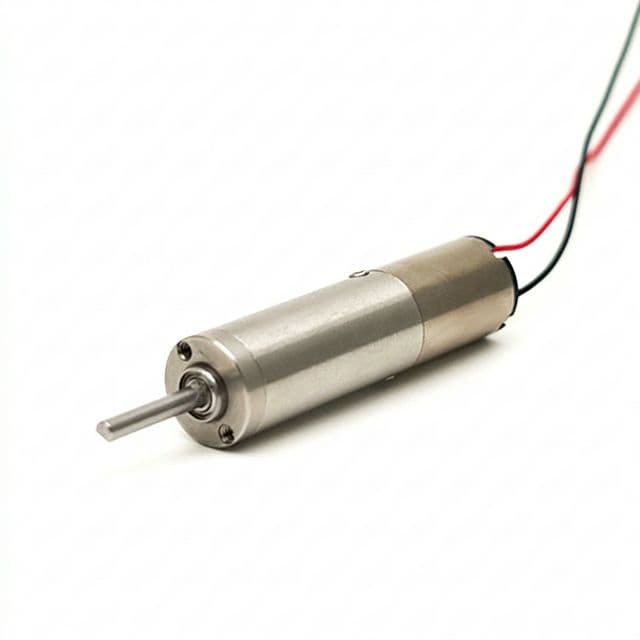
Stage1b gap audit and closure status
Audit-first enhancement: each high-impact content gap is tracked with explicit remediation status.
| Gap found | Decision impact | Stage1b action | Status |
|---|---|---|---|
| Tool flow answered sizing, but did not explicitly answer the actual user question: brushless or brushed. | High risk of users leaving with torque numbers but no commutation decision. | Reframed result layer to output a commutation recommendation with explicit reason stack. | Closed in stage1b |
| `1020` code ambiguity was under-explained across marketplaces and vendor catalogs. | High risk of buying a wrong architecture based on model code shorthand. | Added SERP pattern row, source ledger, risk rows, and FAQ boundary notes requiring PN-level datasheets. | Closed in stage1b |
| Controller complexity tradeoff was buried behind generic current checks. | High risk that teams underestimate BLDC driver bring-up and schedule cost. | Added brushed H-bridge vs brushless 3-phase gate checks and decision actions. | Closed in stage1b |
| Startup-fault boundaries for sensorless BLDC were not explicit. | High risk of teams underestimating loss-of-sync and current-limit events during bring-up. | Added TI tuning-guide evidence for LOSS_OF_SYNC, CBC_ILIMIT, and startup-profile tuning actions. | Closed in stage1b |
| Low-voltage brushed guidance lacked explicit UVLO reset thresholds. | High risk of battery-sag resets being misread as torque or commutation failure. | Added DRV8833 UVLO thresholds and low-VM gate notes to methods, risk table, and FAQ. | Closed in stage1b |
| Cross-vendor matched life data for 10mm-class brushed vs brushless remains scarce. | Medium risk of overconfident lifetime claims in RFQ discussions. | Marked unknowns explicitly and required A/B endurance sampling in scenario actions. | Open (evidence pending) |
| Assumption layer and source-backed layer were mixed in some result interpretations. | High risk that heuristic current multipliers are interpreted as guaranteed supplier values. | Separated assumption formulas from source-backed constraints in method/evidence sections. | Closed in stage1b |
| Compliance block lacked explicit article-level communication obligations. | Medium-to-high risk of incomplete supplier onboarding for EU-facing products. | Kept RoHS + REACH table with RFQ actions and ownership guidance. | Closed in stage1b |
| Keyword snapshot card carried stale volume/KD values from another intent cluster. | Medium risk of misleading prioritization when this page is compared against neighboring keyword pages. | Corrected to the actual proposal snapshot for this change and tagged stage1b re-audit date. | Closed in stage1b (2026-04-24) |
| Low-voltage bridge conduction-loss deltas were not quantified in the evidence layer. | High risk of underestimating thermal and startup-margin penalties near low VM operation. | Added datasheet-backed RDS(ON) deltas for DRV8833 and MCT8316A with explicit applicability conditions. | Closed in stage1b (2026-04-24) |
| Brushless startup KPI scope was overgeneralized outside its original application context. | High risk of schedule misses when teams expect fan-context startup numbers in low-voltage/high-load programs. | Added scope gate for MCT8316A <50 ms / 3-kHz electrical claim and tied it to 12V-24V high-speed ceiling-fan context. | Closed in stage1b (2026-04-24) |
| Low-speed commutation quality boundary was missing from risk and FAQ layers. | High risk of precision-motion mismatch when brushless is selected without feedback/commutation-mode checks. | Added maxon block-commutation torque-ripple boundary and mitigation path (sinus commutation + high-resolution encoder). | Closed in stage1b (2026-04-24) |
Report summary: conclusions and key numbers
Core conclusions are paired with quantifiable context before deep-dive sections.
US volume: 20 / KD: N/A
OpenSpec proposal snapshot for `10mm brushless motor` (2026-04-06), re-audited in stage1b on 2026-04-24.
DRV8833 RDS(ON): 360 mOhm @5V -> 450 mOhm @2.7V
TI DRV8833 Rev. E electrical-characteristics table (25 C, accessed 2026-04-24).
MCT8316A RDS(ON): 95 mOhm (>6V) vs 105 mOhm (<6V)
TI MCT8316A Rev. B table value at 1A and 25 C (accessed 2026-04-24).
<50 ms startup + 3-kHz electrical is 12V-24V fan context
Do not generalize that KPI to low-voltage or high-load cases without validation.
Block commutation ripple can be ~14%
maxon notes low-speed nonuniformity risk; sinus commutation + encoder can improve smoothness and torque.
- Teams deciding between 2-wire brushed simplicity and 3-phase brushless lifecycle/performance.
- Programs that need a same-page flow: immediate recommendation plus source-backed trust checks.
- Procurement and hardware teams preparing first RFQ shortlist for 10mm-class form factor.
- Projects where schedule, cost, and controller complexity tradeoffs matter as much as raw speed.
- Safety-critical designs that require certified lifecycle evidence beyond pre-RFQ screening.
- Programs needing universal 1020 standards across suppliers without PN-level validation.
- Final release decisions made without sample endurance and thermal testing.
- Applications requiring hazardous-location or regulated medical approvals not covered in supplier docs.
Methods and evidence
Transparent formulas, dated sources, and explicit known/unknown boundaries.
| Method block | Formula / rule | Decision value |
|---|---|---|
| Mechanical power estimate | P = 2 * pi * n / 60 * T | Converts target speed and torque into shaft load used by both commutation paths. |
| Brushed current estimate | I_brushed = P / (V * eta_brushed) + I_idle | Uses lower commutation efficiency assumption and higher startup multiplier for brushed path. |
| Brushless current estimate | I_brushless = P / (V * eta_brushless) + I_idle | Uses higher efficiency assumption and lower startup multiplier for BLDC path. |
| Brushed driver gate (DRV8833 class) | 2.7V <= VM <= 10.8V; I_rated <= 1.5A; I_start <= 2A | Represents low-voltage brushed H-bridge boundary for pre-screening. |
| Brushed low-VM derating note | if VM < 5V => I_brushed_adjusted = I_brushed * 1.12 | Heuristic penalty added because DRV8833 datasheet notes reduced max output current below 5V. |
| Brushed UVLO gate (DRV8833 class) | VM_falling typ 2.6V; VM < 2.5V disables outputs; recover above ~2.7V | Battery sag crossing UVLO can reset driver state, so startup failures near low rails are boundary events, not pure torque mismatch. |
| Driver conduction-loss gate (datasheet-based) | P_cond = I^2 * RDS(ON); DRV8833 H-bridge typ 360/450 mOhm (5V/2.7V), MCT8316A typ 95/105 mOhm (>6V/<6V) | Low-voltage operation changes bridge loss before motor-level thermal effects; do not compare low-VM options by current only. |
| Brushless driver gate (MCT8316A class) | 4.5V <= VM <= 35V; typical application band 12V-24V | Represents integrated 3-phase brushless driver boundary and control complexity baseline. |
| Sensorless startup stability gate | If LOSS_OF_SYNC/CBC_ILIMIT appears, retune align/open-loop startup and keep current limit <= motor stall current | TI tuning guide shows startup profile and current-limit settings can dominate first-spin success and thermal safety. |
| LOSS_SYNC lock threshold gate | MCT8316A LOSS_SYNC_TIMES lock threshold can be set from 2 to 9 | Treat threshold changes as risk tradeoffs; higher tolerance can hide startup instability if fault logs are not reviewed. |
| IPD applicability gate | IPD helps high-inertia loads; low-inertia loads may shake and reduce detection reliability | Do not assume one startup mode is universal; inertia class changes optimal sensorless strategy. |
| Continuous-duty thermal gate | if duty >= 70% => treat as S1-like continuous operation | At high duty, require thermal evidence at stated ambient/mounting conditions before RFQ freeze. |
| Low-speed commutation quality gate | Block commutation ripple can be ~14% (theoretical); low-speed smoothness often needs sinus commutation + position feedback | Brushless selection alone does not guarantee precision/smooth startup in low-speed or high-load applications. |
| Rail sag assumption block | V_drop = I_start * R_source, R_source = 0.12..0.28 ohm | On-page assumption only; replace with measured source impedance during validation. |
| Decision confidence score | Base 90 - boundary penalties + evidence-fit bonus | Lowers confidence for low-voltage, high-duty, and high-heat boundary cases. |
| Source | Date | Coverage | Known / Unknown |
|---|---|---|---|
| OpenSpec change: add-kw-10mm-brushless-motor-page | 2026-04-06 | Canonical route and intent baseline for this page. | Known |
| RIC Motor listing: 1020 brushed coreless motor (RIC-1020DT) | Accessed 2026-04-24 | Example of `1020` used as 10x20 mm brushed coreless product naming. | Known with marketplace scope |
| Tenshock listing: VZ1020 inrunner brushless motor | Accessed 2026-04-24 | Counterexample: same `1020` token appears on brushless KV motors with different dimensions (20.5x38 mm). | Known with marketplace scope |
| maxon blog: Brushed vs brushless DC motors | Accessed 2026-04-24 | Service-life and commutation tradeoff framing used for decision boundaries. | Known |
| maxon support PDF: brushed vs BLDC service-life, low-speed behavior, and commutation mode | Accessed 2026-04-24 | Brushed life can vary from <100 h to ~10,000 h; block commutation ripple can be ~14%; sinusoidal commutation with encoder can improve low-speed smoothness and torque. | Known with scope |
| maxon DC/EC key information PDF | Accessed 2026-04-24 | Motor power and efficiency relationships supporting method formulas. | Known |
| FAULHABER DC-Motors Technical Information | Accessed 2026-04-24 | Brushed lifetime spread and PWM control boundary (recommended >=20 kHz PWM). | Known with scope |
| FAULHABER Brushless DC-Motors Technical Information | Accessed 2026-04-24 | S1 continuous-duty context, S2 intermittent overload context, and 22 C measurement baseline for rated values. | Known with scope |
| TI DRV8833 datasheet (Rev. E) | Revised July 2015, accessed 2026-04-24 | 2.7V-10.8V VM range, 1.5A RMS/2A peak ratings, low-VM derating note, UVLO behavior (2.5V disable / ~2.7V recovery), and HS/LS RDS(ON) deltas at 5V vs 2.7V. | Known |
| TI MCT8316A datasheet (Rev. B) | Revised February 2022, accessed 2026-04-24 | 4.5V-35V operating window, 8A peak current, 95/105 mOhm RDS(ON) deltas (>6V/<6V), 12V-24V high-speed fan startup context (<50 ms, up to 3-kHz electrical), and LOSS_SYNC_TIMES threshold range. | Known |
| TI MCT8316A tuning guide (SLLU336A) | Revised January 2022, accessed 2026-04-24 | Startup debug boundaries for LOSS_OF_SYNC and CBC_ILIMIT, plus IPD high-inertia vs low-inertia applicability notes. | Known with scope |
| TI application report SLVA505A (Understanding Motor Driver Current Ratings) | Rev. A, July 2024, accessed 2026-04-24 | Confirms current ratings are thermal-context dependent and not cross-vendor normalized. | Known |
| EUR-Lex Delegated Directive (EU) 2015/863 (RoHS Annex II update) | Published 2015-03-31, accessed 2026-04-24 | Confirms restricted-substance list/threshold basis used in the RoHS gate table. | Known |
| EUR-Lex REACH text (CELEX:32006R1907), Article 33 | Accessed 2026-04-24 | SVHC communication obligations and 45-day response timeline. | Known |
| On-page commutation decision model | 2026-04-24 | Heuristic pre-RFQ scoring for brushed vs brushless recommendation. | Estimator assumption layer |
| Cross-vendor normalized 1020 brushed-vs-brushless endurance dataset | Pending as of 2026-04-24 | No reliable public apples-to-apples dataset located in this iteration. | Pending confirmation / no reliable public dataset |
| Topic | Verified fact | Scope boundary | Required action |
|---|---|---|---|
| Low-voltage brushed derating | DRV8833 notes that below VM=5V, RDS(ON) increases and maximum output current decreases. | Applicable when brushed path is used on low rails (for example, single-cell systems). | Apply extra current headroom and validate startup current on target battery impedance. |
| Brushed bridge conduction-loss delta | DRV8833 HS/LS RDS(ON) typ shifts from 200/160 mOhm at 5V to 250/200 mOhm at 2.7V (25 C), increasing H-bridge total from 360 to 450 mOhm. | Applicable when brushed current estimates are used near low-voltage rails. | Add I^2R bridge-loss margin in thermal checks instead of comparing current numbers alone. |
| Low-voltage UVLO reset boundary | DRV8833 UVLO behavior disables outputs near VM<2.5V and resumes above about 2.7V. | Applicable when battery-powered startup can dip rail voltage during inrush. | Measure worst-case startup sag; treat UVLO-crossing events as architecture/rail issues, not only motor mismatch. |
| Brushless voltage envelope nuance | MCT8316A supports 4.5V-35V operation but lists 12V-24V as the typical application range. | Applicable when teams choose brushless for low-voltage projects near the minimum VM floor. | Treat sub-12V brushless designs as validation-heavy and confirm startup margin in real load tests. |
| Brushless bridge low-VM conduction delta | MCT8316A total MOSFET RDS(ON) typ is 95 mOhm above 6V and 105 mOhm below 6V (1A, 25 C). | Applicable when brushless is selected for low-VM systems and thermal margin is tight. | Model bridge conduction loss at expected current and VM instead of assuming constant bridge efficiency. |
| Brushless startup KPI scope | MCT8316A datasheet startup KPI (<50 ms and up to 3-kHz electrical speed) is documented for 12V-24V high-speed ceiling fan conditions. | Applicable when teams copy startup KPIs into low-voltage or high-load 10mm use cases. | Treat fan-context KPI as non-transferable by default and require bench startup validation at target VM and inertia. |
| LOSS_SYNC lock threshold configurability | MCT8316A lock protection threshold `LOSS_SYNC_TIMES` is configurable from 2 to 9. | Applicable when teams change startup stability thresholds to suppress nuisance trips. | Tie threshold tuning to fault-log review and thermal/current evidence before finalizing production values. |
| Sensorless startup loss-of-sync boundary | MCT8316A tuning guidance ties LOSS_OF_SYNC events to startup-profile and threshold configuration. | Applicable when sensorless BLDC startup is expected to work across unknown inertia and load states. | Run startup tuning on target inertia/load and keep a brushed fallback or alternate startup mode until sync is repeatable. |
| IPD inertia applicability | TI notes IPD startup mode is suitable for high-inertia loads but can introduce shake risk in low-inertia systems. | Applicable when teams copy one BLDC startup mode across both fan-like and light-rotor designs. | Select startup mode per inertia class and verify vibration behavior in final mounting. |
| Current rating comparability | TI SLVA505A shows current rating depends on thermal design details such as copper weight, pours, and vias. | Applicable when comparing driver BOM candidates by headline current only. | Require matched PCB/ambient assumptions before comparing brushed-vs-brushless driver limits. |
| Brushed lifetime counterexample | FAULHABER reports brushed lifetime can exceed 25,000 h under optimal conditions but may be only hundreds of hours under extreme use. | Applicable when decisions rely on fixed life multipliers between brushed and brushless. | Avoid universal life multipliers and request duty-specific endurance evidence. |
| Low-speed commutation smoothness boundary | maxon technical guidance states block commutation has theoretical torque ripple around 14% and very low speed may not run uniformly; sinus commutation with high-resolution encoder can improve smoothness and raise torque by roughly 5% at the same losses. | Applicable when brushless is chosen for precision low-speed, low-noise, or high-load startup conditions. | Require commutation-mode and feedback specification (not just motor type) in RFQ and sample plans. |
| Continuous-duty boundary | FAULHABER brushless technical guide defines S1 as continuous operation and states rated values under specified ambient conditions. | Applicable when requested duty cycle approaches continuous operation. | Gate high-duty recommendations with thermal data and mounting-condition disclosure. |
| Model code ambiguity by counterexample | Public listings use `1020` for both 10x20 brushed coreless and larger brushless KV motors. | Applicable when procurement decisions rely on title keywords instead of datasheets. | Treat `1020` as non-standard shorthand and enforce PN-level commutation and dimension checks. |
Stage1b research delta
Only net-new, source-verifiable information is included here. Each row states scope and decision consequence.
| Topic | New fact | Applicable condition | Decision effect | Certainty |
|---|---|---|---|---|
| SERP intent convergence | Commercial SERP results show users are comparing commutation type, not only dimensions. | Applies to users searching `10mm brushless motor` or similar wording. | Keep one hybrid page with tool-first recommendation and deep report context. | Known |
| Model-code ambiguity | Vendor pages show `1020` on both brushed 10x20 products and larger brushless KV products. | Applies whenever selection is made from listing titles without datasheet verification. | Treat `1020` as geometry shorthand; enforce PN-level electrical and commutation checks. | Known with marketplace scope |
| Service-life tradeoff signal | Primary manufacturer data shows brushed lifetime spread is wide; brushless often extends life by removing brush wear, but not as a universal multiplier. | Applies when lifecycle is a high-priority objective. | Bias toward brushless at high duty, while keeping brushed viable when validated under specific duty/thermal constraints. | Known |
| Controller complexity boundary | Brushed path can use low-voltage H-bridge class; brushless path requires 3-phase control architecture. | Applies to schedule-sensitive programs with limited firmware/driver bring-up capacity. | Expose control-stack complexity as a first-class decision variable near results. | Known |
| Current-rating comparability | Driver current ratings are thermal-context dependent and not directly comparable across vendors. | Applies when teams compare motor-driver options only by headline current values. | Require matched thermal assumptions before selecting brushless or brushed driver BOM. | Known |
| Low-voltage brushed constraint | DRV8833 documentation flags reduced maximum output current below 5V due to higher RDS(ON). | Applies to low-VM brushed paths where users assume constant current capability across voltage. | Apply low-voltage derating logic and ask for startup-current measurement before RFQ. | Known with scope |
| Low-voltage reset gate | DRV8833 UVLO behavior means low-rail sag can disable outputs near 2.5V and only recover when VM rises above about 2.7V. | Applies to battery-powered starts where inrush current and source resistance can collapse VM. | Add UVLO margin checks before concluding commutation type is the root cause of startup failure. | Known with scope |
| Low-voltage bridge-loss nonlinearity | DRV8833 and MCT8316A both show higher bridge RDS(ON) near low VM operation, so conduction losses can increase even at similar current levels. | Applies to low-voltage projects where thermal margin and startup droop are tight. | Use datasheet RDS(ON)-based I^2R checks in architecture comparison, not current metrics alone. | Known |
| Low-voltage floor mismatch | MCT8316A allows 4.5V minimum operation, but its typical application context is 12V-24V. | Applies to 1-cell/low-rail designs where VM margin is tight. | Keep brushed as valid fallback path when brushless VM floor or low-VM startup margin is not met. | Known with scope |
| Startup KPI scope boundary | MCT8316A <50 ms startup and 3-kHz electrical-speed capability are documented in 12V-24V high-speed fan context. | Applies when teams try to transfer fan-context startup KPIs to different VM/load profiles. | Mark startup KPI as conditional and require project-specific bench validation before procurement lock. | Known with scope |
| Configurable lock-sensitivity boundary | MCT8316A LOSS_SYNC_TIMES threshold is configurable between 2 and 9 events. | Applies when fault thresholds are tuned to reduce nuisance lock protection events. | Treat threshold tuning as a controlled risk tradeoff and pair it with logged startup-fault evidence. | Known with scope |
| Sensorless startup fault boundary | TI tuning guide ties LOSS_OF_SYNC/CBC_ILIMIT events to startup-profile tuning and threshold calibration. | Applies to BLDC programs that assume one default startup recipe across different loads. | Promote startup tuning and fault-log review to go/no-go criteria before committing brushless path. | Known with scope |
| IPD strategy is not universal | IPD mode is recommended for high-inertia starts but can cause shake on low-inertia systems. | Applies when architecture includes sensorless startup and mixed rotor/load inertia classes. | Choose startup mode per inertia profile and verify behavior in product-level mounting tests. | Known with scope |
| Low-speed smoothness boundary | maxon guidance notes ~14% theoretical torque ripple for block commutation and recommends sinus commutation with high-resolution encoder where smooth low-speed behavior is required. | Applies to precision low-speed or noise-sensitive programs that assume brushless type alone solves smoothness. | Promote commutation-mode and feedback specification to first-class RFQ gates. | Known with scope |
| Continuous-duty boundary formalization | Brushless technical guidance explicitly defines S1 continuous-duty context and measurement conditions. | Applies when requested duty cycle approaches continuous operation and thermal rise dominates failure risk. | Upgrade high-duty outputs to conditional unless thermal evidence is available. | Known |
| Compliance remains architecture-agnostic | RoHS/REACH obligations apply regardless of commutation type. | Applies to all EU-facing sourcing paths. | Keep compliance gate identical for brushed and brushless shortlist candidates. | Known |
| Common claim | Counterexample | Decision risk | Mitigation |
|---|---|---|---|
| `1020` equals one fixed motor architecture | RIC-1020DT uses 1020 for a brushed coreless 10x20 mm format, while Tenshock VZ1020 is a brushless inrunner with 20.5x38 mm geometry. | Title-level filtering can mix incompatible products into one shortlist. | Add mandatory RFQ fields: commutation type, winding class, and measured dimensions. |
| Brushed motors are always short-life options | FAULHABER states brushed lifetime may exceed 25,000 h in optimal use, but also drop to hundreds of hours under extreme conditions. | Absolute brushed-vs-brushless lifetime claims can mislead architecture choice. | Use duty-profile matched tests rather than architecture-only lifetime assumptions. |
| Driver current headline numbers are directly comparable | TI SLVA505A shows copper thickness, thermal pad continuity, and via strategy can change usable current ratings. | Wrong board-level assumptions can under-size driver path and raise thermal risk. | Normalize test conditions and request thermal test reports before driver finalization. |
| Sensorless BLDC startup is plug-and-play across all loads | TI MCT8316A tuning guidance documents LOSS_OF_SYNC and CBC_ILIMIT cases when startup profile and thresholds are not tuned to real inertia/load. | Projects can miss schedule by treating controller bring-up as a fixed effort item. | Allocate startup-tuning time, capture fault logs, and keep brushed fallback for schedule-critical prototypes. |
| MCT8316A startup KPI can be copied directly to any 10mm brushless program | The datasheet ties <50 ms startup and up-to-3-kHz electrical speed to 12V-24V high-speed ceiling-fan conditions, not universal low-voltage/high-load operation. | Teams can under-budget startup validation when target VM/load differs from the datasheet context. | Re-validate startup KPI on project-specific VM, inertia, and load before committing architecture. |
| Brushless always guarantees smooth low-speed precision | maxon technical guidance reports ~14% theoretical torque ripple for block commutation and notes very-low-speed nonuniformity; sinus commutation with high-resolution encoder is used when smoothness is critical. | Selecting brushless without commutation/feedback details can miss precision-motion targets. | Specify commutation mode, encoder resolution, and startup profile as mandatory RFQ fields. |
| Open question | Why evidence is insufficient | Decision impact |
|---|---|---|
| Cross-vendor 1020 matched-duty endurance A/B data (brushed vs brushless). | Public datasets do not share common duty cycles, loads, and ambient conditions. | Cannot claim universal lifetime multiplier; require controlled sample tests. |
| Normalized acoustic noise benchmarks under identical mounting conditions. | Public documents provide architecture guidance but not fully matched measurement setups. | Noise-sensitive projects must validate with enclosure-level tests. |
| Failure-mode distributions by commutation type for 10mm-class supply chains. | Available sources are vendor-specific and not pooled into one open dataset. | Risk planning needs supplier reliability reports before contract award. |
| Low-voltage (<5V) startup-current statistics for 1020 brushed SKUs across suppliers. | Datasheet-level derating exists, but no open cross-supplier dataset provides comparable startup-current histograms. | Battery-powered designs must run incoming sample tests before final BOM lock. |
| Cross-vendor torque ripple measurements at identical control-loop settings. | Driver firmware and commutation strategy differ across controllers and vendors. | Precision-motion applications need bench validation before architecture freeze. |
| Cross-vendor sensorless startup-fault rates under matched inertia/load profiles. | Public tuning guides describe mechanisms (LOSS_OF_SYNC/CBC_ILIMIT) but do not publish normalized failure-rate datasets by motor class. | Schedule and reliability planning for brushless ramps remains uncertain until in-house A/B startup testing is complete. |
Regulatory and document gate
Use this as a procurement checklist: compliance claims are valid only when paired with article/material evidence and response ownership.
| Framework | Trigger condition | Minimum requirement | RFQ action |
|---|---|---|---|
| RoHS Annex II (consolidated 2023-03-01 text) | Restricted substances in homogeneous materials at or above listed thresholds. | Document substance limits for ten entries (Pb/Hg/Cr6+/PBB/PBDE/DEHP/BBP/DBP/DIBP at 0.1%, Cd at 0.01%). | Collect declaration + exemption mapping before production release. |
| REACH Article 33 (Regulation 1907/2006) | SVHC identified under Article 59(1) present above 0.1% w/w in an article. | Provide sufficient safe-use information (at least substance name) to recipients and answer consumer requests within 45 days. | Include Article 33 communication package and response owner in supplier onboarding. |
Alternative comparison
Use reproducible dimensions (voltage, torque, response, cost, fit) instead of generic claims.
| Option | Voltage band | Torque band | Dynamic response | Cost class | Best-fit scenario | Boundary / counterexample |
|---|---|---|---|---|---|---|
| 1020 brushed coreless (2-wire commutation) | 2.7V-10.8V common H-bridge window | Low-to-medium (PN dependent) | Fast electrical startup | Lower controller cost | Best when BOM simplicity and low-voltage startup are primary priorities | Brush wear and high-duty life limits apply; DRV8833 bridge RDS(ON) rises from 360 to 450 mOhm between 5V and 2.7V, and VM sag near UVLO can disable outputs during startup. |
| 1020 brushless listing / 3-phase path | Often 4.5V+ driver gate (controller dependent) | Low-to-medium (PN + control dependent) | Fast with tuned controller | Higher controller + firmware cost | Best when higher duty cycle, noise, and lifecycle targets dominate | Requires commutation tuning; MCT8316A startup KPI (<50 ms, 3-kHz electrical) is documented for 12V-24V fan context, and sensorless startup can lose sync when profile does not match load inertia. |
| Brushed 1020 + gearbox | 3V-12V (pairing dependent) | Higher output torque via ratio | Medium | Medium | Useful when output torque is needed but control stack must stay simple | Adds gearbox losses and backlash; still inherits brush wear constraints. |
| Brushless + gearbox | 4.5V-24V (driver dependent) | Higher torque + better high-duty endurance potential | Medium | Medium to high | Best for sustained-duty products with lifecycle and thermal stability goals | Highest integration complexity and validation effort among four options. |
Risk and mitigation
Covers misuse risk, cost risk, and scenario mismatch risk with direct mitigation actions.
| Risk | Impact | Probability | Mitigation path |
|---|---|---|---|
| Selecting by `1020` label without confirming commutation type | High | High | Require PN datasheet + commutation declaration before issuing RFQ. |
| Assuming brushless is always superior regardless of control budget | High | Medium | Gate brushless recommendation by driver/firmware readiness and schedule margin. |
| Underestimating brushed wear in high-duty operation | High | Medium to high | Request endurance curves under matched duty and run accelerated life tests. |
| Ignoring BLDC bring-up/tuning complexity | High | Medium | Add controller integration milestone and fallback brushed option in project plan. |
| Comparing driver options by headline current only | High | Medium | Normalize thermal conditions and PCB copper assumptions before driver selection. |
| Assuming brushed current capability is unchanged below 5V | High | Medium | Apply low-VM derating and capture startup current under real battery/internal resistance. |
| Ignoring DRV8833 UVLO behavior under battery sag | High | Medium | Validate worst-case startup sag and keep VM above UVLO recovery margin; otherwise redesign rail or startup strategy. |
| Choosing brushless path below driver VM floor | Medium | Medium | Check minimum VM and low-VM startup margin first; if unmet, keep brushed or boost architecture. |
| Treating fan-context brushless startup KPI as a universal target | High | Medium | Re-test startup time and sync behavior at project VM/inertia/load; do not transfer 12V-24V fan assumptions blindly. |
| Thermal drift at high duty without A/B commutation tests | Medium | Medium | Run brushed vs brushless thermal comparison on representative load profile. |
| Using untuned sensorless startup profile across different inertia loads | High | Medium | Tune startup parameters per load class, log LOSS_OF_SYNC/CBC_ILIMIT events, and keep brushed fallback in schedule-critical phases. |
| Assuming brushless motor type alone guarantees smooth low-speed output | High | Medium | Confirm commutation mode and feedback strategy; precision low-speed paths often need sinus commutation and high-resolution encoder feedback. |
| Ignoring bridge RDS(ON) increase near low VM for brushless driver path | Medium | Medium | Include bridge I^2R checks with datasheet RDS(ON) values at actual VM/current in thermal sizing. |
| Noise claims copied from vendor sheets without enclosure validation | Medium | Medium | Measure acoustic output in final mounting and update decision matrix. |
| RoHS/REACH evidence missing in commutation decision handoff | High | Medium | Bind compliance checklist to RFQ package for every shortlisted option. |
| Single-source lock-in after early architecture decision | Medium | Medium | Keep at least two qualified suppliers per chosen commutation type. |
Scenario examples
Each scenario includes assumptions, modeled output, and the minimum next action.
| Scenario | Assumption | Estimated result | Action |
|---|---|---|---|
| Low-cost wearable alert module | 3.7V rail, 12000 rpm, 4 mNm, 35% duty, cost-first priority | Recommended: brushed 2-wire path. | Request brushed samples with brush-life data and verify startup current on target battery. |
| High-duty compact cooling fan retrofit | 7.4V rail, 22000 rpm, 6 mNm, 85% duty, lifetime/noise priority | Recommended: brushless 3-phase path. | Run BLDC controller bring-up plan and validate thermal/noise under continuous duty. |
| Ambiguous ecommerce listing shortlist | Listings labeled `1020` but commutation type not explicit | Conditional: cannot decide from listing text only. | Demand PN datasheet + commutation declaration before price comparison. |
| Low-voltage medical handheld prototype | 3.0V rail near brushless VM floor, strict schedule, moderate duty | Conditional to brushed fallback. | Use brushed prototype path first, then evaluate brushless only if VM/control budget is expanded. |
| Low-inertia micro-impeller with sensorless BLDC trial | 5V rail, light rotor inertia, aggressive startup profile reused from high-inertia test | Conditional: startup reliability risk on brushless path. | Retune startup mode/thresholds, capture LOSS_OF_SYNC logs, and keep brushed option as schedule fallback. |
| Low-speed precision actuator using brushless shortlist | 6V rail, low-speed noise-sensitive operation, brushless candidates without explicit commutation/encoder details | Conditional: commutation-quality risk. | Request commutation mode + feedback specifications and verify low-speed ripple/noise before RFQ lock. |
Keyword intent anchors
Anchors map adjacent 1020 phrasing to one canonical decision workflow without splitting tool logic and evidence.
Decision FAQ
Questions are grouped by intent, not glossary-only definitions.
B2B application fit, OEM options, and inquiry handoff
Move from estimator output to executable sourcing with factory customization scope and compliance-ready RFQ preparation.
- Teams comparing brushed vs brushless 1020 architecture before selecting a driver stack.
- Programs that need explicit commutation tradeoffs for BOM and schedule planning.
- Sourcing workflows requiring dated evidence, risk disclosure, and next-step CTA in one page.
- Brushed path: winding, brush material, shaft style, and lead-wire customization.
- Brushless path: sensor/sensorless control mode, commutation tuning, and phase lead options.
- Shared options: gearbox ratio, connector format, packaging, and inspection requirements.
- Collect PN-level datasheets and test conditions for each shortlisted brushed/brushless candidate.
- For brushless candidates, require commutation mode, startup strategy, and feedback-device disclosure in the RFQ pack.
- Run A/B life and thermal tests under matched duty profile before architecture freeze.
- Keep RoHS/REACH evidence in RFQ package; this page is pre-RFQ guidance, not compliance certification.
Related fit check
10mm brushless motor: run the brushed-vs-brushless fit tool10mm brushless motor: methods and evidence10mm coreless motor: brushed-coreless baseline fit/report10mm gear motor: ratio and duty decision tool/report12mm brushless motor: adjacent-size commutation decision route1000 rpm small DC motor: architecture fit tool/report10mm coin vibration motor: haptic fit and risk report10mm vibration motor: cross-family fit tool and decision report6V DC motor boundary tool and report1020 brushed coreless motors: brushed-only fit workflow