Vibration Motor Fit Tool and Decision Report (10mm disc + 12V boundary workflow)
Start with the tool for a fast fit decision, then validate with evidence, boundary triggers, alternatives, and risk controls on the same page.
Alias intent covered on this canonical URL: `10 mm disc vibration motor`, `10pcs vibration motor`, `1027 vibration motor`, `10mm coin vibration motor 3v datasheet`, and `12 volt vibration motor / 12 volt dc vibration motor`.
Published: 2026-04-20 | Last updated: 2026-05-09 | Review cadence: quarterly
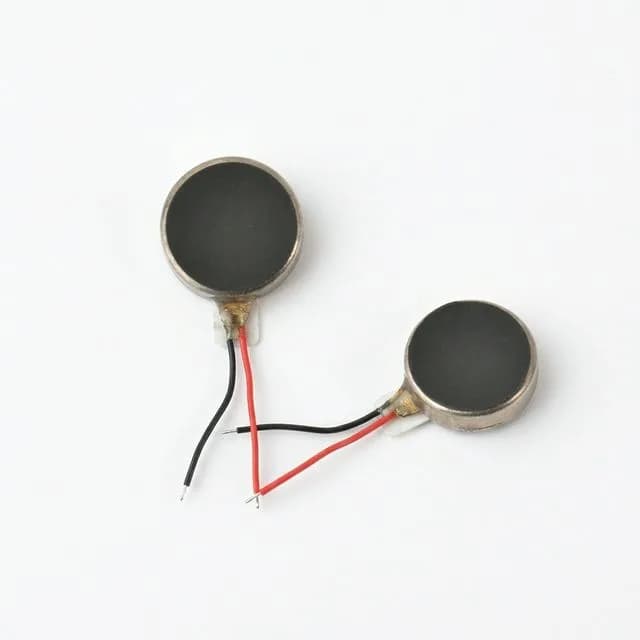
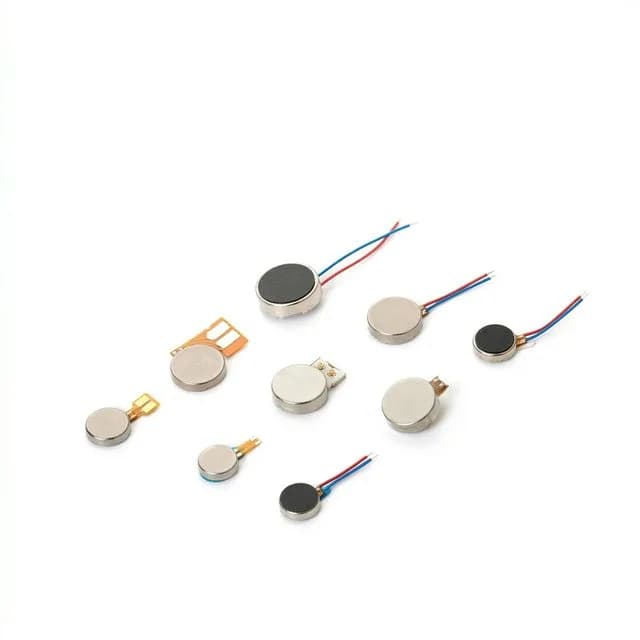
Boundary: 2.0V to 12.0V (tool acceptance). 10mm ERM reference PN window: 2.3V to 3.6V; values above this branch into high-voltage review.
Boundary: 8,000 to 15,000 rpm.
Boundary: 0.3G to 2.5G.
Boundary: 5% to 100%.
If the result is inconclusive, use the design-review CTA instead of forcing a procurement choice.
No calculation yet. Enter inputs and run the estimator to generate a fit decision.
Stage1b gap audit and closure status
Audit-first enhancement: each high-impact content gap is tracked with explicit remediation status.
| Gap found | Decision impact | Stage1b action | Status |
|---|---|---|---|
| 12V branch did not explicitly compare 12V motor startup peaks against candidate driver overcurrent thresholds. | High risk of selecting a nominally compatible 12V driver that can still hit protection/retry behavior during startup pulses. | Added DRV8876 IOCP range (3.5A to 5.5A) versus PMD 334-401 max startup current (4.2A) across summary, research-delta, trigger, risk, and scenario sections. | Closed in stage1b deep-enhance round (2026-05-09) |
| 12V branch lacked explicit PN-level operating-temperature and startup-voltage bounds. | High risk of treating 12V suitability as voltage-only while missing ambient and cold-start constraints. | Added PMD 334-401 environment and start rows (max operating temp 60C, min operating temp -10C, max start voltage 3V, typical start voltage 1.25V) to conclusions and decision tables. | Closed in stage1b deep-enhance round (2026-05-09) |
| Shipping gate lacked the current eCFR transition clause for lithium battery mark format and the air waybill indication condition. | Medium-to-high risk of packaging/document mismatch during 2024-2026 transition shipments. | Added 49 CFR 173.185(c)(3)-(4) details: legacy mark accepted through 2026-12-31 and air-waybill indication required for marked smaller-cell shipments when an air waybill is used. | Closed in stage1b deep-enhance round (2026-05-09) |
| The `12 volt vibration motor / 12 volt dc vibration motor` branch had no PN-level 12V actuator evidence, so current and force expectations were under-specified. | High risk of quoting 12V projects with a 10mm micro-haptic current model, causing driver and power-path under-sizing. | Added PMD 334-401 12V ERM evidence (14.4V max operating, 4.2A max start, 1,000g test-load context) across summary, comparison, boundary, and risk sections. | Closed in stage1b deep-enhance round (2026-05-06) |
| The `12V` wording lacked supply-domain conditions and could be misread as a fixed laboratory rail. | High risk of missing 12V-system boundary conditions (steady-state spread and transient events), especially in vehicle-powered projects. | Added TI 12V rail context (9V-16V steady-state plus transient-event framing tied to ISO 7637/16750 references) and converted it into explicit trigger, risk, and scenario actions. | Closed in stage1b deep-enhance round (2026-05-06) |
| `12 volt vibration motor / 12 volt dc vibration motor` alias intent was missing from canonical heading/FAQ/anchor coverage and had no explicit high-voltage branch explanation. | High risk that 12V buyers interpret the low-voltage 10mm baseline as directly compatible and miss the canonical decision path. | Added explicit alias merge coverage for `12 volt vibration motor / 12 volt dc vibration motor`, expanded tool voltage envelope to 12V boundary-screening, and added high-voltage not-fit actions tied to PN and driver limits. | Closed in stage1b + stage1c merge round (2026-05-06) |
| UN38.3 wording was too broad and did not show the HM-215Q exception for button cells installed in equipment. | High risk of incorrect shipment-go/no-go decisions and unnecessary blockers in early RFQ planning. | Added PHMSA July-2024 scope boundary: exception applies to button cells installed in equipment; TS must be made available on request for applicable batteries. | Closed in stage1b deep-enhance round (2026-04-28) |
| Page did not show a concrete cross-supplier electrical counterexample for same 10mm class parts. | High risk of diameter-only substitution ("10mm = interchangeable") causing startup/rail mismatches. | Added Jinlong C1030Q002F vs PMD 310-103.004 counterexample across operating voltage, rated current, and startup boundaries. | Closed in stage1b deep-enhance round (2026-04-28) |
| `10pcs vibration motor` intent lacked lot-traceability and pilot-to-volume risk framing. | High risk of treating a small pilot order as production-quality evidence without sampling/traceability controls. | Added PMD traceability and ISO 2859 sampling context, plus explicit 10pcs pilot scenario actions. | Closed in stage1b deep-enhance round (2026-04-28) |
| Lifetime references were easy to overread as guaranteed field life. | High risk of overpromising reliability based on supplier "typical" rows without product-level validation. | Added explicit MTTF boundary and "design-guidance-only" interpretation to conclusions and risk logic. | Closed in stage1b deep-enhance round (2026-04-28) |
| `10pcs vibration motor` alias intent was missing from intro, FAQ routing checks, and canonical anchor chips. | High risk that quantity-pack buyers interpret this as a separate route need and miss canonical tool execution. | Added explicit `10pcs vibration motor` wording to heading context, metadata-aligned intro, alias anchors, and routing FAQ answers on `/learn/vibration-motor`. | Closed in stage1c alias merge round (2026-04-28) |
| `10mm coin vibration motor 3v datasheet` alias intent was not explicitly visible in heading/anchor/FAQ coverage. | High risk of intent miss: users seeking PN-style 3V datasheet boundaries may assume this URL is unrelated. | Added explicit alias wording in hero, metadata-aligned copy, alias anchor cards, and FAQ routing answers. | Closed in stage1b deep-enhance round (2026-04-24) |
| Some ERM/LRA response and electrical details were stale or transcribed without latest datasheet recheck. | High risk of wrong architecture tradeoff, especially around stop-time expectation and 3V boundary interpretation. | Revalidated PMD 310-103 and C10-100 datasheets; corrected response/electrical facts and rewrote tradeoff notes with scope conditions. | Closed in stage1b deep-enhance round (2026-04-24) |
| Battery section used only low-current baseline wording without an explicit pulse-load counterexample. | High risk of misreading 3V coin-cell naming as sufficient for motor startup bursts. | Added Energizer CR2032 pulse profile evidence and tied it to startup-current boundary actions. | Closed in stage1b deep-enhance round (2026-04-24) |
| Shipping requirement note leaned on secondary summary wording. | Medium-to-high risk of documentation misses in pilot logistics execution. | Added PHMSA primary guidance row with publication/effective dates for UN38.3 test-summary requirement. | Closed in stage1b deep-enhance round (2026-04-24) |
| Core conclusions cited only marketing listing values, without PN-level datasheet limits and test conditions. | High risk of treating class-level examples as hard qualification limits. | Added PN-level ERM/LRA datasheet boundaries (start voltage/current, max operating voltage, response timings, test-load context). | Closed in stage1b enhancement (2026-04-20) |
| Comparison section lacked concrete counterexample triggers for ERM-to-LRA migration. | High risk of selecting architecture by intuition instead of boundary data. | Added boundary trigger matrix with explicit limit, source, and minimum corrective action. | Closed in stage1b enhancement (2026-04-20) |
| Regulatory and shipping requirements for coin-cell consumer products were not represented in decision flow. | High risk of late-stage compliance rework or shipment blocking. | Added CPSC 16 CFR 1263 / UL 4200A and UN38.3 test-summary gates in risk+FAQ guidance. | Closed in stage1b enhancement (2026-04-20) |
| `10 mm disc vibration motor`, `10pcs vibration motor`, `1027 vibration motor`, and `10mm coin vibration motor 3v datasheet` alias intent were not explicitly answered together on a canonical hybrid page. | High risk of duplicate routes and split keyword signals. | Built one canonical hybrid page at `/learn/vibration-motor` with multi-alias anchors and FAQ coverage. | Closed in stage1b baseline + alias extensions (2026-04-24) |
| Tool guidance lacked numeric boundaries for voltage, rpm, amplitude, and duty. | High risk of using out-of-range requests as procurement-ready outputs. | Added strict input ranges, boundary state messaging, and alternate CTA paths. | Closed in stage1b baseline (2026-04-20) |
| Report layer had no reproducible ERM vs LRA decision table for 10mm disc use cases. | High risk of wrong actuator family selection during RFQ pre-screening. | Added comparison matrix with frequency/amplitude/driver-complexity/cost dimensions. | Closed in stage1b baseline (2026-04-20) |
| Battery suitability discussion ignored coin-cell current-class mismatch against motor start current. | Medium-to-high risk of false starts and brownout loops in compact designs. | Added explicit CR2032 baseline vs high-drain class notes and mitigation actions. | Closed in stage1b baseline (2026-04-20) |
Report summary: conclusions and key numbers
Core conclusions are paired with quantifiable context before deep-dive sections.
/learn/vibration-motor
`10pcs vibration motor`, `10 mm disc vibration motor`, `1027 vibration motor`, `10mm coin vibration motor 3v datasheet`, and `12 volt vibration motor / 12 volt dc vibration motor` are handled as alias_merge on one URL.
10 / month
OpenSpec proposal snapshot for `12 volt vibration motor` (2026-05-09).
do 0.50 / know 0.50
Hybrid mode chosen because tool and report intent are balanced.
2.3V start max, 3.6V max op
Precision Microdrives 310-103.004 datasheet (R001-V003, 2021; rechecked 2026-05-06).
90 mA rated max, 150 mA start max
With inertial test load, 310-103.004 datasheet (rechecked 2026-05-06).
Lag 40 ms, rise 87 ms, stop 115 ms
310-103.004 datasheet timing table + active-brake stop 45 ms reference (rechecked 2026-04-28).
MTTF 132.9 h (typical, application dependent)
PMD 310-103.004 lists design-guidance-only life context; cannot be treated as universal field life (rechecked 2026-04-28).
2 Vrms @ 175 Hz, 0.5 Vrms start max
C10-100 datasheet: lag 11 ms and rise 37 ms but stop 177 ms (rechecked 2026-04-28).
2.0V class (1.7-2.3V) vs 3.0V class (up to 3.6V)
Jinlong C1030Q002F and PMD 310-103.004 show same-diameter parts can have different electrical windows (rechecked 2026-04-28).
2.0V to 5.2V
TI DRV2605L datasheet Rev. D + fLRA support 125-300 Hz (rechecked 2026-04-28).
VM 0-11V, logic 1.8-7V
TI DRV8837 datasheet Rev. F (PWM IN1/IN2 interface).
12.0V is 3.33x over 3.6V PN max op
For the cited 10mm ERM PN (3.6V max operating), 12V requests must branch to a high-voltage-qualified actuator + driver path.
4.2A max start vs 0.15A max start (28x)
PMD 334-401 (12V ERM) vs PMD 310-103.004 (10mm 3V ERM); rechecked 2026-05-06.
9V to 16V steady-state before transients
TI SSZTA76 (2024) describes 12V automotive rail behavior and ISO 7637/16750 transient context (rechecked 2026-05-06).
DRV8876 VM 4.5V to 37V, 3.5A peak
TI DRV8876 datasheet Rev. B (rechecked 2026-05-06).
IOCP 3.5A min to 5.5A max vs 4.2A motor max start
TI DRV8876 overcurrent trip window and PMD 334-401 start-current row show some 12V pairings are near protection limits (rechecked 2026-05-09).
3V for 20ms cold crank, with downstream 40V transient-survivability targets
TI SSZTA76 documents 9V to 16V steady-state rails plus cold-crank and transient context (rechecked 2026-05-09).
-10C to 60C operating range (example PN)
PMD 334-401 environmental rows define the published operating-temperature envelope (rechecked 2026-05-09).
CR2032 0.2 mA continuous vs 10 mA pulse profile
Panasonic CR2032 datasheet + Energizer CR2032 key-fob pulse profile (rechecked 2026-04-28).
16 CFR 1263.3 effective 2023-10-23; 1263.4 battery-pack labels after 2024-09-21
eCFR 16 CFR part 1263 + CPSC Reese's Law enforcement-discretion note for post-2024-03-19 products (rechecked 2026-05-09).
Legacy lithium battery mark can continue through 2026-12-31
49 CFR 173.185(c): test-summary exception for installed button cells remains, and air waybill indication is required when marked small-cell packages move by air (rechecked 2026-05-09).
- Need a fast go/no-go check for 10mm disc ERM / 1027 vibration motor / `10mm coin vibration motor 3v datasheet` / `10pcs vibration motor` / `12 volt vibration motor / 12 volt dc vibration motor` intent on one canonical URL.
- Need to map target feel (G) to realistic rpm/current bounds before RFQ.
- Need one canonical page that serves both keyword-intent execution and technical due diligence.
- Need explicit next action when result is conditional or boundary-failing.
- Safety-critical haptics that require certified reliability qualification data.
- Programs that need guaranteed lifetime without PN-level endurance reports.
- Architectures that mandate coin-cell direct drive with no power-path redesign.
- Final release sign-off without waveform, thermal, and adhesive validation.
Methods and evidence
Transparent formulas, dated sources, and explicit known/unknown boundaries.
| Method block | Formula / rule | Decision value |
|---|---|---|
| Frequency conversion | f(Hz) = rpm / 60 | Converts motor-speed input to vibration frequency for haptic target mapping. |
| Estimated RMS vibration | G_est ~= (rpm / 12200) * (V / 3.0) * env_factor | Uses a 10mm ERM reference point; output is screening-grade, not qualification-grade. |
| Operating current estimate | I_run ~= base + speed/load/duty penalties | Models current envelope needed for pre-RFQ power-path screening. |
| Startup current estimate | I_start ~= 1.9 * I_run (conservative screen) | Uses margin above one cited 10mm ERM ratio (~150mA/90mA ~= 1.67) to reduce false-safe screening outcomes. |
| Confidence score | Base 92 - boundary penalties | Penalizes high duty, high amplitude, and rail mismatch conditions. |
| Source | Date | Coverage | Known / Unknown |
|---|---|---|---|
| data/keywords/vibration-motor_broad-match_us_2026-03-29.alias-merge-checklist.csv | 2026-03-29 | Alias mapping checklist for vibration motor cluster canonicalization. | Known |
| OpenSpec change: add-kw-10-mm-disc-vibration-motor-page | 2026-04-07 | No dedicated alias route, canonical-only merge decision. | Known |
| OpenSpec change: add-kw-10pcs-vibration-motor-page | 2026-04-07 (implemented 2026-04-28) | Alias intent `10pcs vibration motor` must merge into canonical `/learn/vibration-motor` with no dedicated route. | Known |
| OpenSpec change: add-kw-1027-vibration-motor-page | 2026-04-07 | No dedicated alias route for `1027 vibration motor`; canonical-only merge decision. | Known |
| OpenSpec change: add-kw-10mm-coin-vibration-motor-3v-datasheet-page | 2026-04-06 (rechecked 2026-04-28) | Alias intent `10mm coin vibration motor 3v datasheet` must merge into canonical URL without dedicated route. | Known |
| OpenSpec change: add-kw-12-volt-dc-vibration-motor-page | 2026-05-06 | Alias intent `12 volt vibration motor / 12 volt dc vibration motor` must merge into canonical `/learn/vibration-motor` with no dedicated route; tool layer must expose explicit high-voltage boundary action. | Known |
| OpenSpec change: add-kw-12-volt-vibration-motor-page | 2026-05-09 | Alias intent `12 volt vibration motor` must merge into canonical `/learn/vibration-motor`; `/learn/12-volt-vibration-motor` and `/learn/12-volt-dc-vibration-motor` are canonical redirects only. | Known |
| Precision Microdrives 310-103.004 datasheet (R001-V003) | 2021-03 (rechecked 2026-05-06) | 3.0V rated, 3.6V max operating, 2.3V max start, 90mA max rated current, 150mA max start current, 61Ohm typ resistance, 349uH typ inductance, lag/rise/stop timings, and MTTF context (132.9h typical, application dependent). | Known |
| Precision Microdrives 334-401 datasheet (R004-PROD) | © 2022 (rechecked 2026-05-09) | 12V rated ERM example with 14.4V max operating voltage, 320mA max rated current, 4,200mA max start current, 2,700mA typical start current, max start voltage 3V, typical start voltage 1.25V, and -10C to 60C operating-temperature rows under 1,000g inertial test-load context. | Known with PN scope |
| Precision Microdrives C10-100 LRA datasheet (R006-PROD) | 2024-06 (rechecked 2026-04-28) | 10mm LRA reference includes 2Vrms @ 175Hz, 0.5Vrms max start, lag/rise/stop timings, auto-resonance notes including typical voltage derating guidance, and supplier guidance to agree sampling plans (e.g., ISO 2859) for lot acceptance. | Known |
| Jinlong C1030Q002F datasheet (DigiKey host) | accessed 2026-04-28 | Counterexample within 10mm coin ERM class: rated 2.0V, operating 1.7-2.3V, rated current 70mA max, startup current 150mA max. | Known with PN scope |
| TI DRV2605L datasheet (Rev. D) | SLOS854D, revised 2018-03 (accessed 2026-04-28) | 2.0V-5.2V supply, integrated effect library, ERM closed-loop drive, and LRA frequency support (125-300Hz). | Known |
| TI DRV8837 datasheet (Rev. F) | SLVSBA4F, revised 2021-04 (accessed 2026-05-06) | Brushed H-bridge path with VM 0V-11V and VCC 1.8V-7V; supports PWM/phase control but does not provide haptic effect libraries. | Known |
| TI DRV8876 datasheet (Rev. B) | SLVSEX8B, revised 2023-11 (accessed 2026-05-09) | Higher-voltage brushed path with VM operating range 4.5V-37V, 3.5A peak output capability, and overcurrent-trip window IOCP from 3.5A to 5.5A for protection-margin checks. | Known |
| TI technical article: Protect and power automotive body electronics systems with one PMIC | Published 2024-05 (accessed 2026-05-09) | Summarizes 12V automotive steady-state range (about 9V-16V), cold crank down to 3V for 20ms, and downstream-survivability design target near 40V under transient-event classes linked to ISO 7637-2 / ISO 16750-2 context. | Known with supply-domain scope |
| Panasonic CR2032 datasheet | CR2032_Datasheet_EN_240701 (accessed 2026-04-28) | CR2032 nominal 3.0V with 225mAh at 0.2mA continuous to 2.0V. | Known |
| Panasonic BR2032 datasheet | BR2032_Datasheet_EN_260201 (accessed 2026-04-28) | BR2032 nominal 3.0V with 190mAh at 0.03mA continuous to 2.0V, showing chemistry-specific low-drain positioning. | Known |
| Energizer CR2032 datasheet | 2032NA0825 (accessed 2026-04-28) | Lists 190uA continuous drain and includes pulse-use profiles (for example key-fob style 10mA pulses), useful as a pulse-boundary reference. | Known |
| CPSC guidance: Reese's Law for button cell or coin batteries | accessed 2026-05-09 | Shows enforcement-discretion timing for products manufactured/imported after 2024-03-19 and points to battery-pack labeling requirements with package-date boundary at 2024-09-21. | Known with market scope (US consumer products) |
| eCFR 16 CFR 1263.1 (scope and effective-date notes) | current page accessed 2026-05-09 | Defines exemptions (for example toys already compliant with 16 CFR part 1250) and states effective-date notes: 1263.3 effective 2023-10-23, while 1263.4 battery-package labels apply to packages manufactured/imported after 2024-09-21. | Known with jurisdiction scope |
| eCFR 16 CFR 1263.3 (performance requirements) | current page accessed 2026-05-09 | Requires compliance with ANSI/UL 4200A-2023 for covered products containing button cell or coin batteries. | Known with regulatory scope |
| eCFR 49 CFR 173.185 (lithium battery mark and documentation) | current page accessed 2026-05-09 | States legacy lithium battery mark in paragraph (c)(3)(i) may continue through 2026-12-31 and requires air-waybill indication for marked smaller-cell packages in paragraph (c)(3)(ii) when an air waybill is used. | Known with logistics scope |
| CPSC final rule notice and compliance date | Published 2023-09-21 (accessed 2026-04-28) | CPSC states products must be tested to ANSI/UL 4200A-2023 and comply by 2024-03-19 for covered products. | Known with regulatory scope |
| PHMSA: UN38.3 test summary requirement update | Published 2024-04-26; effective 2024-05-10 (accessed 2026-04-28) | Clarifies HM-215Q timing and that required test summaries must be made available when requested, but are not required to travel inside each shipment. | Known with logistics scope |
| PHMSA Lithium Battery Test Summary Guide (2024 revision) | Revised July 2024 (accessed 2026-04-28) | States test-summary requirement applies to lithium cells and batteries (including those in products), except button cells installed in equipment. | Known with logistics scope |
| IEC 60086-4 publication status | Published 2025-01-29 (accessed 2026-04-28) | IEC 60086-4:2025 replaces the previous edition and documents technical changes (including revised child-resistant packaging notes). | Known with standards scope |
| On-page estimator model | 2026-04-28 | Fast screening of current/thermal/confidence for tool-layer actioning. | Known |
| Supplier PN-level endurance reports (publicly sparse) | Pending | High-duty life curves and enclosure-coupled amplitude retention over time. | Pending confirmation / no reliable public dataset |
Stage1b research delta
Only net-new, source-verifiable information is included here. Each row states scope and decision consequence.
| Topic | New fact | Applicable condition | Decision effect | Certainty |
|---|---|---|---|---|
| `3V datasheet` label boundary | For the cited 10mm ERM PN, `3V` is a rated point, while the same datasheet also publishes 2.3V max start and 3.6V max operating limits. | Applies to that PN and listed inertial-load setup; cross-vendor 10mm parts can differ. | Do not treat `3V` wording as blanket overvoltage approval; requests above 3.6V move to boundary review/fallback. | Known with PN scope |
| `12 volt vibration motor / 12 volt dc vibration motor` alias boundary | 12.0V is 3.33x above the cited 10mm ERM PN max-operating row (3.6V), and also above the cited DRV8837 VM 11V ceiling. | This comparison applies to the cited low-voltage 10mm ERM baseline plus DRV8837-class path, not every possible high-voltage actuator architecture. | Treat 12V requests as a high-voltage branch: keep canonical URL, return boundary-state output, and move to high-voltage-qualified actuator/driver review. | Known with PN + driver scope |
| 12V actuator current-class counterexample | PMD 334-401 (12V ERM example) publishes 14.4V max operating with 2,700mA typical start current and 4,200mA max start current, versus 150mA max start for cited 10mm 310-103.004. | This is a PN-level comparison under each datasheet test context (334-401 uses a 1,000g inertial load), not a universal value for every 12V motor. | Treat 12V alias intake as a different current-class branch; size driver/power path with amp-level startup margins before RFQ. | Known with cross-PN scope |
| 12V supply-domain condition boundary | TI describes automotive 12V systems with a steady-state range around 9V-16V and transient-event classes linked to ISO 7637-2 / ISO 16750-2. | Scope is 12V automotive/body-electronics supply domains; laboratory fixed supplies do not represent this full envelope. | For 12V-rail projects, add transient-screening and protection review before finalizing actuator and driver architecture. | Known with supply-domain scope |
| 12V driver-family sizing boundary | TI DRV8876 provides VM 4.5V-37V and 3.5A peak, while DRV8837 tops at VM 11V and is unsuitable for direct 12V-domain startup surges in many use cases. | Driver selection still requires project-specific thermal, EMI, and current-waveform validation. | Use 12V branch as a dedicated driver-selection gate rather than reusing low-voltage haptic-driver assumptions. | Known with architectural scope |
| 12V startup protection-window check | DRV8876 overcurrent trip point (IOCP) spans 3.5A to 5.5A, while the cited PMD 334-401 motor publishes 4.2A max startup current. | Actual margin depends on startup waveform, PWM profile, temperature, and mechanical load at startup. | Do not treat nominal 12V compatibility as sufficient; verify startup waveform and protection behavior on the selected driver-motor pairing before RFQ lock. | Known with cross-source scope |
| 12V cold-crank and transient envelope | TI documents automotive cold crank down to 3V for 20ms and notes downstream electronics are often designed to survive transients up to 40V. | This context targets automotive/body-electronics supply domains and does not represent fixed-lab-supply behavior. | For 12V-rail projects, enforce UV/OV/transient protection review before reusing low-voltage haptic assumptions. | Known with supply-domain scope |
| 12V PN temperature and startup boundary | The cited 12V PN lists max operating temperature 60C, min operating temperature -10C, max start voltage 3V, and typical start voltage 1.25V. | These limits are PN-specific under listed test conditions and cannot be generalized to all 12V vibration motors. | Include ambient-temperature and startup-voltage checks in quote qualification instead of using voltage-only acceptance. | Known with PN scope |
| 10mm cross-supplier electrical counterexample | Jinlong C1030Q002F (10mm class) is rated 2.0V with 1.7V-2.3V operating range and 70mA rated current max, while PMD 310-103.004 is rated 3.0V with 3.6V max operating and 90mA rated current max. | Both are 10mm coin ERM references, but they are different part numbers and vendor test setups. | Do not substitute by diameter or alias wording (`1027`/`10mm`) alone; compare PN-level electrical rows before RFQ lock. | Known with cross-vendor PN scope |
| 10mm ERM electrical + timing envelope | The cited ERM datasheet lists lag/rise/stop around 40ms / 87ms / 115ms (typical), plus 61Ohm typical resistance and 349uH typical inductance. | Frequency depends on actual drive voltage and load coupling. | Use as screening envelope only; if release feel depends on stop behavior, include waveform-level brake validation before RFQ freeze. | Known with test-condition scope |
| 10mm LRA measurable counterexample | C10-100 datasheet lists 2Vrms @ 175Hz and 0.5Vrms max start with lag/rise around 11ms / 37ms, but stop around 177ms without active-brake behavior. | LRA behavior depends on resonance tracking and frequency control near the PN resonance. | When chasing crisp onset and release, do not assume LRA is automatically better on every axis; run ERM/LRA A/B with actual drive mode. | Known with PN scope |
| Driver architecture boundary | DRV2605L supports ERM/LRA haptic control with 125-300Hz LRA frequency support, while DRV8837 is a generic H-bridge (VM 0-11V, VCC 1.8-7V). | A wide VM range does not imply haptic waveform quality or resonance control equivalence. | Keep DRV2605L-class path for nuanced haptics; reserve DRV8837-class path for simpler brushed-drive envelopes. | Known with architectural scope |
| Coin-cell chemistry boundary | Panasonic and Energizer datasheets publish low continuous-drain classes (for example 0.2mA or 190uA), while Energizer pulse examples are still around 10mA-class, below many ERM startup bursts. | Capacity and baseline drain numbers are not direct pulse-current guarantees. | Coin-cell-only direct-drive is treated as conditional/not-fit unless power path is redesigned. | Known with chemistry and test-condition scope |
| Regulatory and logistics gate | CPSC guidance and eCFR show U.S. product-safety gates (16 CFR 1263 + UL 4200A-2023), while PHMSA shows UN38.3 test-summary logistics rules with explicit scope boundaries. | Applies to covered consumer products and applicable battery-shipping channels; some categories are exempted by rule text. | Split product-compliance checks from shipment-document checks, and run explicit scope screening before blocking a project path. | Known with jurisdiction and logistics scope |
| UN38.3 test-summary scope boundary | PHMSA guide states test-summary requirement applies to lithium cells/batteries (including those in products), except button cells installed in equipment, and summaries are provided on request rather than mandatory in every shipment carton. | US DOT harmonization context; still requires battery-family applicability and document ownership mapping. | Treat missing TS as a blocker for applicable battery shipments, but do not over-apply this blocker to excepted installed button-cell cases. | Known with logistics scope |
| Lithium battery mark transition boundary | 49 CFR 173.185(c)(3) allows the legacy lithium battery mark format through 2026-12-31, and paragraph (c)(3)(ii) requires an air-waybill indication for marked smaller-cell packages when an air waybill is used. | Applies to shipments in scope of paragraph (c)(3); other packaging configurations can follow different marking paths. | Lock shipping SOP by lane: mark format version, waybill indication rule, and test-summary ownership should be checked together. | Known with logistics scope |
| 10pcs pilot procurement boundary | PMD datasheets state life values are design guidance only and emphasize batch traceability and agreed sampling plans (e.g., ISO 2859 references in supplier documentation). | Supplier-specific documentation; not a universal cross-vendor qualification substitute. | Do not use a 10pcs pilot as production reliability proof; require lot traceability and acceptance sampling terms before volume commitment. | Known with supplier-scope boundary |
| Standards baseline update | IEC publication metadata shows IEC 60086-4:2025 (published 2025-01-29) replacing the prior edition and listing technical changes including revised child-resistant packaging references. | Standard applicability depends on your product market and conformity pathway. | Treat IEC edition references as time-sensitive and confirm target-market version before compliance freeze. | Known with standards scope |
| Open question | Why evidence is insufficient | Decision impact |
|---|---|---|
| Long-cycle amplitude retention for 10mm discs bonded to real production housings. | Public datasets rarely include enclosure-coupled adhesive aging under matched duty cycles. | Cannot issue hard lifetime claims for amplitude drift without PN-level validation. |
| Cross-vendor acoustic spectra measured on identical fixture and mounting geometry. | Most public measurements are generated on different test rigs and filtering methods. | Noise comparisons remain directional; procurement decisions require your own bench data. |
| Battery aging impact on startup reliability for compact high-current bursts. | Open datasets do not normalize chemistry/temperature/state-of-health consistently. | Brownout and start-failure risk remains conditional until pack-level waveform capture. |
| Cross-vendor 10mm ERM-vs-LRA lifetime comparison on one unified fixture. | Public PN datasheets use different fixtures, waveforms, and duty assumptions, which blocks fair direct life ranking. | Architecture choice should use in-house A/B validation instead of a single normalized life claim. |
| Public pass/fail threshold linking 10pcs pilot lots to mass-production Cp/Cpk outcomes. | No reliable open dataset maps tiny pilot sample outcomes to statistically defensible production process capability for vibration motors. | Pilot success should be treated as feasibility evidence only, not as final incoming-quality assurance. |
| Unified public datasheet registry for `10mm coin vibration motor 3v datasheet` alias queries. | No authoritative open repository normalizes PN-level 10mm coin motor electrical and durability fields across suppliers. | Procurement teams still need supplier-by-supplier datasheet intake and normalization before final comparison. |
| Unified public benchmark linking `12 volt vibration motor / 12 volt dc vibration motor` query language to miniature-haptics PN classes. | Open sources rarely normalize naming between high-voltage industrial vibration motors and 10mm haptic ERM/LRA classes. | 12V intent must be handled as a boundary branch with explicit engineering review, not as direct 10mm PN interchangeability. |
| Public cross-vendor transient-survivability curves for 12V vibration motors under one unified test profile. | Open PN datasheets rarely publish comparable load-dump/cold-crank survivability and protection-stack details on the same fixture. | Driver and protection-network margins for 12V programs remain partially uncertain until project-level bench stress tests are completed. |
| Freely accessible numeric pulse templates for full ISO 7637-2 / ISO 16750-2 qualification paths. | Public summaries reference the standards, but full normative pulse details are not openly published in one free authoritative dataset. | Teams should treat public transient numbers as screening guidance only and finalize with licensed standards plus bench validation. |
Alternative comparison
Use reproducible dimensions (voltage, amplitude, response, cost, fit) instead of generic claims.
| Option | Voltage band | Torque band | Dynamic response | Cost class | Best-fit scenario | Boundary / counterexample |
|---|---|---|---|---|---|---|
| 10mm disc ERM (brushed) | 3.0V rated, 3.6V max op, 2.3V max start | 1.3G typ / 0.75G min (datasheet test load) | Lag 40ms, rise 87ms, stop 115ms (typical) | Low | General alerts and haptic cues in compact products. | 90mA rated max and 150mA start max constrain battery path; cited MTTF is test-condition specific. |
| 10mm disc ERM (2V-class counterexample PN) | 2.0V rated, 1.7V to 2.3V operating (C1030Q002F) | N/A (public cross-rig normalization unavailable) | Rise time 170ms max (datasheet row) | Low to medium | Low-voltage rails that cannot sustain 3V-class operation windows. | Same 10mm diameter does not imply same electrical boundaries; treat as PN-level branch, not direct swap. |
| 10mm LRA coin actuator | 2.0Vrms rated, 2.05Vrms max, 0.5Vrms max start | 1.5G typ / 1.0G min (datasheet test load) | Lag 11ms, rise 37ms, stop 177ms (typical) | Medium | Premium haptic profiles needing tighter effect consistency. | Requires resonance-aware drive; onset can be fast but release can be slower without an actively tuned control strategy. |
| 12mm ERM disc | N/A (PN dependent; request supplier datasheet) | N/A (public fixture-normalized data unavailable) | Varies by PN and mounting stack | Low to medium | Higher-mass products where 10mm force margin is insufficient. | Larger diameter may break packaging constraints or raise audible output; no single public normalized baseline. |
| Dual 10mm ERM layout | N/A (architecture-specific rail design) | N/A (depends on phasing and fixture) | Pattern flexibility with control complexity | Medium | Products needing multiple haptic zones or stronger burst effects. | Current peaks, thermal load, and synchronization complexity increase substantially. |
| 12V ERM branch (alias-intent high-voltage path) | 12V rated, 14.4V max op (PMD 334-401 example PN) | 6.7G min / 11G typ at 1,000g inertial-load context | Lag 6ms, rise 77ms, stop 176ms (334-401 PN typical rows) | Medium to high | When project constraints truly require 12V supply-domain vibration architecture. | Not interchangeable with cited 10mm low-voltage ERM baseline; published start current can reach 4.2A max, operating range is -10C to 60C for the cited PN, and dedicated driver/power-path qualification is required. |
| Trigger condition | Why it matters | Source anchor | Minimum action |
|---|---|---|---|
| Interpreting `3V datasheet` label as safe for direct 4.2V battery drive | The cited ERM PN is rated 3.0V and publishes 3.6V max operating voltage. | PMD 310-103.004 datasheet | Treat as overvoltage boundary: add regulation/driver derating or select a different qualified PN. |
| Input voltage > 3.6V for baseline 10mm ERM path | Cited ERM PN max operating voltage is 3.6V. | PMD 310-103.004 datasheet | Switch to high-voltage-qualified actuator/driver path or reduce rail before sample selection. |
| `12 volt vibration motor / 12 volt dc vibration motor` intent entered as 12.0V with 10mm baseline assumptions | 12.0V exceeds both the cited 10mm ERM 3.6V max-op row and cited DRV8837 VM 11V row. | PMD 310-103.004 + TI DRV8837 datasheets | Keep canonical route but force boundary-state result; branch to high-voltage actuator + driver architecture review before RFQ. |
| 12V project assumes fixed rail and skips supply-domain event screening | TI 12V-system guidance states a 9V-16V steady-state window and transient events linked to ISO 7637-2 / ISO 16750-2 classes. | TI SSZTA76 technical article | Add transient/protection checklist (cold crank, reverse battery, load dump context) before approving actuator + driver BOM. |
| 12V branch keeps low-voltage driver assumptions | DRV8837 VM max is 11V, while 12V branch examples require higher voltage and amp-level startup handling. | TI DRV8837 + DRV8876 datasheets | Switch to a 12V-capable driver class and verify thermal/current margins with measured startup waveform. |
| 12V motor startup current sits near driver overcurrent window | The cited 12V PN publishes 4.2A max startup current, while DRV8876 overcurrent trip can begin at 3.5A. | TI DRV8876 + PMD 334-401 datasheets | Capture startup current on real load and confirm no repeated protection/retry behavior before locking driver choice. |
| 12V quote omits PN-level ambient and startup rows | The cited 12V PN publishes operating-temperature and startup-voltage limits that can invalidate blanket 12V assumptions. | PMD 334-401 datasheet | Add ambient envelope and startup-voltage checks to quotation and validation plans before sample approval. |
| Input voltage < 2.3V for baseline 10mm ERM path | Cited ERM PN max start voltage is 2.3V with inertial load. | PMD 310-103.004 datasheet | Treat as startup-risk boundary; redesign power path or choose actuator with lower start threshold. |
| Selecting a replacement only by `10mm` / `1027` naming | C1030Q002F and 310-103.004 show same-class geometry with different rated/operating voltage windows and current rows. | C1030Q002F + PMD 310-103.004 datasheets | Block dimension-only substitution; compare PN-level electrical rows before approving equivalent sourcing. |
| Predicted startup current exceeds battery burst capability | Coin-cell datasheets show low continuous classes and modest pulse examples versus motor startup bursts. | Panasonic + Energizer CR2032 datasheets | Add reservoir/boost or move to battery architecture that can support startup transients. |
| Need both fast onset and fast stop in the same haptic profile | Cited LRA lag/rise is faster, but cited LRA stop time is longer than cited ERM stop time under listed conditions. | PMD C10-100 vs 310-103 datasheets | Run ERM/LRA A/B prototype with actual drive mode and braking strategy; do not choose by one timing metric. |
| US consumer product uses replaceable coin battery access path | CPSC guidance cites 16 CFR 1263 + UL 4200A-2023 expectations for covered products. | CPSC guidance and final rule notice | Run compliance gate review before RFQ freeze to prevent redesign at launch stage. |
| Battery-powered SKU enters pilot shipping without test-summary package | PHMSA guidance requires UN38.3 summaries for applicable lithium cells/batteries and also states installed button cells in equipment are excepted. | PHMSA UN38.3 test-summary update | Check applicability first, then collect test-summary files and owner responsibility mapping before pilot logistics release. |
| Air shipment planning ignores lithium-mark transition window and waybill indication rule | 49 CFR 173.185(c)(3) keeps legacy mark use through 2026-12-31 and requires an air-waybill indication for marked smaller-cell packages when an air waybill is used. | eCFR 49 CFR 173.185 | Set lane-specific SOP for mark version plus documentation before booking transport. |
| Using a 10pcs pilot lot as final production reliability evidence | Supplier docs frame life rows as design guidance and call for lot traceability plus agreed sampling plans. | PMD 310-103.004 and C10-100 datasheets | Require traceability fields and acceptance-sampling definition before volume PO approval. |
Risk and mitigation
Covers misuse risk, cost risk, and scenario mismatch risk with direct mitigation actions.
| Risk | Impact | Probability | Mitigation path |
|---|---|---|---|
| Treating `3V` naming as universal max-voltage approval | High | Medium | Use PN-level voltage rows (rated/start/max op) and enforce overvoltage gating in early architecture review. |
| Treating `12 volt vibration motor / 12 volt dc vibration motor` query wording as direct compatibility with low-voltage 10mm ERM baseline | High | Medium to high | Use the canonical-page high-voltage boundary branch: keep one URL, return boundary status, and require high-voltage-qualified actuator + driver selection. |
| Treating 12V supply as fixed while ignoring 9V-16V steady-state spread and transient events | High | Medium | For 12V-domain projects, include supply-event screening and protection design review before final BOM freeze. |
| Sizing 12V driver path with low-voltage startup-current assumptions | High | Medium to high | Use PN-level startup-current rows (for example amp-level 12V branches) and validate current/thermal margins with oscilloscope captures. |
| Selecting a 12V driver whose overcurrent threshold overlaps motor startup peaks | High | Medium | Compare motor startup-current max against driver IOCP range and validate protection behavior on real startup waveform. |
| Treating 12V fit as valid without PN-level ambient boundary checks | High | Medium | Use PN operating-temperature and startup-voltage rows as explicit quote gates before sample or production approval. |
| Drive voltage below practical startup region for 10mm ERM | High | Medium to high | Treat <2.3V as boundary state; redesign rail or actuator class before sourcing. |
| Assuming all 10mm / 1027 parts are electrically interchangeable | High | Medium to high | Use PN-level comparison (rated/operating voltage, startup current, timing), not diameter-only equivalence. |
| Battery path cannot supply startup-current burst | High | High in coin-cell-only designs | Validate startup pulse on real pack; add reservoir/boost or change battery architecture. |
| Assuming generic H-bridge equals haptic driver capability | High | Medium | Separate motor-drive feasibility from haptic quality requirements; keep ERM/LRA control-fit review before driver freeze. |
| Assuming LRA always stops faster because onset is faster | Medium to high | Medium | Use complete timing rows (lag/rise/stop) and verify with selected drive mode before architecture lock. |
| Target G set above realistic 10mm disc envelope | High | Medium | Shift to larger ERM, dual-motor layout, or LRA architecture as required. |
| High duty cycle causes thermal drift and amplitude drop | High | Medium | Apply duty derating, ramp profile, and thermal validation before release. |
| Mounting adhesive and enclosure coupling mismatch | Medium | Medium | Validate on final enclosure stack, not only free-air bench fixtures. |
| US coin-cell compliance gate discovered too late | High | Medium | When shipping to U.S. consumer channels, review 16 CFR 1263 and UL 4200A requirements during architecture phase, not at launch. |
| Missing UN38.3-aligned test-summary evidence for battery logistics | Medium to high | Medium | Run applicability screening first (including installed button-cell exceptions), then collect test-summary evidence for applicable battery shipments. |
| Applying wrong lithium battery mark/document workflow during transition period | Medium | Medium | Check 49 CFR 173.185 mark-transition timing and air-waybill indication requirements by shipping lane before dispatch. |
| Treating 10pcs pilot success as proof of mass-production reliability | High | Medium | Hold volume-release decisions until traceability fields, sampling plans, and incoming-quality criteria are contractually defined. |
| Driver family selected without ERM/LRA control-fit check | Medium | Medium | Confirm actuator type, control mode, and supply envelope together in architecture review. |
| Alias intent interpreted as standalone route | Medium | Medium | Keep one canonical page and expose alias anchors across tool and FAQ sections. |
Scenario examples
Each scenario includes assumptions, modeled output, and the minimum next action.
| Scenario | Assumption | Estimated result | Action |
|---|---|---|---|
| Smartwatch alert module | 3.0V rail, 12,200 rpm target, 1.0G, 25% duty | Recommended with standard 10mm disc ERM class. | Request two PN samples and validate startup feel plus enclosure-coupled amplitude. |
| Coin-cell direct-drive prototype | CR2032-only rail, 12,000 rpm target, 1.1G, 30% duty | Conditional to not recommended depending pulse path. | Capture startup waveform and brownout behavior before selecting production BOM. |
| `12 volt vibration motor / 12 volt dc vibration motor` sourcing brief on canonical page | 12.0V rail request arrives with 10mm baseline assumptions | Not recommended for direct 10mm low-voltage path. | Branch to high-voltage-qualified actuator + driver path and run thermal/noise validation before quoting. |
| 12V vehicle-powered alert module | Nominal 12V rail with 9V-16V steady-state spread and transient-event exposure | Conditional, even with a 12V-rated motor candidate. | Run transient/protection checklist and verify startup waveform against selected driver current limits before RFQ lock. |
| 12V outdoor module near high ambient | 12V branch candidate is evaluated at 55C ambient with startup-current peaks near driver protection threshold | Conditional with elevated thermal/protection risk. | Validate against PN operating-temperature boundary and confirm no overcurrent retry under worst-case startup. |
| High-force handheld notification | 3.7V rail, 13,500 rpm target, 2.0G, 65% duty | Boundary review needed for 10mm disc class. | Evaluate 12mm ERM or LRA/dual-motor fallback architecture. |
| High-temperature enclosure | 3.0V rail, 12,000 rpm target, 1.2G, 50% duty, high ambient | Conditional due to thermal and adhesive risk. | Apply duty derating and run enclosure thermal validation. |
| Low-noise medical handheld | 3.3V rail, 10,500 rpm target, 0.8G, 35% duty, noise priority | Conditional with actuator-family comparison. | Run ERM vs LRA A/B test and choose based on measured acoustic profile. |
| US consumer wearable with replaceable coin cell | Coin-cell-powered alert product targeting U.S. consumer channels | Conditional pending compliance and transport evidence. | Run 16 CFR 1263 / UL 4200A check, then perform UN38.3 applicability screening (including installed button-cell exception) before RFQ lock. |
| Air shipment during lithium-mark transition period | Small-cell package is prepared for air transport in a lane that still uses legacy mark format | Conditional pending marking/document verification. | Verify 49 CFR 173.185 transition allowance and ensure air-waybill indication is present when required before shipment release. |
| 10pcs pilot order before supplier shortlist freeze | Small pilot quantity is available quickly, but no lot-traceability packet or sampling plan is defined yet. | Conditional and not production-ready. | Use pilot for feasibility only; request traceability fields, acceptance sampling terms, and volume-lot consistency data before production PO. |
Alias coverage anchors
Internal anchors keep `10 mm disc vibration motor`, `10pcs vibration motor`, `1027 vibration motor`, `10mm coin vibration motor 3v datasheet`, and `12 volt vibration motor / 12 volt dc vibration motor` traffic on this canonical page without split routes.
Decision FAQ
Questions are grouped by intent, not glossary-only definitions.
B2B application fit, OEM options, and inquiry handoff
Move from estimator output to executable sourcing with factory customization scope and compliance-ready RFQ preparation.
- Wearables, handheld controls, and alerts that target 10mm disc ERM-class vibration.
- Teams consolidating `vibration motor`, `10pcs vibration motor`, `10 mm disc vibration motor`, `1027 vibration motor`, `10mm coin vibration motor 3v datasheet`, and `12 volt vibration motor / 12 volt dc vibration motor` intent on one canonical route.
- Projects needing early current and duty boundaries before supplier shortlist.
- Lead wire, FPC, connector, and adhesive stack customization for assembly flow.
- ERM/LRA actuator family selection with driver strategy alignment.
- Amplitude/noise/duty tuning through voltage profile and waveform ramp design.
- Collect RoHS/REACH declarations and run battery-shipping applicability screening (including installed button-cell exceptions and 49 CFR 173.185 mark-transition rules) at RFQ gate.
- Validate startup waveform, thermal rise, and adhesive retention on your enclosure stack.
- Treat this page as pre-RFQ guidance; final claims require supplier test packages, lot traceability, and agreed sampling plans.
Related fit check
10 mm disc vibration motor alias anchors on canonical page10pcs vibration motor alias anchors on canonical page10mm coin vibration motor 3v datasheet alias anchors on canonical page10mm coin vibration motor: dedicated hybrid tool and report12mm brushless vibration motor alias anchors on canonical page1027 vibration motor alias anchors on canonical page12 volt vibration motor alias anchors on canonical page1.5V micro motor hybrid sizing page0717 coreless DC motor selection page